
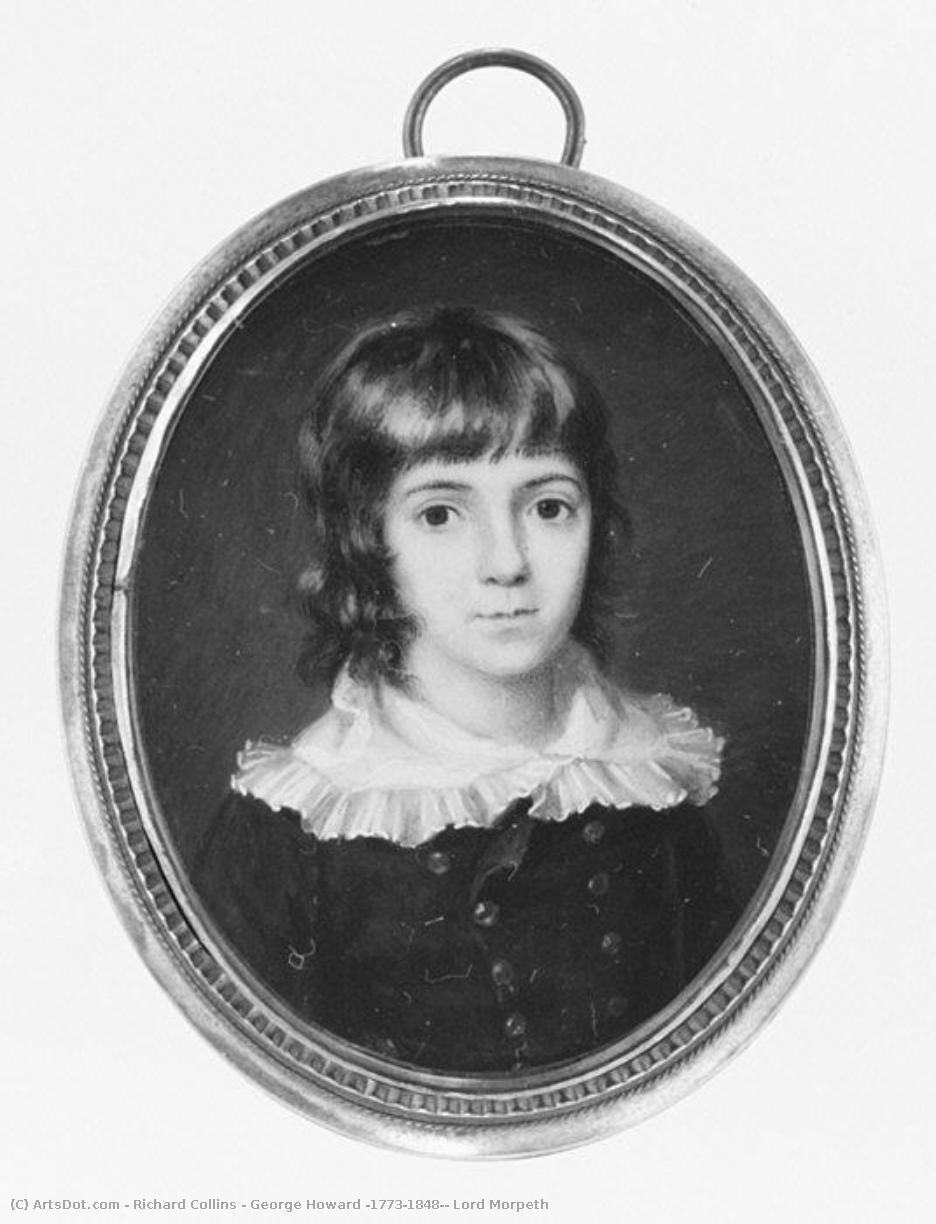
 실제 크기로 보기
 보내기
보내기 공유하기
공유하기
 상세 보기
상세 보기 가이드 보기

 이미지 다운로드
 유사 작품 더 보기
 X-레이
X-레이 슬라이드 쇼 보기
 통계 정보
통계 정보George Howard (1773–1848), Lord Morpeth
 Classical Portraiture
 5.0 x 4.0 cm
 상세 보기
상세 보기
지클레 / 아트 프린트
빠른 제작과 다양한 마감 옵션을 선택할 수 있는 박물관 수준의 지클레이 및 캔버스 프린트. ( 수작업 채색 복제본 주문하기 디지털 이미지 판매 채널로 전환)




































작품의 원본 비율을 그대로 유지하는 프리셋 사이즈 중에서 선택해 보세요.

특정 프레임이나 공간에 맞춰 직접 치수를 입력하실 수 있습니다. 선택하신 사이즈가 원본 이미지의 비율과 일치하지 않을 경우, 작품을 크롭(자르기)하거나 이미지를 대칭 또는 단색 채우기로 확장하여 제작합니다. 제작 시작 전, 최종 확인을 위해 디지털 목업이 전송됩니다.
화면상의 미리보기는 실제 크롭이나 확장 상태를 반영하지 않으므로, 최종 구도는 오직 목업을 통해서만 정확하게 확인하실 수 있습니다.
맞춤 사이즈 제작도 가능하지만, 원본 비율을 유지하기 위해서는 사전 정의된 목록에서 치수를 선택하시는 것을 권장합니다.


 유리 옵션은 110cm 미만 크기에서만 선택 가능합니다.

George Howard (1773–1848), Lord Morpeth
지클레 / 아트 프린트
복제본 규격
-


총 결제 금액
$ 80
작가 소개
Early Life and Apprenticeship
Richard Collins, born in the naval town of Gosport, Hampshire on January 30th, 1755, emerged into a world steeped in maritime tradition yet soon found his artistic calling far removed from shipbuilding. His early life offered little indication of the refined miniature painter he would become; however, it was through an apprenticeship with Jeremias Meyer that Collins’s path truly began to unfold. Meyer, a respected enamel artist, provided Collins with foundational training in this delicate and demanding art form – a skill highly prized during the Georgian era for its ability to capture likenesses with exquisite detail and luminosity. This early exposure to enamel painting would profoundly shape Collins's style and ultimately lead to his appointment as principal painter in enamel to King George III. The meticulous nature of enamel work instilled in him a patience and precision that became hallmarks of his mature portraits, allowing him to render not just features but also the very essence of his sitters.Ascent to Royal Favor and Artistic Practice
Collins’s talent quickly garnered recognition, evidenced by his early exhibitions at the Royal Academy in 1777. He rapidly established himself as a sought-after portraitist, sharing patronage with prominent artists like Richard Cosway and Samuel Shelley. The fashionable elite of the day clamored for his services, drawn to his ability to create intimate, captivating miniatures that reflected their status and taste. His portraits weren’t merely representations; they were carefully constructed statements of identity. In 1789, a pivotal moment arrived with his appointment as principal painter in enamel to King George III. This prestigious position cemented Collins's reputation and brought him into the heart of royal circles. He was commissioned to paint numerous members of the royal family and aristocracy, creating a lasting record of Georgian society’s most influential figures. His technique involved layering translucent enamels onto metal supports – often copper or gold – building up depth and color with astonishing subtlety.Style and Influences
Richard Collins's style is characterized by its elegance, refinement, and attention to detail. While influenced by earlier miniature painters such as Rosalba Carriera, he developed a distinctive approach that blended meticulous realism with a delicate sense of romanticism. His portraits often feature sitters posed against simple backgrounds, allowing their features and attire to take center stage. He possessed an exceptional ability to capture the textures of fabrics – silks, velvets, and lace – and the subtle nuances of skin tones. His work reflects the prevailing aesthetic sensibilities of the late Georgian period, emphasizing grace, poise, and social standing. The influence of Cosway is visible in his skillful rendering of facial expressions and the overall air of sophistication that permeates his miniatures. However, Collins distinguished himself through his mastery of enamel painting, achieving a unique luminosity and depth of color that set his work apart.Legacy and Historical Significance
Richard Collins died in London on November 28th, 1831, leaving behind a substantial body of work that provides invaluable insights into the lives and personalities of Georgian Britain’s elite. His miniatures are now highly sought after by collectors and museums worldwide, prized for their artistic merit and historical significance. He stands as one of the most accomplished miniature painters of his era, renowned for his technical skill, elegant style, and ability to capture the essence of his sitters. Beyond his individual achievements, Collins’s work reflects a broader cultural shift towards portraiture as a means of self-representation and social advancement. His portraits offer a glimpse into the values, tastes, and aspirations of Georgian society, making him an important figure in the history of British art.- His miniatures provide valuable documentation of royal and aristocratic life.
- He helped elevate miniature painting to a respected art form.
- Collins’s work continues to inspire artists and collectors today.

richard collins
1755 - 1831 , United Kingdom
작가 정보 요약
- Artistic Movement Or Style: Miniature painting
- Artists Who Influenced This Artist: ['Jeremias Meyer']
- Date Of Birth: January 30, 1755
- Date Of Death: November 28, 1831
- Full Name: Richard Collins
- Nationality: British
- Place Of Birth: Gosport, United Kingdom
관련 기사

Neo-Classicism's Greatest Hits: 10 Masterpieces for Your Home |
Journey through Neo-Classicism's finest! Explore 10 iconic masterpieces by David, Ingres & Canova. Discover art history, techniques & timeless beauty – perfect for inspiring your home decor. Find museum-quality reproductions at
Timeless Resonance: Exploring Classic Vibe in Art – A Historical & Aesthetic Analysis
Explore the rich history & enduring aesthetic of Classicism art! Discover key movements, iconic artists like Raphael & David, and its lasting influence on Western art. Deepen your appreciation today.
The Timeless Elegance of Academic Classicism: A Journey Through Order, Precision, and the Pursuit of Perfection
Explore the profound beauty of Academic Classicism. Discover how masters used order, precision, and classical ideals to achieve timeless perfection in art history, from Neoclassical portraits to the pursuit of ideal beauty.
The Enduring Legacy of Classicism: Principles, Evolution & Influence in Western Art
Explore the enduring legacy of Classicism in Western art! Discover its historical context, key principles, iconic masterpieces & lasting influence. Learn about Renaissance and Neoclassical movements with OriginalUniqueArt.
Timeless Elegance: The Ultimate Buyer's Guide to Choosing Classical Portraits for Sophisticated Interiors
Discover how to select the perfect classical portrait for your home. Our expert guide explores matching art styles to interiors, choosing between hand-painted oils and Giclée prints, and transforming personal photos into timeless masterpieces with professional artistry.