미리보기
미리보기
 공유하기
공유하기 공유하기
공유하기
 상세 정보
상세 정보

 다운로드
다운로드
 유사 작품
유사 작품 X-레이
X-레이 슬라이드 쇼
Stanza Della Segnatura d07

 더 보기
더 보기
지클레 / 아트 프린트
빠른 제작과 다양한 마감 옵션을 제공하는 박물관 품질의 지클레이 또는 캔버스 프린트. ( 손으로 그린 그림 구매 이미지 구매)




P118B $10

P118H $10

P118W $10

P438Z $10

P508JH $12

P508YH $12

P805H $10

P805Z $10

P919BZ $10

P919G $10

P919XJ $10

P959ZH $10

P968JZ $12

W106C $8

W218G $10

W218JH $8

W218Y $10

W307PJ $10

W316G $10

W316PJ $8

W316Y $10

W398PJ $8

W4111J $10

W500HY $15

W500JH $15

W692G $12

W849H $8

W940BG $15

W953PJ $8




작품의 원본 비율을 유지하는 미리 설정된 크기 중에서 선택하세요.

특정 프레임이나 공간에 맞춰 직접 치수를 입력하실 수 있습니다. 선택하신 사이즈가 원본 이미지의 비율과 일치하지 않을 경우, 작품을 크롭(자르기)하거나 이미지를 대칭 또는 단색 채우기로 확장하여 제작합니다. 제작 시작 전, 최종 확인을 위해 디지털 목업이 전송됩니다.
화면상의 미리보기는 실제 크롭이나 확장 상태를 반영하지 않으므로, 최종 구도는 오직 목업을 통해서만 정확하게 확인하실 수 있습니다.
맞춤 사이즈 제작도 가능하지만, 원본 비율을 유지하기 위해서는 사전 정의된 목록에서 치수를 선택하시는 것을 권장합니다.


 유리 옵션은 110cm 미만 크기에서만 선택 가능합니다.

Stanza Della Segnatura d07
지클레 / 아트 프린트
복제본 크기
-


최종 결제 금액
$ 80
작품 상세 설명
The Stanza Della Segnatura: A Window into Renaissance Thought
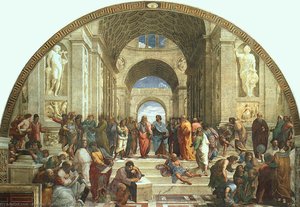
Raphael’s “Stanza della Segnatura,” or Room of the Signatura, within the Vatican Palace remains one of the most profoundly captivating and intellectually stimulating spaces in Western art history. Completed between 1508 and 1511 during a period of intense artistic and philosophical ferment, this fresco cycle isn't merely a decorative scheme; it’s a meticulously crafted visual argument for the harmonious balance of human knowledge and virtue. Commissioned by Pope Julius II, a man known for his patronage of the arts and his ambition to restore Rome’s former glory, the room was intended as a study and library – a space dedicated not just to accumulating information but to understanding its significance and applying it to the betterment of humankind.
The overall design is rooted in classical principles, particularly those championed by Leon Battista Alberti, whose treatise *De Pictura* provided a foundational framework for Renaissance art. The room’s layout mirrors the structure of a Roman atrium, with a central perspective leading the eye towards the magnificent “Parnassus” fresco – a breathtaking depiction of Apollo and the Muses presiding over the realms of poetry, philosophy, theology, and law. This central image serves as the anchor for the entire cycle, visually connecting the individual scenes that surround it.
The Frescoes: A Symphony of Allegory
Each of the five frescoes within the Stanza Della Segnatura tells a distinct story, interwoven with complex allegorical meanings. “Disputation over the Most Holy Sacrament,” on the left wall, depicts theologians engaged in a spirited debate about the Eucharist, representing theological truth. “School of Athens,” arguably the most famous fresco in the room, celebrates philosophy and reason, featuring a gathering of ancient Greek philosophers – Plato and Aristotle are prominently displayed – alongside Renaissance figures like Raphael himself and Leonardo da Vinci. The scene is not simply a historical representation; it’s an assertion of the enduring power of classical thought to inform contemporary understanding.
“Cardinal and Theological Virtues and the Law” showcases the cardinal virtues (prudence, justice, fortitude, and temperance) alongside theological virtues (faith, hope, and charity), all presided over by a majestic Cardinal. Finally, “Parnassus” embodies beauty and artistic inspiration, with Apollo and the Muses overseeing the intellectual pursuits of humankind. Notice the meticulous detail in each figure’s drapery, the subtle gradations of color, and the masterful use of perspective – hallmarks of Raphael's unparalleled skill.
Technique and Style: The Pinnacle of High Renaissance Grace
Raphael’s style during this period is characterized by its remarkable clarity, balance, and grace. He masterfully blended the influences of his predecessors—Perugino, Leonardo da Vinci, and Michelangelo—into a uniquely harmonious aesthetic. The frescoes are executed in *aerangio*, a technique involving layering thin washes of color to create luminous effects and subtle transitions between tones. This method contributes significantly to the paintings’ ethereal quality and sense of depth.
The use of *sfumato* – a blurring effect achieved through delicate glazing—is particularly evident in the faces, lending them an almost lifelike quality. Raphael's attention to detail is astonishing; from the individual folds of fabric to the expressions on the figures’ faces, every element contributes to the overall sense of realism and psychological insight. The scale of the frescoes, combined with Raphael’s technical prowess, creates a truly immersive experience for the viewer.
Symbolism and Legacy: A Timeless Vision
Beyond their aesthetic beauty, the frescoes of the Stanza Della Segnatura are laden with symbolism. They represent not just the pursuit of knowledge but also the importance of virtue, reason, and divine guidance in shaping a fulfilling life. The room itself embodies the humanist ideal – a space designed to foster intellectual growth and spiritual contemplation.
Raphael’s “Stanza Della Segnatura” stands as a testament to the power of art to communicate complex ideas and inspire profound reflection. It remains a source of fascination for scholars, artists, and viewers alike, offering a glimpse into the mind of one of history's greatest masters and a window into the intellectual heart of Renaissance Italy. Reproductions of this masterpiece continue to captivate audiences today, allowing them to experience its beauty and wisdom firsthand.
작가 약력
라파엘로: 우르비노의 빛, 르네상스 미술의 정수
1483년, 이탈리아 우르비노에서 태어난 라파엘로 산치오 다 우르비노, 그는 역사 속에서 ‘라파엘’이라는 이름으로 영원히 기억될 것입니다. 그의 삶은 바로크 건축과 예술의 중심지였던 우르비노 공국의 문화적 풍요 속에서 시작되었습니다. 아버지 조반니 산티 역시 공국에 고용된 화가이자 시인이었으며, 르네상스 사상의 흐름을 읽고 새로운 예술적 아이디어를 적극적으로 수용한 인물이었습니다. 이러한 환경은 어린 라파엘에게 예술과 학문이 결합된 균형 잡힌 감수성을 심어주었고, 그의 작품 세계에 깊은 영향을 미쳤습니다. 아버지의 갑작스러운 죽음 이후, 라파엘은 젊은 나이에 가족 작업장을 이끌며 그림 실력을 갈고 닦았고, 섬세한 표현과 부드러운 선이 특징인 초기 작품들에서 그의 재능을 엿볼 수 있습니다.
움브리아에서 피렌체로: 새로운 영감의 추구
라파엘의 예술적 여정은 끊임없는 변화와 성장의 연속이었습니다. 페루지노에게 그림을 배우며 움브리아 스타일의 기반을 다졌지만, 그는 안주하지 않고 더 넓은 세상으로 나아가고자 했습니다. 1504년, 예술 혁신의 중심지였던 피렌체로 향한 라파엘은 레오나르도 다 빈치와 미켈란젤로의 걸작들을 직접 마주하며 깊은 감명을 받았습니다. 그는 두 거장의 기법을 탐구하고 분석하며 자신만의 독창적인 스타일을 구축하기 위해 노력했습니다. 특히 레오나르도의 스푸마토 기법, 즉 부드러운 명암 대비를 통해 형태를 표현하는 방식과 미켈란젤로의 인체 해부학적 정확성과 역동적인 구성을 연구하며 자신의 예술 세계에 새로운 가능성을 불어넣었습니다. 피렌체에서의 경험은 라파엘에게 깊은 영향을 미쳐, 그의 작품에서 더욱 풍부한 감정과 생동감을 느낄 수 있게 해주었습니다.
로마의 황금기: 위대한 의뢰와 걸작 탄생
1508년, 교황 율리우스 2세의 초청으로 라파엘은 로마행을 결정하며 자신의 예술적 역량을 본격적으로 발휘할 기회를 맞이합니다. 영원한 도시 로마는 그에게 무대이자 영감의 원천이었으며, 바티칸 궁전의 벽면을 장식하는 대규모 프레스코화 작업을 통해 그의 명성은 더욱 높아졌습니다. 특히 ‘아테네 학당’은 라파엘의 대표작으로 손꼽히며, 고대 그리스 철학자들의 모습을 생생하게 묘사하여 지성과 예술이 조화를 이루는 르네상스 시대의 이상을 구현했습니다. 또한, 교황 레오 10세의 의뢰를 받아 ‘세그나투라 방’과 ‘엘리오도로 방’ 등의 프레스코화 작업을 진행하며 종교적 주제와 세속적인 이야기를 능숙하게 조화시키는 그의 재능을 증명했습니다. 이러한 작업들은 라파엘을 단순한 화가를 넘어, 시대의 정신을 반영하는 위대한 예술가로 자리매김하게 했습니다.
우아함과 웅장함의 조화: 라파엘의 예술적 특징
라파엘의 작품은 우아함, 명료함, 이상적인 아름다움이 절묘하게 어우러진 것이 특징입니다. 그는 움브리아 전통, 피렌체 혁신, 고대 그리스 로마 문화 등 다양한 영향을 흡수하여 자신만의 독창적인 예술 세계를 구축했습니다. 그의 구도는 정교하게 계획되어 있으며, 르네상스 시대의 원리를 반영하는 균형과 비례미를 자랑합니다. 인물들은 서정적이고 감성적인 표현을 통해 인간 본연의 아름다움을 드러내며, 보는 이로 하여금 깊은 감동을 불러일으킵니다. 또한, 그는 풍부하고 밝은 색채를 사용하여 시각적으로 매혹적이면서도 지적으로 자극하는 작품들을 창조했습니다. 미켈란젤로의 강렬하고 격렬한 스타일과는 대조적으로, 라파엘의 작품은 평온함과 조화로움이 느껴지는 것이 특징입니다.
불멸의 유산: 후대에 드리운 영향
라파엘은 37세라는 젊은 나이에 세상을 떠났지만, 그의 예술적 업적은 시대를 초월하여 후대 예술가들에게 영감을 불어넣었습니다. 그의 작품은 르네상스 시대의 미학을 대표하는 동시에, 이후 네오클래식주의 운동에 큰 영향을 미쳤습니다. 요한 요아힘 빈켈만과 같은 비평가들은 라파엘의 작품에서 고전적인 아름다움의 이상을 발견하고 이를 적극적으로 재조명했습니다. 오늘날까지도 그의 그림들은 전 세계 미술관에 전시되어 수많은 사람들에게 감동을 선사하며, 르네상스 시대 최고의 거장으로서 그의 위상은 확고히 자리 잡았습니다. 라파엘은 단순한 화가를 넘어, 인간의 아름다움과 정신적인 가치를 예술로 승화시킨 불멸의 존재입니다.

라파엘로
1483 - 1520 , 이탈리아
주요 정보
- 국적: 이탈리아인
- 대표 작품:
- 아테네 학당
- 시스티나 마돈나
- 변화
- 사망일: 1520년 4월 6일
- 영향을 받은 예술 사조: ['신고전주의']
- 영향을 준 예술가:
- 레오나르도 다 빈치
- 미켈란젤로
- 피에트로 페루지노
- 예술 사조: 고전 회화 (High Renaissance)
- 전체 이름: 라파엘로 산치오 다 우르비노
- 출생일: 1483년 3월 28일 (또는 4월 6일)
- 출생지: 우르비노, 이탈리아
관련 기사 더 보기
라파엘의 걸작 25선: 예술과 영혼을 담은 명화 컬렉션 | OriginalUniqueArt
라파엘의 걸작 25선을 만나보세요. 르네상스 시대 예술가의 섬세한 기법과 영혼을 담은 명화들을 감상하고, 아테네 학당, 천사의 학교 등 대표 작품의 숨겨진 이야기를 OriginalUniqueArt에서 확인하세요. 고급 아트 프린트로 공간에 우아함을 더해보세요! 지금 바로 컬렉션을 탐험하세요.
가족 유산의 벽화: 대를 잇는 예술적 전통과 기억의 보존
가족 유산의 벽화에 담긴 예술적 전통과 기억 보존의 의미를 탐구합니다. 프레스코 기법의 역사, 제작 과정, 복원 노력을 심층 분석하고 현대적인 응용 가능성을 제시합니다. 전문가의 시각으로 고품격 미술 정보를 제공합니다.
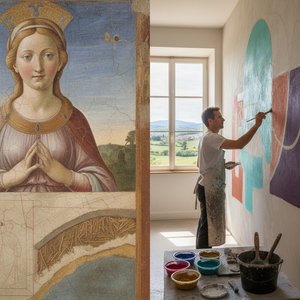
The Enduring Legacy of Fresco Painting: Techniques, History & Contemporary Relevance
Explore the rich history & enduring artistry of fresco painting – from Giotto to Michelangelo! Discover techniques, conservation efforts, & modern applications. Learn how OriginalUniqueArt brings this timeless art form to your home.

The Enduring Legacy of Fresco: Technique, History & Artistic Expression Across Cultures
Explore the rich history & enduring legacy of fresco painting! Discover ancient techniques, Giotto's masterpieces, and modern applications. Expert insights for art lovers & professionals.

The Enduring Legacy of Fresco: Technique, History & Artistic Expression
Explore the rich history & enduring artistry of fresco painting. Discover techniques from Giotto to Michelangelo, conservation efforts, & modern applications. Learn how OriginalUniqueArt brings this timeless art form to your home.