

 실제 크기로 보기
 보내기
보내기 공유하기
공유하기
 상세 보기
상세 보기 가이드 보기

 이미지 다운로드
 유사 작품 더 보기
 X-레이
X-레이 슬라이드 쇼 보기
 통계 정보
통계 정보Untitled #767


 상세 보기
상세 보기
이 페이지에 표시된 작품은 저작권법의 보호를 받으며, 이에 따라 동일한 복제품을 제작하거나 판매하는 것은 법으로 금지되어 있습니다. 이러한 권리 보호는 다음과 같은 국제 협약에 따라 시행됩니다. 베른 협약 또한 다음에서 명시하는 법률을 포함한 국내법에 의해 보호됩니다. 미국 저작권법 제17조.
저희는 존중을 담은 합법적인 대안으로서, 원작에서 영감을 받은 맞춤형 수제 유화 작품을 제공합니다. 저희의 숙련된 전문 화가들은 원작의 스타일, 분위기, 예술적 정수를 면밀히 연구하여, 그 자체로 독창적인 창작물이면서도 원작과 동일한 감동을 불러일으키는 새로운 작품을 만들어냅니다.
이 방식은 저작권 보호를 받는 예술 작품을 복제하거나 그대로 재현하는 것이 아니기에 저작권 규정을 완벽히 준수합니다. 대신, 이는 창의적인 재해석의 과정을 거칩니다. 즉, 원작에서 영감을 받되 원작과 동일하지 않은 새로운 회화 작품을 의미합니다.
핸드메이드 유화 복제화
작가가 직접 캔버스에 손으로 그린 유화 작품으로, 원하는 크기와 액자로 맞춤 제작해 드립니다. ( 프린트 판매로 전환 디지털 이미지 판매 채널로 전환)




































작품의 원본 비율을 그대로 유지하는 프리셋 사이즈 중에서 선택해 보세요.

액자나 벽면 크기에 맞춰 필요한 가로와 세로 길이를 입력해 주세요. 본 작품은 수작업으로 제작되므로, 요청하신 비율에 따라 작가가 그림의 가장자리를 조금 더 넓게 그리거나 일부를 조정하여 작업할 수 있습니다. 작업 시작 전, 최종 확인을 위해 디지털 목업 이미지를 보내드립니다. 이 페이지에 표시된 이미지는 실제 결과물과 다를 수 있으며, 오직 목업 이미지만이 정확한 결과물을 보여줍니다.
주문 완료 후 OriginalUniqueArt.com 팀에서 상세 안내를 위해 고객님께 이메일을 보내드리며, 미리보기 시안을 함께 제공해 드립니다.


 유리 옵션은 110cm 미만 크기에서만 선택 가능합니다.

Untitled #767
재현 매체
복제본 규격
-


총 결제 금액
₩ 410582
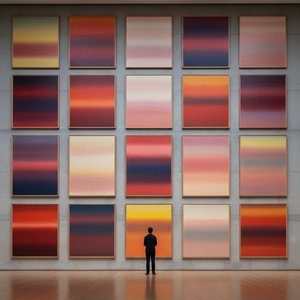
A Symphony of Crimson: The Abstract Depth of Untitled #767
In the evocative realm of contemporary abstraction, few works command the immediate attention of the viewer quite like Prudencio Irazábal’s Untitled #767. Created in 1996, this masterpiece serves as a profound meditation on color, texture, and the very essence of the painted surface. At first glance, the eye is ensnously drawn into a sea of reds—a spectrum that ranges from deep, bruised crimsons to vibrant, pulsating scarlets. This is not merely a painting of color, but an exploration of it. The composition is built upon a complex architecture of layers, where each section reveals a new nuance of hue, creating a rhythmic movement that guides the viewer through a labyrinth of light and shadow.
The technique employed by Irazábal in this piece demonstrates a masterful command over the physical properties of paint. Through a meticulous process of layering, the artist achieves a sculptural quality that transcends the two-dimensional plane. The presence of subtle black accents acts as a structural skeleton, providing necessary contrast and depth to the overwhelming warmth of the red palette. These dark elements serve as anchors, preventing the vibrant reds from becoming overwhelming and instead directing the gaze toward the intricate textures that define the work. It is this interplay between the bold, saturated tones and the delicate, shadowy outlines that creates a sense of breathing life within the canvas.
The Legacy of Abstraction and Emotional Resonance
To understand the soul of Untitled #767, one must look toward the artistic lineage of its creator. Irazábal, a Spanish virtuoso shaped by the academic rigor of Seville and Barcelona and the expansive creative energy of New York City, carries within his brushstrokes the echoes of giants like Picasso and Miró. While he moves away from their figurative roots, he retains their relentless pursuit of abstraction's origins. In this work, we see a modern evolution of that quest—a move toward pure form and emotional resonance where the subject is not an object, but the sensation of color itself.
For the discerning collector or interior designer, this painting offers more than just aesthetic beauty; it offers a transformative atmosphere. The piece possesses a powerful emotional gravity, capable of anchoring a room with its warmth and intensity. Whether placed in a minimalist contemporary gallery or as a sophisticated focal point in a luxury residential setting, Untitled #767 invites contemplation. It is a work that rewards the patient observer, revealing new details of craftsmanship and complexity upon every encounter, making it an enduring investment for those who appreciate the profound dialogue between light, pigment, and emotion.
질의응답
Prudencio Irazábal의 "Untitled #767"의 엑스레이(X-ray) 이미지를 볼 수 있을까요?
Prudencio Irazábal의 "Untitled #767"의 X선 분석 페이지는 엑스레이 스타일의 뷰를 포함하여 작품 이미지의 11개 광학 레이어를 슬라이드하며 살펴볼 수 있는 인터랙티브 뷰어를 제공합니다.
"Untitled #767"은 언제, 어떤 재료로 제작되었나요?
"Untitled #767"은(는) 1996년에 Painting 기법으로 제작되었습니다.
Prudencio Irazábal의 "Untitled #767"을(를) 어떤 용도로 활용하기에 좋을까요?
Prudencio Irazábal의 "Untitled #767"의 복제본은 Focal에 활용하시기에 좋습니다. 이는 작품의 주제와 분위기, 그리고 색감을 고려한 제안입니다.
작가 소개
The Luminous Architecture of Color: The Art of Prudencio Irazábal
In the vast landscape of contemporary abstraction, few artists command the canvas with such a profound investigation into the very soul of medium as Prudencio Irazábal. Born in 1954 in Puentelarreia, Spain, Irazábal’s journey is one of transatlantic dialogue, bridging the academic rigor of his Spanish roots with the expansive, experimental energy of New York City. His early encounters with the monumental legacies of Pablo Picasso and Joan Miró acted as a creative catalyst, instilling in him a lifelong fascination with the origins of abstraction. This pursuit was not merely about simplifying form, but about deconstructing the fundamental elements of painting to discover what remains when all narration and symbolism are stripped away.
Irazábal’s academic foundation was laid at the Universidad de Sevilla and Barcelona, providing him with a deep respect for classical technique. However, it was his move to New York in 1986 to study at Columbia University that fundamentally reshaped his artistic trajectory. For over two decades, living and working in the heart of the global art capital, he immersed himself in a period of intense research. This era marked a pivotal shift toward what he calls "irreducible facts"—a focus on the raw, unmediated relationship between light, color, and material truth. His work began to move away from the figurative, seeking instead a way to capture intangible sensations through the physical properties of paint.
The Alchemy of Surface and Light
To encounter an Irazábal painting is to enter a meditative space where the boundary between the two-dimensional plane and sculptural depth begins to dissolve. His technique is a masterful alchemy, characterized by a complex layering process that invites the viewer into a labyrinth of hue and texture. He often employs porous fabrics as a base, allowing bold, sometimes monochromatic colors to interact with the grain of the substrate. This creates a surface that feels alive, breathing with a rhythmic movement that guides the eye through layers of light and shadow.
A defining moment in his technical evolution occurred in the early 1990s when Irazábal began photographing microscopic cross-sections of his older works. These investigations revealed a hidden world of structural beauty, showing the correlation between raw materials and the transcendent nature of the painted image. This discovery led to the development of groundbreaking methods where he would build massive colors from chromatic ideas, creating surfaces that could be unweaved and reassembled as an illusionistic experience. In masterpieces such as “Untitled #767,” one can witness this "symphony of crimson," where deep, bruised crimsons and vibrant scarlets are anchored by subtle black accents, creating a structural skeleton that prevents the warmth from becoming overwhelming.
A Legacy of Perceptual Exploration
The significance of Irazábal’s oeuvre lies in his ability to unite the certainty of materiality with the unreliable nature of human perception. His work does not merely represent color; it facilitates a unique perceptual event where light, mediated through thin, translucent layers, becomes the primary protagonist. This creates an ongoing challenge for the viewer: to synthesize image, matter, and meaning in an attempt to paint that which is otherwise unpaintable.
Throughout his career, Irazábal has achieved remarkable recognition on the international stage, with his works finding homes in prestigious institutions such as the Diseño Museo Barcelona. His exhibitions, ranging from the evocative “Tide Marks” to the conceptually dense “Grammar of Extension” at Galería Pelaires in Mallorca, demonstrate a consistent commitment to exploring the "extensive intimacy" of the painted surface. As he continues to live and work between Madrid and New York, Irazábal remains a vital figure in Spanish painting, standing as a bridge between the historical weight of Cubism and Abstract Expressionism and the limitless possibilities of contemporary chromatic thought.

Prudencio Irazábal
1954 - , Spain
작가 정보 요약
- Artistic Movement Or Style: Geometric abstraction
- Artists Or Movements Influenced By This Artist: ['Francisco de Goya']
- Artists Who Influenced This Artist:
- Pablo Picasso
- Joan Miró
- Date Of Birth: 1954
- Full Name: Prudencio Irazábal
- Nationality: Spanish
- Notable Artworks: ['Untitled #767']
- Place Of Birth: Puentelarreia, Spain
관련 기사

Crimson Threads of Narrative: Exploring Symbolism & Representation in Artworks Featuring the Red Dress
Explore the rich symbolism of the red dress in art history! From ancient power displays to iconic portraits like Cézanne’s 'Madame Cezanne', discover the cultural and artistic significance behind this captivating color. Expert analysis & insights.
마크 로스코 최고작 25선: 색채로 표현된 심오한 감정과 예술의 세계 | OriginalUniqueArt
마크 로스코 최고작 25선을 만나보세요. 추상 표현주의 거장의 색채로 표현된 심오한 감정과 예술의 세계를 탐험하고, OriginalUniqueArt에서 명화 복제본과 특별한 인테리어 아이디어를 찾아보세요. 지금 바로 컬렉션을 확인하세요!

추상표현주의를 정의한 10대 걸작: 예술과 인테리어의 새로운 영감
추상표현주의의 심장을 뛰게 한 10대 걸작을 만나보세요. 폴록, 로스코 등 거장의 작품 비하인드 스토리와 예술적 영감을 OriginalUniqueArt에서! 지금 바로 미술품 컬렉션을 탐험하고, 당신의 공간에 특별한 예술적 감성을 더하세요. OriginalUniqueArt.com

Dark Masterpieces: 10 Iconic Paintings Dominated by Black Tones |
Explore 10 iconic paintings dominated by black tones, from Rembrandt’s chiaroscuro to Goya's dark expressions. Discover the stories behind these masterpieces & find museum-quality art reproductions for your home at .

Kandinsky's Masterpieces: 25 Paintings That Define Abstract Art | OriginalUniqueArt
Journey through Wassily Kandinsky's 25 most iconic abstract paintings. Explore his revolutionary use of color, form & spiritual expressionism. Find museum-quality Kandinsky reproductions and elevate your home decor with OriginalUniqueArt.com. Discover all masterpieces on OriginalUniqueArt.com!