프린트 판매로 전환
 상세 보기
상세 보기







































 가로 또는 세로 중 어느 한 면이라도 105cm(약 41인치)를 초과하는 작품이나 복제화의 경우, 프레임은 분해된 키트 형태로 배송됩니다. 이는 안전한 배송을 보장하고 운송 중 발생할 수 있는 손상을 방지하기 위함입니다.


Passion Flower
Piet Mondrian, a foundational figure in modern abstract art, captivated audiences with his painting Passion flower. Dated 1908, this masterpiece exemplifies the Post-Impressionist movement’s daring departure from naturalistic representation.
The Artistic Context: Post-Impressionism
Post-Impressionism arose as a reaction against Impressionists' preoccupation with capturing fleeting moments of light and color. Artists like Cézanne, Gauguin, and Van Gogh sought to express emotions and ideas through art—a conscious rejection of Impressionistic objectivity. Mondrian’s work during this period reflects his gradual shift from figurative painting towards pure abstraction, driven by a desire to distill the essence of visual experience.
Artistic Elements in “Passion Flower”
The painting utilizes ink as its medium, allowing for precise lines and delicate detailing—a deliberate choice that underscores Mondrian’s commitment to geometric forms. Compositionally, it centers around a vase brimming with flowers, encircled by a serene woman adorned with floral embellishments in her hair. Two additional vases appear in the background, establishing depth and harmoniously balancing visual elements.
While color isn't explicitly prominent, Mondrian’s palette during this period favored muted tones that prioritized form over vibrant hues—a characteristic of De Stijl’s aesthetic principles. This understated approach contributes to the painting’s contemplative mood.
Significance and Influence
Pablo Picasso and Georges Braque spearheaded Cubism, profoundly influenced by Cézanne's exploration of multiple perspectives. Mondrian’s Passion flower subtly incorporates this technique—breaking down objects into geometric planes—albeit in a more restrained manner.
Relevance to Modern Art Movements
- Cubism: The representation of three-dimensional form in multiple viewpoints.
- Futurism: Embracing dynamism and portraying diverse perspectives simultaneously.
- Constructivism: Building sculptures from separate components—a conceptual approach that anticipates later developments in art.
Conclusion
Piet Mondrian’s Passion flower stands as a testament to his artistic evolution—a pivotal piece within Post-Impressionism and a cornerstone of modern abstraction.
Its serene composition embodies the spirit of De Stijl’s utopian vision. As we delve into art history, Mondrian's work illuminates how artists pushed boundaries and paved the way for groundbreaking movements that continue to inspire creativity today.
For more information on Piet Mondrian and his contributions to modern abstract art, visit Piet Mondrian at OriginalUniqueArt. To explore the broader context of Post-Impressionism, refer to Post-Impressionism Art Movement Introduction.
To discover more captivating paintings influenced by Mondrian and Post-Impressionism, browse these exceptional artworks:
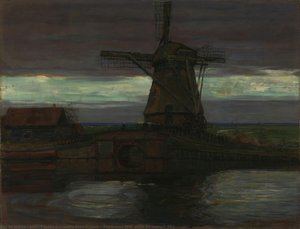
- Pieter Cornelis Mondriaan: Stammer Mill with Streaked Sky at Nelson-Atkins Museum of Art (Kansas City, United States)
- Piet Mondrian: Passionflower at Kunstmuseum Den Haag (The Hague, Netherlands)
OriginalUniqueArt offers meticulously crafted oil painting reproductions of these masterpieces and countless others. Explore OriginalUniqueArt to immerse yourself in art history and acquire a timeless piece of artistic legacy.
질의응답
"Passion flower"은 미술사적으로 어떤 위치에 있습니까?
피에트 몬드리안의 "Passion flower"은(는) 근대 미술 시대의 Post-Impressionism 사조에 속합니다. 이 요소들이 어우러져 미술사에서 이 작품이 갖는 위상을 완성합니다.
"Passion flower"의 색상들은 빛을 어느 정도나 반사하는 것처럼 보이나요?
피에트 몬드리안의 "Passion flower"의 기록된 휘도는 부드러운 휘도입니다.
"Passion flower"은(는) 어떤 분위기를 담고 있나요?
피에트 몬드리안의 "Passion flower"의 전반적인 분위기는 평온한입니다. 이 분위기는 작품의 전반적인 공기를 설명합니다.
More about this painting
 실제 크기로 보기
 보내기
보내기 공유하기
공유하기
 상세 보기
상세 보기 가이드 보기

 이미지 다운로드
 유사 작품 더 보기
 X-레이
X-레이 슬라이드 쇼 보기
 Q&A
Q&A 통계 정보
통계 정보