프린트 판매로 전환
 더 보기
더 보기







































 가로 또는 세로 중 어느 한 면이라도 105cm(약 41인치)를 초과하는 작품이나 복제화의 경우, 프레임은 분해된 키트 형태로 배송됩니다. 이는 안전한 배송을 보장하고 운송 중 발생할 수 있는 손상을 방지하기 위함입니다.


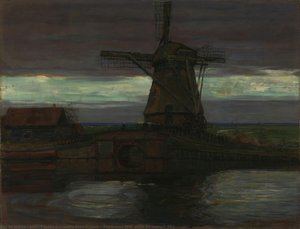
The Genesis of Abstraction: Exploring ‘Mill in the Sun’
Piet Mondrian's “Mill in the Sun,” painted in 1908, isn’t merely a depiction of a Dutch windmill; it’s a pivotal moment in the birth of modern art. This vibrant canvas, housed today at the Gemeentemuseum Den Haag, represents a dramatic shift away from the representational landscapes that initially defined Mondrian's artistic journey. Initially trained as a landscape painter, influenced by the Hague School and Dutch Impressionism – evidenced in early works like “The Red Mill” – he began to feel constrained by the limitations of mirroring nature. He sought instead to distill the essence of reality, to capture not its outward appearance but its underlying geometric structure and emotional core. ‘Mill in the Sun’ embodies this nascent ambition, a stepping stone towards his revolutionary Neoplastic style.
- Early Influences: The painting echoes the tonalism of Dutch Impressionists like Van Gogh, yet Mondrian quickly moved beyond mere imitation.
- The Turning Point: This work marks a decisive break from naturalistic representation, foreshadowing his later commitment to pure abstraction.
Deconstructing Reality: The Principles of Neoplasticism
“Mill in the Sun” is a prime example of Mondrian’s developing Neoplasticism – a philosophy and style he meticulously crafted alongside Theo van Doesburg. Neoplasticism wasn't simply about reducing images to basic shapes; it was a profound attempt to express universal harmony through geometric abstraction. Mondrian believed that art should transcend the limitations of the physical world, reaching towards a higher spiritual plane. He achieved this by employing only three primary colors – red, blue, and yellow – along with black, white, and gray, arranged in strict horizontal and vertical lines. The windmill itself becomes a vehicle for exploring these fundamental elements; its form is broken down into simplified geometric shapes, allowing the viewer to perceive the underlying structure of reality rather than its superficial details.
Key to Neoplasticism: The belief that art should represent universal harmony through pure abstraction and the use of primary colors and basic lines.Color and Light: A Symphony of Simplicity
The painting’s power lies not just in its geometric composition but also in Mondrian's masterful manipulation of color and light. The blazing sunlight, rendered in a vibrant yellow, dominates the scene, bathing the windmill and surrounding fields in an almost ethereal glow. This intense illumination contrasts sharply with the cooler blues and greens of the sky, creating a dynamic tension that draws the eye across the canvas. Notice how Mondrian uses subtle gradations within each color – variations in tone and hue – to suggest depth and volume without resorting to traditional shading techniques. The deliberate limitation of his palette—the strict adherence to red, yellow, and blue—forces him to explore the expressive potential of these colors themselves, creating a visual language that is both precise and profoundly emotive.
Symbolism and Emotional Resonance
Beyond its formal qualities, “Mill in the Sun” carries a potent symbolic weight. The windmill itself has long been associated with industry, progress, and the cyclical nature of time – themes that resonate deeply within Mondrian’s philosophical framework. The painting can be interpreted as an allegory for humanity's striving towards spiritual enlightenment, symbolized by the windmill’s upward trajectory against the backdrop of a serene landscape. The simplicity of the composition invites contemplation, encouraging viewers to engage with the work on a purely emotional level. ‘Mill in the Sun’ is not simply a representation of a rural scene; it’s an invitation to experience the world through the lens of abstraction and find harmony within its essential elements.
질의응답
"Mill in the sun"의 색상들이 서로 어떻게 조화를 이루고 있나요?
피에트 몬드리안의 "Mill in the sun"의 색채는 Balanced Harmony 조화를 보여줍니다. 여기서 조화란 색상들이 서로 어떻게 어우러지는지를 의미합니다.
Living Room에 "Mill in the sun" 작품을 어떤 사이즈로 배치하는 것이 가장 좋을까요?
Living Room 공간에는 피에트 몬드리안의 "Mill in the sun" 작품을 Large 크기로 인쇄하시는 것을 추천합니다.
피에트 몬드리안 작가의 다른 활동명이나 알려진 이름이 있나요?
피에트 몬드리안은(는) 피터 콘스탄틴 모드리얀, 피터 코르넬리스 몬드리안, Pieter Cornelis Mondriaan(으)로도 알려져 있습니다.
이 작품에 대해 더 알아보기
 미리보기
미리보기
 공유하기
공유하기 공유하기
공유하기
 상세 정보
상세 정보 가이드 보기

 다운로드
다운로드
 유사 작품 더 보기
 X-레이
X-레이 슬라이드 쇼 보기
 질의응답
질의응답 통계 정보
통계 정보