프린트 판매로 전환
 상세 보기
상세 보기







































 가로 또는 세로 중 어느 한 면이라도 105cm(약 41인치)를 초과하는 작품이나 복제화의 경우, 프레임은 분해된 키트 형태로 배송됩니다. 이는 안전한 배송을 보장하고 운송 중 발생할 수 있는 손상을 방지하기 위함입니다.


The Quiet Power of Gray and Brown: Piet Mondrian’s Exploration of Universal Harmony
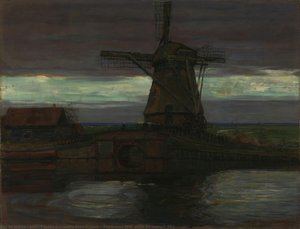
Piet Mondrian, a name synonymous with modern abstraction, didn't initially seek to dismantle the world through art; rather, he aimed to reveal its underlying order. His painting “Gray lt brown,” created around 1913 during his formative years in Paris, stands as a pivotal moment in this journey – a deliberate departure from representational landscapes and a bold step toward the pure geometric language that would define his Neoplasticist style. This work isn’t merely a composition of colors; it's an architectural meditation on balance, harmony, and the fundamental elements of visual experience.
The painting immediately captivates with its restrained palette – a deliberate rejection of the vibrant hues favored by many of his contemporaries. Instead, Mondrian employs a subtle interplay of yellow, gray, and brown, creating a sense of quiet contemplation. The background is a warm, inviting yellow, providing a luminous anchor for the carefully arranged squares that dominate the composition. These aren’t haphazardly placed; each element contributes to an intricate web of vertical and horizontal lines, suggesting a grid-like structure beneath the surface. Notice how the varying shades of gray and brown in the foreground subtly delineate depth, preventing the image from feeling flat or static.
Neoplasticism: A Search for Universal Harmony
“Gray lt brown” is deeply rooted in Mondrian’s development of Neoplasticism, a philosophy and artistic movement he co-founded with Theo van Doesburg. More than just a style, Neoplasticism represented a radical attempt to distill art down to its essential elements – lines, colors, and rectangles – believing that these were the universal building blocks of visual experience. Mondrian sought to create paintings that transcended individual emotion or subject matter, instead representing an abstract expression of underlying reality. This pursuit was heavily influenced by his interest in spiritualism and a desire to find a common aesthetic language for humanity.
The movement’s core tenets were rigorously applied: primary colors (red, blue, yellow), black, white, and gray were the only permissible hues. Lines – strictly vertical and horizontal – served as the framework, defining spatial relationships and creating a sense of stability. Mondrian believed that these elements, when arranged with precision and harmony, could evoke a profound emotional response in the viewer, bypassing the need for representational imagery. “Gray lt brown” exemplifies this principle perfectly; it’s not about depicting something specific but rather conveying an abstract state of equilibrium.
Composition and the Language of Geometry
Examining the painting's structure reveals a sophisticated understanding of geometric principles. The large yellow square, positioned centrally, acts as a focal point, drawing the eye inward. Smaller squares arranged in the foreground create a sense of depth and layering, suggesting a carefully constructed space. The deliberate asymmetry – achieved through subtle variations in color and size – prevents the composition from feeling overly rigid or symmetrical, adding to its visual interest. It’s crucial to note that Mondrian wasn't simply arranging shapes; he was using them as symbols—vertical lines representing man and horizontal lines representing nature, striving for a harmonious balance between these opposing forces.
The choice of gray and brown tones further enhances the painting’s contemplative mood. These muted colors create a sense of stillness and introspection, inviting the viewer to slow down and consider the relationships between the elements within the composition. They also subtly echo the earthy tones found in nature, grounding the abstract forms in a tangible reality.
A Legacy of Pure Abstraction
“Gray lt brown” is more than just a beautiful painting; it’s a manifesto for a new way of seeing and understanding art. It represents a crucial step in Mondrian's evolution toward pure abstraction, foreshadowing the monumental impact he would have on 20th-century art and design. His exploration of geometric forms and primary colors profoundly influenced movements like Bauhaus and Minimalism, shaping the visual landscape of modernism and beyond. Today, “Gray lt brown” continues to resonate with viewers seeking a sense of order, harmony, and spiritual connection – a testament to Mondrian’s enduring vision.
For those interested in exploring more of Mondrian's work, Piet Mondrian on OriginalUniqueArt offers a comprehensive collection of his paintings, providing invaluable insight into the evolution of this revolutionary artist’s style and philosophy.
질의응답
증강 현실(AR)을 사용하여 제 방에 피에트 몬드리안의 "Gray lt brown"를 배치해 볼 수 있나요?
피에트 몬드리안의 "Gray lt brown"의 AR 미리보기 페이지에서는 증강 현실(AR) 기술을 사용하여 호환 가능한 기기를 통해 작품이 사용자의 공간에 배치된 모습을 미리 확인할 수 있습니다.
피에트 몬드리안의 "Gray lt brown"의 대비(contrast) 수준은 어느 정도인가요?
"Gray lt brown"의 명암 대비는 Statement로 기록되었습니다. 대비는 밝은 부분과 어두운 부분의 차이가 얼마나 강한지를 나타냅니다.
피에트 몬드리안의 "Gray lt brown"의 정서적 분위기는 어떠한가요?
피에트 몬드리안의 "Gray lt brown"은(는) Reflective 감성을 전달합니다.




 실제 크기로 보기
 보내기
보내기 공유하기
공유하기
 상세 보기
상세 보기 가이드 보기

 이미지 다운로드
 유사 작품 더 보기
 X-레이
X-레이 슬라이드 쇼 보기
 Q&A
Q&A 통계 정보
통계 정보