프린트 판매로 전환
 더 보기
더 보기







































 가로 또는 세로 중 어느 한 면이라도 105cm(약 41인치)를 초과하는 작품이나 복제화의 경우, 프레임은 분해된 키트 형태로 배송됩니다. 이는 안전한 배송을 보장하고 운송 중 발생할 수 있는 손상을 방지하기 위함입니다.


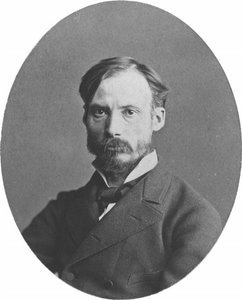
A Moment Frozen in Light: Renoir’s Portrait Sketch of Cézanne
Pierre-Auguste Renoir's charcoal sketch of Paul Cézanne stands as a testament to the Impressionist fascination with capturing fleeting impressions and conveying emotion through subtle tonal variations. Executed around 1902, this intimate portrait offers a glimpse into Cézanne’s artistic spirit—a quiet contemplation rendered in deceptively simple lines. It's not an attempt at photographic realism but rather an endeavor to distill the essence of Cézanne’s presence onto paper, reflecting Renoir’s admiration for his fellow artist’s groundbreaking vision.- Composition & Perspective: The sketch adheres to a classic bust format, centering Cézanne's head and shoulders within a rectangular frame. Notably, Cézanne’s gaze drifts slightly off-center, injecting a sense of introspection into the composition—a characteristic stylistic choice that prioritizes psychological depth over precise spatial representation.
- Line & Shape Language: Renoir employs loose, gestural lines to delineate Cézanne's facial features and clothing, eschewing meticulous detail for expressive movement. Dominating the sketch are circular shapes – visible in Cézanne’s face, hair, and collar of his coat—a deliberate technique that embodies Impressionism’s emphasis on capturing organic forms and textures.
- Texture & Lighting: The charcoal marks reveal a palpable texture reminiscent of the artist's working process, with smudges and strokes contributing to the overall volume and depth of the image. Soft, diffused lighting illuminates Cézanne’s visage, avoiding harsh shadows and fostering an atmosphere of understated elegance—a hallmark of Renoir’s Impressionistic style.
- Historical Context & Symbolism: Created during Cézanne's formative years as a painter, this sketch speaks to the burgeoning artistic dialogue between Impressionists and Post-Impressionists. It symbolizes Renoir’s respect for Cézanne’s pioneering exploration of form and color—a gesture of admiration within the broader context of artistic innovation.
Technique & Material Considerations
The artwork's materiality is crucial to understanding its aesthetic impact. Charcoal or graphite pencil was meticulously applied onto paper, utilizing pressure variations to achieve nuanced tonal gradations—a technique honed by Renoir’s extensive study of Old Masters and his desire to capture the subtleties of light and shadow. The resulting surface texture embodies Impressionism’s commitment to conveying immediacy and spontaneity, mirroring the artist's rapid sketching process.Emotional Resonance & Artistic Influence
Beyond its formal elements, Renoir’s sketch possesses a profound emotional resonance—a quiet dignity conveyed through Cézanne’s gaze and the understated beauty of the monochromatic palette. It exemplifies Impressionism’s ability to evoke feeling rather than simply depicting reality, inviting viewers to contemplate Cézanne's inner life and artistic legacy. This piece continues to inspire artists today, demonstrating the enduring power of capturing a moment in time with sensitivity and precision.Further Exploration
For deeper insights into Renoir’s oeuvre and the broader Impressionist movement, consider visiting the Petit Palais (Petit Palais) or Musée d'Orsay (Musée d’Orsay). Also, explore John Lawson Thornton’s cartographic work and Ambroise Vollard’s role in championing modern artists. Don’t forget to check out Paul Cezanne by Auguste Renoir at the National Gallery of Art for a comparative study!질의응답
르누아르의 "Paul Cézanne"와 유사한 작품은 어디에서 찾을 수 있나요?
"Paul Cézanne"와 유사한 작품들은 해당 작품의 유사한 작품들 페이지에서 확인하실 수 있습니다.
Impressionistic Sketching 사조의 작품 "Paul Cézanne"은 어떤 감정을 전달하나요?
"Paul Cézanne"은 Impressionistic Sketching 운동의 흐름 속에서 Reflective 정서를 담아내고 있습니다.
"Paul Cézanne"은(는) 어떤 공간에서 어떤 용도로 활용하기에 좋을까요?
"Paul Cézanne"은(는) Accent 용도로 추천하며, Living Room 공간에 배치하기 좋습니다.
이 작품에 대해 더 알아보기
 미리보기
미리보기
 공유하기
공유하기 공유하기
공유하기
 상세 정보
상세 정보 가이드 보기

 다운로드
다운로드
 유사 작품 더 보기
 X-레이
X-레이 슬라이드 쇼 보기
 질의응답
질의응답 통계 정보
통계 정보