프린트 판매로 전환
 더 보기
더 보기







































 가로 또는 세로 중 어느 한 면이라도 105cm(약 41인치)를 초과하는 작품이나 복제화의 경우, 프레임은 분해된 키트 형태로 배송됩니다. 이는 안전한 배송을 보장하고 운송 중 발생할 수 있는 손상을 방지하기 위함입니다.


A Dawn of Symbolism: Philipp Otto Runge’s “Study to the Morning”
Philipp Otto Runge's "Study to the Morning," completed in 1809, stands as a cornerstone of German Romantic painting—a testament to an artist grappling with profound philosophical and spiritual currents. More than just a depiction of sunrise, it embodies the burgeoning fascination with mythology and the yearning for transcendence that characterized the era.
Composition and Technique: Linework as Revelation
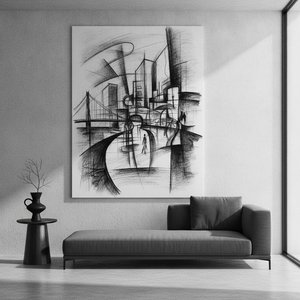
- Vertical Emphasis: The canvas is dominated by a vertical orientation, prioritizing the central female figure against a swirling backdrop. This deliberate choice underscores the importance of inner contemplation and spiritual awakening—themes central to Romantic thought.
- Dynamic Line Work: Runge’s masterful technique relies heavily on charcoal or graphite, employing hatching and cross-hatching with remarkable precision. These lines aren't merely descriptive; they convey movement, texture, and volume, mirroring the turbulent energies of nature itself. Notice how bold strokes define the figure’s form while delicate sketches capture the ethereal quality of the base shapes.
- Limited Palette: The monochrome palette—ranging from deep grays to pale shades—serves as a deliberate constraint, forcing Runge to focus on tonal values and expressive line work rather than coloristic illusion. This stylistic choice reflects the Romantic preoccupation with inner experience and symbolic representation.
Symbolic Resonance: Chaos and Enlightenment
The swirling forms at the base of the composition are interpreted as representing primordial chaos—the raw material from which creation emerges. Yet, crucially, the female figure ascends from this tumult, holding aloft a luminous orb—a potent symbol of enlightenment and divine grace. This gesture speaks to the Romantic belief in the transformative power of nature and the possibility of spiritual illumination.
Historical Context: The Spirit of Romanticism
"Study to the Morning" emerged during a period of intense intellectual ferment, fueled by thinkers like Friedrich Schlegel and Novalis who championed Neo-Platonism and sought to reconcile Christianity with pagan mythology. Runge’s work aligns seamlessly with these philosophical ideals, reflecting the Romantic impulse to explore the mysteries of existence and to express profound emotion.
Emotional Impact: A Moment of Contemplation
Ultimately, “Study to the Morning” transcends mere visual representation; it invites viewers into a realm of contemplation—a meditation on beauty, spirituality, and the cyclical rhythms of nature. Runge’s expressive line work captures not only the physical form of his subject but also the emotional depth of her journey toward transcendence—a legacy that continues to inspire artists and collectors alike.
질의응답
필리프 오토 루게의 "Study to the Morning"은(는) Romanticism를 작가의 모국과 어떻게 연결하고 있나요?
"Study to the Morning"은 독일 출신의 필리프 오토 루게가 Romanticism 운동의 흐름 속에서 제작한 작품입니다. 작가의 출신 배경은 이 작품을 독일 예술가들이 선보인 Romanticism 양식과 연결해 줍니다.
필리프 오토 루게의 "Study to the Morning"의 복제본은 어디에 걸면 좋을까요?
필리프 오토 루게의 "Study to the Morning"의 작품 형태(Portrait)와 추천 공간(Living Room)은 이 작품을 위한 두 가지 배치 정보입니다.
"Study to the Morning"은(는) 무엇을 묘사하고 있으며, 어떤 분위기를 풍기나요?
"Study to the Morning"은(는) female figure, swirling forms, dawn symbolism, romantic line work, light & shadow, allegorical art, organic shapes을(를) 담아내며, Romantic한 분위기를 자아냅니다.
이 작품에 대해 더 알아보기
 미리보기
미리보기
 공유하기
공유하기 공유하기
공유하기
 상세 정보
상세 정보 가이드 보기

 다운로드
다운로드
 유사 작품 더 보기
 X-레이
X-레이 슬라이드 쇼 보기
 질의응답
질의응답 통계 정보
통계 정보