
 실제 크기로 보기
 보내기
보내기 공유하기
공유하기
 상세 보기
상세 보기 가이드 보기

 이미지 다운로드
 유사 작품 더 보기
 X-레이
X-레이 슬라이드 쇼 보기
 Q&A
Q&A 통계 정보
통계 정보Roses

- 73.0 x 97.0 cm


 상세 보기
상세 보기
웹 미리보기 화면을 훨씬 뛰어넘는 인쇄용 파일을 만나보세요. 저희가 판매하는 모든 디지털 이미지는 스톡 데이터베이스 내의 고해상도 마스터 파일(일반적으로 가로 5,000~15,000픽셀)을 기반으로 합니다. 따라서 대형 인쇄나 정밀한 크롭 작업 시에도 세밀한 디테일을 자신 있게 구현할 수 있습니다.
저희 스튜디오를 거치는 모든 파일은 정교한 손길을 거칩니다. 디지털 전문가가 원작과 대조하여 색상을 점검하고 필요 시 보정하며, 전문 리터칭 도구를 사용하여 선명도와 디테일을 높입니다. 이 과정에서 작가의 붓 터치와 화풍을 충실히 유지하는 것을 원칙으로 합니다. 그 결과, 단순한 스캔본에 필터를 입힌 듯한 느낌이 아닌, 마치 실제 회화 작품을 보는 듯한 이미지를 구현해냅니다.
최종 완료 전 확인 단계가 있습니다. 전문가가 검토하실 수 있도록 72시간 이내에 이메일로 이미지를 보내드립니다. 결과물이 만족스럽지 않으신가요? 수정이나 보완을 요청하시거나, 품질이 기대에 미치지 못할 경우 환불을 요청하실 수 있습니다.
출판사, 디자인 스튜디오, 갤러리 및 인쇄소가 신뢰하는 바로 그 품질입니다.
디지털 이미지
개인 소장 및 전시, 인쇄, 창작 프로젝트를 위한 고해상도 파일을 다운로드하세요. ( 프린트 판매로 전환 수작업 채색 복제본 주문하기)
모든 디지털 이미지 주문 시 제공되는 혜택
전문적인 디지털 이미지 전송 보장
OriginalUniqueArt.com를 선택하시면 단순히 이미지를 받는 것을 넘어, 정밀한 보정 과정을 거쳐 완성된 전문적인 디지털 예술 작품을 만나보실 수 있습니다. 모든 작품에는 만족 보장 서비스가 함께 제공되며, 주문 시 다음과 같은 사항들이 자동으로 포함됩니다:

빠른 이메일 수령
주문 후 72시간 이내에 고해상도 디지털 이미지 파일이 이메일로 발송되며, 즉시 사용하실 수 있습니다.

AI 기술로 최적화된 디지털 파일
귀하의 작품은 고급 AI 기술과 정교한 수동 편집 과정을 거쳐 전문적으로 최적화되며, 이를 통해 디테일과 선명도, 색상의 정확도를 극대화합니다.

평생 무료 재전송 서비스
파일을 실수로 삭제하거나 분실하셨나요? 걱정 마세요. 언제든 무료로 다시 보내드립니다.

추가 수입 비용 없음 - 언제나
관세나 부가세, 배송비 부담 없이 작품을 즉시 소장하세요 - 디지털 다운로드는 언제나 면세 혜택이 적용됩니다.

정확한 색상 보장
전문적인 도구와 색상 관리 시스템을 통해 디지털 이미지가 원본의 색상을 최대한 정확하게 구현하도록 보장합니다.

100일 만족 보장제
구매하신 디지털 이미지에 만족하지 못하실 경우, 100일 이내에 별도의 조건 없이 수정 또는 100% 환불을 진행해 드립니다.

100% 환불 보장
만족스럽지 않으신가요? 디지털 파일을 받으신 후 100일 이내에 조건 없이 전액 환불해 드립니다.

대량 주문 할인
이미지 3매 구매 시 10% 할인 - 5매 구매 시 15% 할인 - 10매 이상 구매 시 20% 할인. 크리에이티브 프로젝트, 갤러리, 에이전시에 매우 유용합니다.
A Silver Symphony of Petals and Light
In the vast, textured tapestry of twentieth-century Balkan art, few works capture the delicate transition between tradition and modernity as poignantly as Petar Lubarda’s Roses. Painted in 1937, this masterpiece serves as a luminous gateway into what historians fondly refer to as Lubarda’s "silver period." At first glance, the viewer is greeted by a breathtaking arrangement of blossoms, where the soft, velvety textures of roses mingle with complementary flora, all cradled within a graceful vase. The composition is not merely a study of botanical beauty but a sophisticated dance of light and form. As the eye wanders across the canvas, one notices how the artist employs a masterful balance of depth; certain blooms press forward with vibrant vitality, while others recede into a soft, atmospheric haze, creating a sense of three-dimensional space that breathes within the frame.
The technique displayed in Roses is nothing short of transformative. During this pivotal era of his career, Lubarda was navigating the delicate shift from linear precision to a more fluid, pictorial approach. While his earlier works often relied on defined outlines, here we see the emergence of a "sillevry shine"—a luminous quality where color acts as a deliberate accent against a more ethereal, shimmering background. The brushstrokes are skillful and intentional, capturing the organic weight of the petals and the reflective surface of the vase with an impressionistic touch that recalls the expressive power of Van Gogh, yet remains uniquely anchored in Lubarda’s own visionary language. This interplay of light and shadow lends the painting a rhythmic quality, making the stillness of the still life feel vibrantly alive.
Historical Resonance and Artistic Legacy
Beyond its aesthetic splendor, Roses carries a profound historical and emotional resonance that makes it a cornerstone for any serious collection. The painting was part of the prestigious Pavle Beljanski collection, acquired as early as 1937, marking it as a work of immediate significance. There are even legendary stories surrounding its impact; during an exhibition in Moscow in 1948, one visitor was reportedly captivated by the painting, stating that it was exactly the work he had hoped to paint all his life. This level of reverence speaks to the universal appeal of Lubarda's ability to blend the local spirit of Montenegro with a broader European modernism.
For the discerning collector or interior designer, this piece offers more than just visual beauty; it provides a sense of timelessness. The way the light interacts with the "silver" tones makes it an ideal centerpiece for spaces that value elegance and quiet contemplation. Whether placed in a sun-drenched gallery or a sophisticated contemporary living room, the painting acts as a window into a moment of perfect botanical harmony. It is a work that does not merely decorate a wall but enriches the very atmosphere of a home, inviting viewers to pause and lose themselves in its shimmering, floral depths.
질의응답
Petar Lubarda의 "Roses"은 밝은 분위기의 작품인가요, 아니면 어두운 분위기의 작품인가요?
Petar Lubarda의 "Roses"의 느껴지는 밝기는 balanced입니다. 이는 의도한 공간의 조명과 조화를 이룰 수 있습니다.
"Roses"의 작가는 누구인가요?
"Roses"의 작가는 Petar Lubarda입니다. 이 작품은 Petar Lubarda의 이름으로 등록되어 있습니다.
Petar Lubarda의 "Roses"의 이미지는 어떻게 다운로드하나요?
Petar Lubarda의 "Roses"의 이미지는 작품의 다운로드 페이지에서 다운로드하실 수 있습니다: 고해상도 디지털 이미지 다운로드.
아티스트 프로필
The Visionary Soul of Montenegro: The Life and Legacy of Petar Lubarda
In the vast, rugged tapestry of twentieth-century Balkan art, few names resonate with as much heroic grandeur and profound emotional depth as Petar Lubarda. Born in 1907 in the village of Ljubotinj, near Cetinje, Lubarda’s very existence was steeped in the spiritual and historical echoes of Montenegro. His formative years were shaped by the solemnity of Byzantine traditions and the narrative power of medieval frescoes, elements that would later become the bedrock of his distinctive artistic language. As a painter, he did not merely seek to replicate the world around him; rather, he sought to capture the very essence of identity, sacrifice, and the enduring spirit of a people.
Lubarda’s journey was one of constant movement and intellectual expansion. His early studies at the Belgrade School of Art in 1925 led him to the vibrant artistic currents of Paris, where he encountered the transformative power of European modernism. It was here that the influence of Flemish realism and the expressive, emotive use of color found in Vincent van Gogh’s work began to permeate his technique. This period of exposure allowed him to bridge the gap between the ancient, iconographic traditions of his homeland and the fluid, avant-garde movements of the West. His ability to synthesize these disparate worlds—the rigid spiritual symbolism of the East and the impressionistic light of the West—created a style that was both timeless and strikingly modern.
A Symphony of Light, Shadow, and History
The evolution of Lubarda’s technique is perhaps most beautifully illustrated in his transition from linear precision to a more atmospheric, painterly approach. During what historians often call his "silver period," exemplified by his 1937 masterpiece Roses, one can witness a breathtaking dance of light and form. In these works, the artist moved away from defined outlines toward a luminous quality where color acts as a deliberate accent against an ethereal, shimmering background. He masterfully employed chiaroscoscuro—a technique reminiscent of Rembrandt—to heighten dramatic tension, allowing certain elements to press forward with vitality while others recede into a soft, mysterious haze.
Beyond the delicate beauty of his still lifes, Lubarda’s oeuvre is defined by its monumental themes. He was a painter of epic proportions, most famously revisited in over thirty different versions of the Battle of Kosovo (1389). These canvases are far more than historical chronicles; they are visceral, psychological explorations of courage and tragedy. Through thick, intentional brushstrokes and a powerful command of composition, he transformed historical struggle into a universal symbol of human resilience. His work often grappled with the weight of history, using the landscape of Montenegro not just as a setting, but as a character imbued with memory and myth.
Enduring Influence and Artistic Triumph
The significance of Petar Lubarda extends far beyond the borders of the Balkans. Throughout his career, he achieved international acclaim, earning prestigious honors such as the Herder Prize in 1968 and recognition from major institutions in Brazil, New York, and across Europe. His role as an educator was equally profound; after surviving the hardships of concentration camps during the war years, he returned to Belgrade and Cetinje to shape the next generation of artists, serving as a professor at the Academy of Fine Arts and establishing vital art institutions in Montenegro.
Lubarda’s legacy is characterized by several key pillars of achievement:
- Synthesis of Traditions: The seamless integration of Byzantine iconography and medieval narrative power with modern European Impressionism.
- Mastery of Emotion: A unique ability to use color and light to convey the psychological complexity of both historical events and natural landscapes.
- Cultural Foundation: His instrumental role in establishing professional art schools and institutions that solidified Montenegro's place in the global art dialogue.
- Iconic Imagery: The creation of a visual vocabulary for Balkan identity, most notably through his monumental depictions of historical struggle.
Today, Petar Lubarda remains a cornerstone of 20th-century art. His paintings continue to serve as luminous gateways into a world where the boundaries between reality and myth are beautifully blurred, leaving behind a legacy that is as enduring and rugged as the Montenegrin mountains from which he emerged.
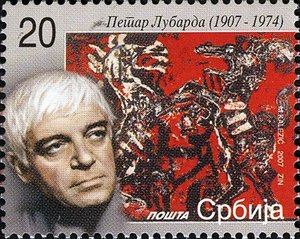
Petar Lubarda
1907 - 1974 , Montenegro
핵심 정보
- Full Name: Petar Lubarda
- Nationality: Serbian
- Date Of Birth: 1907
- Date Of Death: 1974
- Place Of Birth: Cetinje, Montenegro
- Notable Artworks: ['Battle of Kosovo']
- Artistic Movement Or Style: Byzantine & Medieval influence
- Artists Who Influenced This Artist:
- Jan van Eyck
- Vincent van Gogh
- Artists Or Movements Influenced By This Artist: ['Belgrade City Museum']