Expressionism
Self-portrait (파울라 모더존-베커)
파울라 모더존-베커 (1876–1907) 작가의 Self-portrait Expressionism 운동에 속합니다. Oil On Canvas(으)로 제작되었습니다. Bremen, Germany에 위치한 Paula Modersohn-Becker Museum에 소장되어 있습니다.
- Oil On Canvas
- Paula Modersohn-Becker Museum, Bremen

 미리보기

 수작업 유화 작품
 공유하기
 공유하기
 학습용 요약본


 다운로드
 유사 작품 더 보기
 X-레이
 슬라이드 쇼 보기
 질의응답

 통계 정보
Self-portrait 요약
- 제목
- Self-portrait
- 작가
- 파울라 모더존-베커 (1876–1907)
- 작가 출생지
- 드레스덴, 독일
- 매체
- Oil On Canvas
- 전시 장소
- Paula Modersohn-Becker Museum, Bremen, Germany
- 제작 시기
- Modern
- 주제
- woman, face, eyes, hair, skin, brown
Self-portrait은(는) 무엇을 묘사하고 있나요?
Identification of the Self-portrait
The work titled Self-portrait is a creation by the German Expressionist painter and draftswoman Paula Modersohn-Becker. It captures a moment of quiet intensity through the artist's own likeness. This specific piece belongs to a vast body of work produced during her active life, a period that saw the creation of more than 700 paintings and over 1000 drawings.
Born on 8 February 1876 in Dresden, Germany, the artist developed a singular visual language. Her life was brief, ending in Worpswede on 30 November 1907. In this self-representation, she turns her gaze toward the viewer, using her own features to explore the essence of her identity. The image remains a direct encounter with the artist's presence.
Composition and Visual Elements
The composition is a tight enclosure. It focuses on the face and the upper torso, cropping the view just below the collarbone. This close-up framing pushes the subject forward, leaving little room for the background to breathe. Because of this narrow focus and the lack of detail behind her, the painting feels largely flat. The woman meets the viewer with a direct and intense gaze that anchors the entire arrangement.
Color arrives in muted, earthy tones. Browns, creams, and whites settle alongside quiet greens. These hues do not compete; they exist in a state of restraint. Lines define the contours of the face and the hair, yet they refuse to remain sharp. Instead, they soften into the surrounding colors. The shapes are organic and flowing, following the natural curves of the human form without the interruption of hard edges.
Light falls across the skin in a diffused, even manner. There are no heavy shadows or bright highlights to disrupt the surface. This evenness contributes to the sense of quietude. The subject remains still within her muted, tonal world. A steady, searching eye looks out from the center.
Technique and Artistic Style
The paint clings to the canvas in a rough, impasto-like texture. It is an oil work where colors are blended directly upon the surface, leaving behind the evidence of the hand. Visible brushstrokes mark the skin and hair, suggesting a spontaneous and expressive approach. This tactile application gives the surface a raw, immediate quality.
The style leans toward Expressionism, favoring the weight of feeling over the precision of academic tradition. A deliberate flattening of perspective removes the illusion of deep space, pushing the subject forward. The forms are simplified and almost primal, stripped of unnecessary detail to reach a core essence. The composition relies on these organic shapes to define the contours of the face and torso.
The artist rejects the polished finish of the past. Instead, she uses a heavy, direct method to build the presence of the figure. The light remains even and diffused, avoiding sharp shadows to maintain a sense of quiet intensity. The work exists as a direct encounter between the artist and the medium.
Related Works by the Artist
The artist’s gaze often turned toward her own reflection, seeking a quiet truth in the glass. In 1906, she painted Self-Portrait Looking Slightly Left, a work that shares the same searching quality found in her other studies of identity. During that same year, she produced Self-Portrait at 6th Wedding Anniversary and Self-Portrait on the 6th Wedding Anniversary, capturing a specific moment of transition. These works exist alongside her 1906 Self-Portrait nude with amber necklace, where the jewelry rests against her skin. She also created Self-Portrait with Red Flower Wreath and Necklace, a somber composition that explores the weight of her own presence.
Flowers often appear as silent companions in her compositions. Between 1906 and 1907, she worked on Self Portrait with Camellia Branch, a piece that emphasizes the intersection of the female form and the natural world. This connects to Self Portrait with Two Flowers, where she cradles blossoms with a deliberate, steady intention. Earlier, around 1904, she produced Self-Portrait with a bowl and a glass, a work from a period of intense exploration. Each image remains a fragment of a life lived through the brush. The paint dries on the canvas, holding a steady, unblinking stare.
Self-portrait은(는) 어느 미술관에 소장되어 있나요?
Paula Modersohn-Becker Museum
Bremen, Germany
The History of Paula Modersohn-Becker Museum Located in Bremen, Germany, the Paula Modersohn-Becker Museum holds a specific place in institutional history. It was established as a museum in 1927. This institution is the first in the world dedicated to the work of a female painter.
Self-portrait의 고해상도 이미지
파울라 모더존-베커, Self-portrait, Paula Modersohn-Becker Museum. 퍼블릭 도메인
Self-portrait에 관한 질문과 답변
파울라 모더존-베커의 "Self-portrait"의 원화는 어디에서 감상할 수 있나요?
Self-portrait의 원작은 Paula Modersohn-Becker Museum, Bremen, Germany에서 만나보실 수 있습니다.
파울라 모더존-베커의 "Self-portrait"의 기법은 무엇인가요?
파울라 모더존-베커의 "Self-portrait"의 재료는 Oil On Canvas입니다. 복제화는 이 기법 특유의 질감을 그대로 구현하는 것을 목표로 합니다.
파울라 모더존-베커의 "Self-portrait"에는 어떤 소재가 등장하나요?
파울라 모더존-베커의 "Self-portrait"에 담긴 주제: woman, face, eyes, hair, skin, brown, cream, white
파울라 모더존-베커의 "Self-portrait"의 이미지를 자유롭게 복제할 수 있나요?
파울라 모더존-베커의 "Self-portrait"의 저작권 정보: 해당 작품은 퍼블릭 도메인 - 저작권 보호 기간이 만료되었습니다 상태입니다. 이는 이미지 복제 가능 여부를 결정하는 기준이 됩니다.
"Self-portrait"은(는) 어느 작가의 작품인가요?
"Self-portrait"의 작가는 파울라 모더존-베커입니다.
"Self-portrait"은(는) 어떤 화풍에 속하나요?
파울라 모더존-베커의 "Self-portrait"과(와) 관련된 미술 사조는 Expressionism입니다. 이러한 분류를 통해 해당 작품을 관련 작가 및 예술 작품들과 함께 파악할 수 있습니다.
Self-portrait은(는) 파울라 모더존-베커의 예술적 여정 중 어느 시기의 작품인가요?
"Self-portrait"은(는) 파울라 모더존-베커의 Mature Period를 잘 보여주는 작품입니다.
"Self-portrait"의 저작권 상태가 왜 이렇게 지정되어 있나요?
파울라 모더존-베커의 "Self-portrait"은(는) 퍼블릭 도메인 - 저작권 보호 기간이 만료되었습니다 상태입니다. 저작권 보호 기간은 작가 사후를 기준으로 산정되며, 파울라 모더존-베커은(는) 1907년에 작고하였습니다.
"Self-portrait"은(는) 작가의 모국에 남아 있나요?
아니요 - 해당 작품은 해외에 보관되어 있습니다. 파울라 모더존-베커의 출생국은 독일이며, "Self-portrait"의 원작을 소장하고 있는 미술관은 Germany에 있습니다.
아티스트 파울라 모더존-베커 소개

1876–1907, 독일
파울라 모더존-베커
내면의 비전을 개척한 예술가: 파울라 모더존-베커의 삶과 예술 파울라 모더존-베커(Paula Modersohn-Becker)라는 이름은 초기 현대 미술사에 조용하지만 강력하게 울려 퍼지는 이름입니다. 1876년 독일 드레스덴에서 미나 헤르미네 파울라 베커로 태어난 그녀의 삶은 비극적으로 짧았습니다 – 1907년 11월 30일 보르프스베데에서 세상을 떠났지만, 그 30년 동안 놀라운 예술적 혁신과 개인적인 용기를 보여주는 길을 개척했습니다. 그녀의 이야기는 생전의 즉각적인 찬사나 광범위한 인정을 받은 것이 아니라, 정직함으로 인간 경험의 깊이를 탐구하고 관습에 도전하는 개인의 강인함이 지속되는 증거입니다. 비교적 특권 있는 환경에서 자랐지만 – 삼촌은 프로이아 왕을 암살하려 했던 그림자가 드리워진 가족 – 파울라의 예술적 성향은 육성되었지만 사회적 기대 또한 그녀에게 가해졌습니다.
파울라 모더존-베커의 다른 작품들
 Portrait of a young woman with red hat1900
 Half-length portrait of an old farmer1903
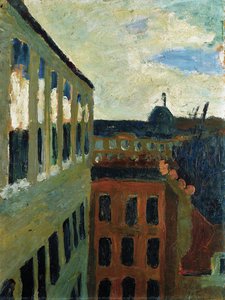 View from the studio window of the artist in Paris1900
 Still life with plant, lemon and orange1906
Self-portrait 관련 에세이
 에곤 시엘레 최고 걸작 25선: 삶과 죽음의 강렬한 표현 | OriginalUniqueArt에곤 시엘레 최고 걸작 25선을 만나보세요. 표현주의 화가 시엘레의 삶과 죽음, 불안을 담은 인물화 작품들을 감상하고 그 의미를 탐구합니다. OriginalUniqueArt에서 명작 복제본으로 예술적인 공간을 완성하세요. 지금 바로 컬렉션을 확인하세…
 제임스 애벗 맥닐 휘슬러 최고 걸작 25선: 예술의 정수, 공간에 스며드는 아름다움제임스 애벗 맥닐 휘슬러의 최고 걸작 25선을 만나보세요. 야간 풍경부터 아랑미술관 소장품까지, 예술가의 삶과 작품 세계를 탐험합니다. 색채와 분위기가 완벽한 조화를 이루는 그림들을 OriginalUniqueArt.com에서 감상하고 특별한 공간을 …
 Polish artworks of the 1900sPolish Symbolism in the 1900s features masterpieces by Jacek Malczewski, Olga Boznańska, and Józef Mehoffer. View the full collection at Or…