프린트 판매로 전환
 더 보기
더 보기







































 가로 또는 세로 중 어느 한 면이라도 105cm(약 41인치)를 초과하는 작품이나 복제화의 경우, 프레임은 분해된 키트 형태로 배송됩니다. 이는 안전한 배송을 보장하고 운송 중 발생할 수 있는 손상을 방지하기 위함입니다.


A Cosmic Prelude: Unveiling Paul Klee’s “Winter Day, Shortly Before Noon”
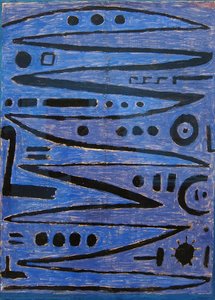
Paul Klee's "Winter Day, Shortly before Noon," painted in 1922, isn’t merely a depiction of a winter landscape; it’s an invitation into a realm of layered symbolism and profound emotional resonance. Executed as an oil transfer drawing – a technique Klee himself pioneered to capture the fleeting essence of his visual ideas – this artwork immediately possesses a captivating fragility. The brittle lines, reminiscent of a child's sketch, contrast sharply with the bold swathes of color that define the background, creating a dynamic tension between observation and imagination. It’s a piece that whispers of impending change, a quiet premonition woven into the fabric of a snowy scene.
The painting immediately draws the eye to the central grouping of buildings, clustered with a deliberate asymmetry that speaks to Klee's inherent interest in disrupting traditional perspectives. Rising vertically from this core are tower-like structures, their lines converging upwards, establishing a compelling visual rhythm—a subtle counterpoint to the expansive circular form dominating the upper left quadrant. This circle isn’t simply decorative; it feels like a contained universe, hinting at the cosmic catastrophe subtly suggested by the artwork's overall mood. The inclusion of a modest house near the bottom center grounds the scene, offering a touch of domesticity amidst the more abstract elements.
Decoding the Symbolism: Fate, Time, and the Arrow’s Dance
Klee’s artistic journey in 1922 was deeply influenced by the aftermath of World War I, a period marked by anxieties about fate and the uncertain future. The painting directly echoes this preoccupation, with the prominent motif of the arrow hand – a recurring symbol throughout Klee's work until 1924 – acting as an insistent indicator of direction and, crucially, of impending doom. This arrow, meticulously rendered in brittle lines, isn’t just a decorative element; it represents the relentless march of time, specifically referencing the hour of noon—a traditionally associated time of judgment and transition. The clock tower itself becomes a visual embodiment of this temporal pressure, its presence amplifying the sense of foreboding.
Beyond the immediate symbolism of the arrow, Klee’s use of color is profoundly evocative. The dominant palette – yellows, oranges, reds, greens, and purples – creates a rich tapestry that simultaneously suggests warmth and melancholy. These colors aren't blended smoothly; instead, they are applied in broad swathes, contributing to the artwork’s overall abstract quality while hinting at the fiery celestial body looming over the house—a potential solar event or perhaps a metaphorical representation of destruction. The diffused lighting further enhances this atmospheric effect, casting a gentle, almost mournful glow across the scene.
The Technique and its Legacy: A Window into Klee’s Process
“Winter Day, Shortly before Noon” offers a rare glimpse into Paul Klee's artistic process. The oil transfer drawing technique—developed to meet the demands of his growing popularity—is evident in the artwork’s distinctive texture. The brittle lines, born from transferring an image onto a blackened paper surface, create a tactile quality that invites close inspection. This method allowed Klee to capture the ephemeral nature of his ideas, preserving them as sketches before committing them to a more permanent painted ground. It's a testament to his innovative approach and his willingness to experiment with unconventional materials and methods.
Klee’s work during this period reflects a fascinating synthesis of abstraction and representation. While the landscape is stylized and simplified, retaining elements of recognizable architectural forms, it ultimately transcends mere depiction. The artwork becomes a meditation on fate, time, and the human condition—a poignant reminder of Klee's profound ability to imbue his art with layers of meaning and emotional depth. Reproductions of this piece offer a beautiful opportunity to experience this complex and captivating work firsthand.
질의응답
"Winter Day, Shortly before Noon"의 유화 복제본을 주문할 수 있을까요?
폴 클레의 "Winter Day, Shortly before Noon"의 수작업 복제화는 주문 제작 방식으로 수작업 유화 복제화 페이지에서 직접 주문하실 수 있습니다: 리넨 캔버스에 손으로 직접 그린 유화 복제화
폴 클레의 "Winter Day, Shortly before Noon"에서 느껴지는 정서는 무엇인가요?
"Winter Day, Shortly before Noon"은(는) Melancholic한 분위기를 자아냅니다. 이 정서적 톤은 작품이 전달하는 인상을 설명합니다.
폴 클레의 "Winter Day, Shortly before Noon"의 구성을 주도하는 색상은 무엇인가요?
폴 클레의 "Winter Day, Shortly before Noon"의 주요 색상은 Bronze (#d0a93e)입니다.
이 작품에 대해 더 알아보기
 미리보기
미리보기
 공유하기
공유하기 공유하기
공유하기
 상세 정보
상세 정보 가이드 보기

 다운로드
다운로드
 유사 작품 더 보기
 X-레이
X-레이 슬라이드 쇼 보기
 질의응답
질의응답 통계 정보
통계 정보