프린트 판매로 전환
 더 보기
더 보기







































 가로 또는 세로 중 어느 한 면이라도 105cm(약 41인치)를 초과하는 작품이나 복제화의 경우, 프레임은 분해된 키트 형태로 배송됩니다. 이는 안전한 배송을 보장하고 운송 중 발생할 수 있는 손상을 방지하기 위함입니다.


A Fragment of Hope Amidst Uncertainty
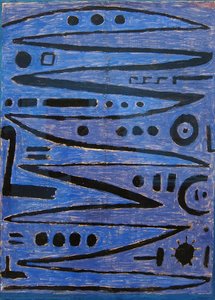
- Subject Matter: The painting depicts a solitary human face rendered in an abstracted form against a serene blue backdrop. This deliberate simplification prioritizes emotional resonance over precise anatomical detail, inviting viewers to contemplate the essence of human experience.
- Style: Klee’s work embodies the spirit of Surrealism and Expressionism simultaneously. While retaining elements of Cubist fragmentation—particularly evident in the geometric shapes subtly interwoven within the face—the overall aesthetic leans towards lyrical abstraction, characteristic of his mature style. It's a visual language that eschews literal representation for conveying feeling.
- Technique: Executed in watercolor on paper, “Little Hope” showcases Klee’s masterful control over color and texture. Watercolor pigments blend seamlessly to create luminous washes and delicate gradations, capturing the ethereal quality of light and atmosphere. The artist employs a technique known as ‘masking,’ strategically covering portions of the paper with adhesive tape to ensure consistent pigment distribution and achieve precise tonal harmonies.
- Historical Context: Created in 1938 during the tumultuous period of World War II, “Little Hope” reflects the anxieties and aspirations of its time. Klee’s artistic output during this era was marked by a preoccupation with themes of fragility, resilience, and spiritual contemplation—responses to the pervasive fear of destruction that gripped Europe.
- Symbolism: The blue hue dominating the background is not merely decorative; it symbolizes tranquility and introspection – a deliberate counterpoint to the external pressures of war. Furthermore, the distorted face itself can be interpreted as representing vulnerability and inner turmoil, yet simultaneously conveying an unwavering spirit of hope—a subtle affirmation of human perseverance in the face of adversity.
Exploring Klee’s Artistic Vision
Paul Klee's artistic philosophy revolved around a belief that art should transcend mere imitation of nature. Instead, he sought to capture inner states and emotions through visual symbols—a method deeply rooted in Jungian psychology and influenced by Eastern philosophies. His approach championed spontaneity and intuition, rejecting rigid academic conventions in favor of embracing chance and experimentation.Watercolor’s Delicate Embrace
The choice of watercolor as the medium was crucial to Klee's artistic intent. Watercolor pigments possess remarkable transparency and luminosity—qualities that allowed him to achieve breathtaking effects of color and light. Unlike oil paints, which require layering and blending over extended periods, watercolor dries quickly, permitting artists to capture fleeting impressions and imbue their canvases with immediacy.A Legacy of Emotional Resonance
“Little Hope” stands as a testament to Klee’s enduring legacy—a painting that continues to captivate viewers with its understated beauty and profound psychological depth. Its evocative imagery speaks to universal themes of human emotion, reminding us that even amidst darkness and uncertainty, the possibility of solace and renewal persists.질의응답
"Little Hope"은(는) 폴 클레의 작품 세계에서 어떤 위치를 차지하고 있나요?
"Little Hope"은(는) 폴 클레의 Abstract Expressionism 시기 작품으로, 작가의 주요 주제로는 expressionist roots, swiss identity, emotional depth, geometric abstraction, klee legacy 등이 있습니다.
"Little Hope"의 작가는 누구인가요?
"Little Hope"의 작가는 폴 클레입니다.
제 방에 "Little Hope"을(를) 어떤 사이즈로 프린트하는 것이 좋을까요?
Living Room 공간에는 폴 클레의 "Little Hope" 작품을 Large 크기로 인쇄하시는 것을 추천합니다.
이 작품에 대해 더 알아보기
 미리보기
미리보기
 공유하기
공유하기 공유하기
공유하기
 상세 정보
상세 정보 가이드 보기

 다운로드
다운로드
 유사 작품 더 보기
 X-레이
X-레이 슬라이드 쇼 보기
 질의응답
질의응답 통계 정보
통계 정보