유화 원작 구매
 Birth에 관한 모든 것







































 가로 또는 세로 중 어느 한 면이라도 105cm(약 41인치)를 초과하는 작품이나 복제화의 경우, 프레임은 분해된 키트 형태로 배송됩니다. 이는 안전한 배송을 보장하고 운송 중 발생할 수 있는 손상을 방지하기 위함입니다.


A Tempestuous Birth: Decoding Pollock’s Abstract Vision
Jackson Pollock's *Birth* (1948-51) is a pivotal work within his mature “drip” period and a cornerstone of Abstract Expressionism. More than just an abstract composition, it represents a raw and visceral exploration of creation, chaos, and renewal – themes powerfully conveyed through its dynamic energy and complex layering. The painting doesn’t depict a literal birth; rather, it embodies the *feeling* of emergence, struggle, and transformation. It's a visual manifestation of internal forces unleashed onto the canvas.Technique & Materials: The Dance of Destruction and Creation
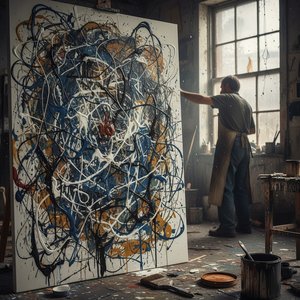
Pollock’s revolutionary technique is central to understanding *Birth*. Abandoning traditional easel painting, he laid his canvases on the floor, surrounding himself with pots of paint – primarily industrial enamels and aluminum paints alongside oil-based colors. He then employed sticks, hardened brushes, and even syringes to drip, fling, and pour paint onto the surface. This “action painting” wasn’t about carefully applying color; it was a performative act, a physical dialogue between artist and canvas. The resulting web of lines and splatters isn't random but meticulously controlled chaos. The layering is key, building up density and depth while simultaneously creating a sense of transparency where lighter colors peek through the darker ones. This technique allowed Pollock to circumvent representational concerns, focusing instead on pure form, color, and gesture. The size (116 x 55 cm) contributes to its immersive quality, drawing the viewer into the swirling vortex of paint.Symbolism & Interpretation: A Psychological Landscape
While Pollock resisted definitive interpretations of his work, *Birth* is often seen as reflecting his own psychological state and grappling with existential themes. The fragmented forms and turbulent energy can be interpreted as representing inner turmoil, anxiety, or the struggle to find meaning in a chaotic world. The presence of vaguely anthropomorphic shapes, particularly within the swirling blues and whites, suggests figures emerging from – or dissolving into – the surrounding darkness. Some scholars have linked these forms to ancient mythological imagery, hinting at archetypal themes of creation and destruction. The painting’s title itself is deliberately ambiguous; it doesn't specify *what* is being born, leaving room for personal interpretation. Is it a rebirth of the self? A new artistic vision? Or something more primal and universal?Historical Context & Legacy: Redefining Modern Art
Created in the aftermath of World War II, *Birth* reflects the anxieties and uncertainties of the era. Abstract Expressionism emerged as a distinctly American response to European artistic traditions, rejecting representational art in favor of subjective expression. Pollock’s work challenged conventional notions of painting, elevating process over product and emphasizing the artist's emotional experience. He became an icon of post-war America, embodying its spirit of innovation and rebellion. *Birth* remains a powerful testament to his artistic vision and continues to inspire artists and collectors today. Its influence can be seen in countless works of abstract art, solidifying Pollock’s place as one of the most important figures in 20th-century art history.질의응답
Birth은(는) 수작업으로 그린 작품인가요, 아니면 프린트된 작품인가요?
수작업 제작: 숙련된 화가가 Birth을(를) 리넨 캔버스 위에 유화로 재현합니다.
Birth의 사이즈는 어떤 것을 선택해야 하나요?
원작의 크기는 116 x 55 cm입니다. 사이즈는 46.5 x 21.5 cm (₩271335)부터 249.5 x 115.5 cm (₩1530330)까지 있으며, 이 페이지의 표에 주요 단계별 가격이 안내되어 있습니다.
배송은 얼마나 걸리나요?
배송은 전 세계 무료 특송으로 4~5주가 소요되며, 본 페이지에서 긴급 제작 옵션을 선택하실 수 있습니다. 제품은 조건 없이 100일 이내에 반품하여 전액 환불받으실 수 있습니다.
잭슨 폴록 작가는 Birth 작품에 어떤 재료를 사용했나요?
Oil On Canvas
 미리보기

 공유하기
 공유하기
 상세 정보
 학습용 요약본


 다운로드
 유사 작품 더 보기
 X-레이
 슬라이드 쇼 보기
 질의응답

 통계 정보