프린트 판매로 전환
 더 보기
더 보기







































 가로 또는 세로 중 어느 한 면이라도 105cm(약 41인치)를 초과하는 작품이나 복제화의 경우, 프레임은 분해된 키트 형태로 배송됩니다. 이는 안전한 배송을 보장하고 운송 중 발생할 수 있는 손상을 방지하기 위함입니다.


Trees and Houses: A Symphony of Rural Tranquility
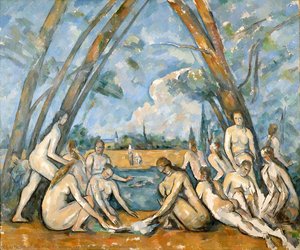
Paul Cézanne’s “Trees and Houses,” completed in 1886, transcends mere depiction; it embodies the very essence of Post-Impressionist philosophy—a deliberate rejection of fleeting optical impressions in favor of capturing underlying structure and emotion. This painting isn't simply a landscape; it’s an exploration of perception itself, reflecting Cézanne’s profound conviction that art should strive to represent not what we see but how we *feel* about what we see.Composition and Technique: Embracing Geometric Harmony
The artwork’s masterful composition immediately draws the eye inward. Cézanne eschews traditional perspective, opting instead for a flattened space where planes intersect and overlap—a technique characteristic of his groundbreaking approach to painting. Several trees dominate the scene, their branches reaching upwards with assertive curves that create a palpable sense of depth despite the absence of linear recession. These branches aren’t merely decorative; they are meticulously rendered to convey solidity and resistance, mirroring Cézanne's fascination with geological forms. Behind these monumental trees stand two houses—one positioned on the left side of the canvas and another slightly further to its center—creating a harmonious juxtaposition between organic and constructed elements. Cézanne achieves this balance through careful layering of paint, applying thin glazes over thicker impasto strokes to build up texture and luminosity. The resulting surface is rich with visual information, inviting contemplation and stimulating the imagination.Historical Context: Bridging Impressionism and Cubism
“Trees and Houses” stands as a pivotal moment in Cézanne’s artistic evolution—a decisive step away from Impressionistic idealism toward the more assertive geometric explorations that would foreshadow Cubism. Cézanne was reacting against the limitations of Impressionism's preoccupation with capturing atmospheric effects, arguing instead for a more fundamental understanding of visual reality. He sought to distill nature into its essential forms, prioritizing structure and solidity over fleeting color variations. This approach aligns perfectly with the burgeoning intellectual currents of the time—particularly Nietzsche’s philosophy of perspectivism—which questioned accepted notions of truth and championed subjective experience as paramount. The painting's placement in the Musée de l'Orangerie underscores its significance within the broader canon of Impressionist and Post-Impressionist art, alongside masterpieces by Monet and Matisse.Symbolism: Capturing the Spirit of Provence
Beyond its formal innovations, “Trees and Houses” resonates with deeper symbolic meanings rooted in Cézanne’s Provençal homeland. The trees represent resilience and permanence—symbols of enduring life against the backdrop of human endeavor. The houses symbolize domesticity and stability, yet they are rendered as simplified geometric shapes, subtly undermining their conventional associations. Cézanne's deliberate use of color—primarily yellows and greens—evokes the vibrancy of the Mediterranean landscape and imbues the scene with a feeling of tranquil serenity. It’s a visual meditation on the relationship between humanity and nature, suggesting that true beauty lies in recognizing the underlying order and harmony of both realms.Legacy: An Influence That Endures
“Trees and Houses” cemented Cézanne's reputation as an innovator who fundamentally reshaped the trajectory of modern art. His pioneering techniques—particularly his use of impasto and planar geometry—inspired generations of artists, including Picasso and Matisse, who would subsequently develop Cubism and other radical stylistic developments. More broadly, Cézanne’s insistence on capturing inner feeling alongside outward appearance continues to resonate with contemporary artists and viewers alike, reminding us that art's true power resides in its ability to communicate profound truths about the human condition.질의응답
"Trees and houses"의 조회수는 어떻게 되나요?
세잔의 "Trees and houses"의 방문 통계 페이지에서는 해당 작품의 월간 방문 수, 작가의 최고 조회 작품과의 비교, 그리고 방문자 유입 경로 등 공개된 방문 통계를 제공합니다.
세잔의 "Trees and houses"의 엑스레이(X-ray) 이미지를 확인할 수 있을까요?
"Trees and houses"은 작품의 X선 분석 페이지에서 층별로 자세히 살펴볼 수 있습니다. 이 뷰어는 보존 과학자의 라이트 벤치(light bench)에서 영감을 얻었으며, 이미지의 11가지 광학적 판독값을 제공합니다.
"Trees and houses"은(는) 작가의 모국에 남아 있나요?
네, 해당 작품은 작가의 본국에 보관되어 있습니다.. 세잔은(는) 프랑스에서 태어났으며, 원작 "Trees and houses"은(는) 프랑스에 있는 미술관에 소장되어 있습니다.
이 작품에 대해 더 알아보기
 미리보기
미리보기
 공유하기
공유하기 공유하기
공유하기
 상세 정보
상세 정보 가이드 보기

 다운로드
다운로드
 유사 작품 더 보기
 X-레이
X-레이 슬라이드 쇼 보기
 질의응답
질의응답 통계 정보
통계 정보