
 미리보기
미리보기
 공유하기
공유하기 공유하기
공유하기
 상세 정보
상세 정보 가이드 보기

 다운로드
다운로드
 유사 작품 더 보기
 X-레이
X-레이 슬라이드 쇼 보기
 질의응답
질의응답 통계 정보
통계 정보Venus Disarming Cupid

- 18.0 x 14.0 cm


 더 보기
더 보기
지클레 / 아트 프린트
빠른 제작과 다양한 마감 옵션을 제공하는 박물관 수준의 지클레이 및 캔버스 프린트. ( 수작업 채색 복제본 주문하기 디지털 이미지로 전환)




P118B ₩10

P118H ₩10

P118W ₩10

P438Z ₩10

P508JH ₩12

P508YH ₩12

P805H ₩10

P805Z ₩10

P919BZ ₩10

P919G ₩10

P919XJ ₩10

P959ZH ₩10

P968JZ ₩12

W106C ₩8

W218G ₩10

W218JH ₩8

W218Y ₩10

W307PJ ₩10

W316G ₩10

W316PJ ₩8

W316Y ₩10

W398PJ ₩8

W4111J ₩10

W500HY ₩15

W500JH ₩15

W692G ₩12

W849H ₩8

W940BG ₩15

W953PJ ₩8




작품의 원본 비율을 그대로 유지하는 프리셋 사이즈 중에서 선택해 보세요.

액자나 벽면 크기에 맞춰 필요한 가로와 세로 길이를 입력해 주세요. 프린트는 원본 이미지보다 크게 제작할 수 없으며 오직 자르는 것만 가능하므로, 비율이 다른 사이즈를 선택할 경우 이미지의 일부가 잘려 나갈 수 있습니다. 인쇄 작업에 들어가기 전, 최종 확인을 위해 디지털 목업을 보내드립니다. 이 페이지에 표시된 이미지는 실제 잘리는 영역을 나타내지 않으며, 오직 목업을 통해서만 정확한 확인이 가능합니다.


 유리 옵션은 110cm 미만 크기에서만 선택 가능합니다.

Venus Disarming Cupid
지클레 / 아트 프린트
복제본 크기
-


최종 결제 금액
₩ 108665
The Enigmatic Dance of Desire: Parmigianino’s Venus Disarming Cupid
Parmigianino's "Venus Disarming Cupid," a drawing executed between 1527 and 1530, isn’t merely a depiction of a mythological scene; it’s a profound meditation on love, power, and the very nature of desire. Created during his formative years in Florence and Rome, this work encapsulates the burgeoning Mannerist style – a deliberate departure from the idealized harmony of the High Renaissance, favoring instead an exquisite tension, a heightened drama, and a captivating sense of ambiguity. The sheet itself, a pale pink prepared paper reminiscent of a chiaroscuro woodcut, immediately establishes a mood of restrained elegance, hinting at the intricate layers of meaning concealed within the composition.
At its heart lies Venus, rendered with an almost unsettling sensuality. She’s not the serene goddess of classical sculpture; instead, she's caught in a moment of fierce, volatile emotion. Her pose – a masterful example of the *figura serpentinata*, that sinuous, twisting form so beloved by Mannerist artists – is both arresting and subtly unsettling. The exaggerated curve of her spine, the languid drape of her gown, all contribute to an image brimming with contained energy. Her hand, poised mid-gesture, holds the bow and arrow, a symbol of Cupid’s destructive power, yet she wields it not with aggression, but with a deliberate, almost playful control.
- The Myth Unveiled: The scene draws directly from Ovid's *Metamorphoses*, recounting the moment when Venus, wounded by Cupid’s arrow, retaliates by disarming her son. This isn’t a tale of simple maternal affection; it’s a complex narrative of reciprocal pain and fury – a testament to the consuming nature of love itself.
- A Study in Movement: Parmigianino meticulously explored various poses for Venus's arm, evident in the numerous preparatory sketches that accompanied this drawing. Each iteration reveals his painstaking process of achieving the perfect balance between dynamism and grace, capturing the fleeting quality of emotion.
- The Woodcutter’s Influence: The Budapest sheet’s origin is intriguing; it was likely intended for woodcuts, a technique favored by Parmigianino during his time working with Antonio da Trento. This suggests an awareness of the limitations of drawing as a medium and a desire to translate the image into a more widely accessible format.
Mannerist Sensibilities: A Departure from Tradition
“Venus Disarming Cupid” is a quintessential example of Mannerism’s distinctive aesthetic. Unlike the balanced compositions and harmonious colors of the High Renaissance, Parmigianino embraces distortion, exaggeration, and an unsettling sense of artificiality. The figures are elongated, their proportions subtly skewed, creating a visual tension that mirrors the emotional turmoil depicted. The use of pale pink as a dominant color further contributes to this atmosphere of restrained intensity – it’s not a vibrant, celebratory hue, but rather one imbued with a subtle melancholy.
This departure from classical ideals wasn't simply stylistic; it reflected a broader cultural shift. The Sack of Rome in 1527 had profoundly impacted the Italian Renaissance, shattering the confidence and stability that had characterized the era. Mannerism emerged as a response to this upheaval – a style characterized by uncertainty, anxiety, and a fascination with the grotesque. Parmigianino’s drawing embodies these anxieties, capturing the sense of disorientation and emotional instability that permeated the period.
Symbolic Layers: Beyond the Myth
Beyond its mythological narrative, “Venus Disarming Cupid” is rich in symbolic meaning. The bow and arrow represent not just Cupid's destructive power but also the vulnerability inherent in love – a force capable of inflicting both pleasure and pain. Venus’s act of disarming her son can be interpreted as a rejection of passive acceptance, a declaration of agency in the face of overwhelming emotion. The two Cupids flanking her are themselves symbolic: one appears subdued, perhaps representing the wounded innocence of youth, while the other seems to mirror Venus's defiant stance.
Furthermore, the drawing’s preparatory nature—the numerous sketches and studies—suggest a deeper exploration of the theme. It’s not simply a finished artwork but a testament to Parmigianino’s intellectual engagement with the subject matter, reflecting his meticulous approach to artistic creation.
A Legacy of Grace: Reproduction and Interpretation
Reproductions of “Venus Disarming Cupid” offer a remarkable opportunity to appreciate the nuances of Parmigianino's artistry. The delicate washes, the subtle gradations of tone, and the masterful rendering of form are all best appreciated through high-quality reproductions. This drawing remains a powerful testament to the enduring appeal of Mannerist art – a style that continues to captivate viewers with its exquisite beauty, unsettling intensity, and profound exploration of human emotion. It’s a work that invites contemplation, prompting us to consider the complexities of love, desire, and the ever-shifting boundaries between power and vulnerability.
질의응답
파르미자니노의 "Venus Disarming Cupid"의 휘도는 어느 정도인가요?
파르미자니노의 "Venus Disarming Cupid"의 휘도는 Soft Shadow입니다. 휘도는 색상이 빛을 얼마나 반사하는지를 나타냅니다.
파르미자니노 작가의 다른 활동명이나 알려진 이름이 있나요?
파르미자니노은(는) 지롤라모 프란체스코 마리아 마촐라, 프란체스코 마촐라, 르 파르메자네(으)로도 알려져 있습니다.
파르미자니노의 "Venus Disarming Cupid"의 실제 크기는 어떻게 되나요?
파르미자니노의 "Venus Disarming Cupid"의 원작 크기는 18 x 14 cm입니다. 복제화는 동일한 비율을 유지하면서 다른 크기로도 주문 가능합니다.
작가 정보
정제된 감수성: 파르미자니노의 생애와 예술
역사에 파르미자니노, 즉 “파르마의 작은 이”로 알려진 지롤라모 프란체스코 마리아 마촐라는 성기 르네상스 시대에 등장하였으나, 곧 피어오르는 매너리즘 양식을 정의하는 핵심적인 인물이 되었습니다. 1503년 1월 11일 파르마에서 태어난 그의 어린 시절은 가족의 상실로 점철되었습니다. 그가 겨우 두 살이었을 때 아버지 필리포 마촐라가 세상을 떠났기 때문입니다. 예술가로서 소박한 재능을 지녔던 숙부 미켈레와 피에르 일라리오의 손에서 자란 어린 파르미자니노는 이 가족적 울타리 안에서 첫 예술 교육을 받았습니다. 그러나 이러한 토대는 곧 스승들조차 압도할 만큼 뛰어난 천재성을 발휘하기 위한 도약대에 불과했습니다. 놀랍게도 그는 불과 18세의 나이에 이미 바르디 제단화를 완성하였는데, 이 작품은 그의 연령을 훨씬 뛰어넘는 성숙함과 정교함을 보여주며 진정으로 경이로운 예술가의 탄생을 알렸습니다.피렌체와 로마, 매너리즘적 비전의 형성
파르명자니노의 예술적 여정은 1524년경 피렌체로 이어졌고, 그곳에서 그는 라파엘로와 레오나르도 다 빈치 같은 거장들의 영향을 흡수하면서도 빠르게 자신만의 독창적인 길을 개척하기 시작했습니다. 그는 교황 클레멘스 7세에게 볼록 거울 속에 비친 강렬한 자화상을 포함한 세 점의 회화를 바쳤는데, 이는 그의 기술적 숙련도와 고조되는 자아의식을 보여주는 증거였습니다. 이 일로 로마에서 여러 의뢰를 따낼 수 있었으나, 1527년 로마 약탈이라는 격동의 사건으로 인해 도시의 예술적 풍경은 곧 무너지고 말았습니다. 피신할 수밖에 없었던 파르미자니노는 볼로냐에서 안식처를 찾았고, 그곳에서 그의 가장 유명한 걸작 중 하나인 <성가족>을 그려냈습니다. 바로 이 시기에 그의 상징적인 스타일이 결정적으로 응축되었습니다. 길게 늘어진 형태, 우아한 자세, 그리고 정제된 관능미가 그의 예술적 특징으로 자리 잡은 것입니다. 그는 단순히 현실을 묘사하는 데 그치지 않고, 우아함과 이상화된 아름다움이라는 렌즈를 통해 현실을 재창조했습니다. 자연주의를 강조하던 성기 르네상스로부터의 이러한 탈피는 인위성과 정교함, 그리고 고전적 형태의 의도적인 왜곡을 특징으로 하는 매너리즘 운동의 핵심 혁신가로서 그를 각인시켰습니다.연장된 선과 우아함의 걸작들
파르미자니노의 유산은 규모 면에서는 비교적 작지만, 깊은 영향력을 지닌 작품들로 이루어져 있습니다. <목이 긴 성모>(1534)는 아마도 그의 가장 상징적인 창조물로 남아 있을 것입니다. 길게 늘어진 목과 팔다리를 가진 인물들이 등장하는 이 불안하면서도 매혹적인 구도는 아름다움과 비례에 대한 전통적인 관념에 도전합니다. 이러한 의도적인 왜곡은 단순한 양식적 선택이 아닙니다. 그것은 영적인 갈망과 초월적인 은총의 감각을 전달합니다. 이와 유사하게 로마 시절 완성된 <성 제롬의 환시>(1527)는 해부학적 숙련도와 원근법을 보여주는 동시에, 극적인 구성과 정서적 강렬함을 추구하는 매너리즘적 성향을 품고 있습니다. 이러한 유명한 회화들을 넘어, 파르미자니노의 드로잉은 놀라운 수준의 기술과 섬세함을 드러냅니다. 인물, 옷주름, 건축적 요소에 대한 그의 연구는 세밀한 디테일에 대한 주의력과 형태에 대한 깊은 이해를 증명합니다. <활을 깎는 아모르>와 같이 덜 알려진 작품들조차 그의 전 생애를 정의하는 정제된 감수성과 기술적 거장다움을 고스란히 보여줍니다.중단된 유산: 파르미자니노의 마지막 시절
비극적이게도, 파르미자니노의 유망한 경력은 1540년 카살마조레에서 서른일곱이라는 젊은 나이에 맞이한 갑작스러운 죽음으로 끊기고 말았습니다. 그의 죽음을 둘러싼 상황은 여전히 다소 미스터리로 남아 있습니다. 어떤 기록은 그가 열병으로 사망했다고 전하며, 다른 기록은 추락으로 인한 합병증을 암시하기도 합니다. 비록 짧은 생애였으나 파르미자니노는 이탈리아 르네상스 미술에 지울 수 없는 흔적을 남겼습니다. 그는 매너리즘의 가장 중요한 대표자 중 한 명으로서, 우아한 양식과 형태 및 구도에 대한 혁신적인 접근법을 통해 후대 예술가들에게 영향을 미쳤습니다. 그의 작품은 오늘날에도 관람객들을 매료시키며, 아름다움이 단순히 관찰되는 것이 아니라 능동적으로 창조되는 세계를 엿보게 합니다. 이는 예술적 비전이 지닌 영원한 힘에 대한 증거입니다. 파르마와 폰타넬라토에 남겨진 미완성의 프레스코화들은 '만약 그랬더라면'이라는 애틋한 기억을 불러일으키지만, 그 미완의 상태조차 수 세기를 거쳐 울려 퍼지는 거장의 찬란한 광채를 드러내고 있습니다.
파르미자니노
1503 - 1540 , 이탈리아
작가 정보 요약
- Artistic Movement Or Style: 매너리즘
- Artists Or Movements Influenced By This Artist: ['이탈리아 르네상스 미술']
- Artists Who Influenced This Artist:
- 코레조
- 라파엘로
- Date Of Birth: 1503년 1월 11일
- Date Of Death: 1540년
- Full Name: 지롤라모 프란체스코 마리아 마촐라
- Nationality: 이탈리아
- Notable Artworks:
- 목이 긴 성모
- 성 제롬의 환시
- 볼록 거울 속의 자화상
- 성가족
- 할례
- 활을 깎는 에로스
- Place Of Birth: 이탈리아 파르마
관련 콘텐츠
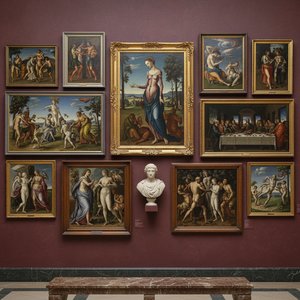
Mannerism's Masters: 10 Artworks That Redefined Renaissance Style | OriginalUniqueArt
Explore 10 defining Mannerism masterpieces – from Pontormo to El Greco. Discover the stories behind these Renaissance paintings, their unique style & symbolism. Find museum-quality art reproductions at OriginalUniqueArt.com and elevate your home decor.

Mannerism: Bridging Renaissance Harmony & Baroque Drama – A Study of Style & Affectation
Explore the fascinating world of Mannerism! Discover its key characteristics, pioneering artists like Pontormo & Bronzino, and its pivotal role in bridging Renaissance harmony to Baroque drama. A comprehensive guide for art enthusiasts.

Mastering the Line: A Comprehensive Expert Guide to Technical Precision and Expressive Depth in Drawing
Elevate your artistic practice with this expert guide to mastering the line. Discover advanced techniques in graphite, charcoal, and contour drawing designed for art students seeking technical precision and expressive depth in their fine art studies.

The Nuances of Graphite: Exploring Emotional Depth & Technical Mastery in Pencil Drawing
Explore the captivating world of graphite drawing! Discover its rich history, master essential techniques like chiaroscuro, and learn how artists evoke emotion through this timeless medium. Expert insights for art enthusiasts.

보티첼리 명작 25선: 르네상스 거장의 아름다움과 이야기 | OriginalUniqueArt
보티첼리 명작 25선을 만나보세요. 르네상스 시대의 아름다움과 신화가 담긴 작품들을 감상하고, 베누스의 탄생부터 봄까지 거장의 예술 세계를 탐험하세요. OriginalUniqueArt에서 고품질 미술 복제 및 인테리어 액자를 만나보실 수 있습니다. 지금 바로 컬렉션을 확인하세요!
