프린트 판매로 전환
 더 보기
더 보기







































 가로 또는 세로 중 어느 한 면이라도 105cm(약 41인치)를 초과하는 작품이나 복제화의 경우, 프레임은 분해된 키트 형태로 배송됩니다. 이는 안전한 배송을 보장하고 운송 중 발생할 수 있는 손상을 방지하기 위함입니다.


A Venetian Rhapsody: Unveiling the Opulence of Veronese’s Venus and Adonis
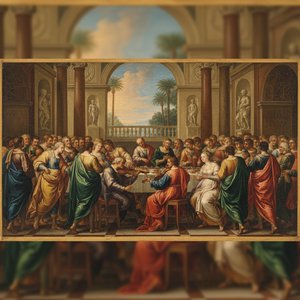
Paolo Veronese's “Venus and Adonis,” painted in 1580, isn’t merely a depiction of a classical myth; it’s an immersive theatrical experience rendered on canvas. Born in Verona and deeply rooted in the artistic traditions of his homeland, Veronese arrived in Venice at the height of its Renaissance power, quickly becoming one of the city's most celebrated artists. This particular painting exemplifies his signature style – a masterful blend of classical grace, Venetian exuberance, and an almost overwhelming sense of spectacle. The sheer scale of the work (212 x 191 cm) immediately commands attention, drawing the viewer into a world brimming with vibrant color, intricate detail, and a palpable sense of drama.
The scene unfolds within a lavishly decorated interior, reminiscent of a grand Venetian palazzo. Veronese meticulously recreates the atmosphere of a bustling court, populated by an array of figures engaged in various activities: musicians playing instruments, dancers swirling in elegant gowns, and elegantly dressed nobles observing the unfolding drama. At the heart of this vibrant tableau stand Venus and Adonis, their interaction forming the central focus. The goddess, depicted with breathtaking sensuality and poised grace, holds a mirror, reflecting her own beauty and subtly drawing attention to the scene’s theatricality. Adonis, lying prone at her feet, is rendered in a strikingly realistic manner, capturing both his youthful vulnerability and the tragic consequences of their love affair.
The Language of Symbolism: Animals, Music, and the Dance of Fate
Beyond the central figures, “Venus and Adonis” is laden with symbolic details. The presence of numerous animals – dogs, horses, birds – isn’t simply decorative; each creature carries a specific meaning within the context of classical mythology. Dogs, often associated with loyalty and fidelity, surround Adonis, perhaps hinting at his unwavering devotion to Venus. Horses represent power and nobility, while the birds add an element of ethereal beauty and fleeting joy. The musicians and dancers further contribute to the painting’s layered symbolism, representing the pleasures of earthly life and the transient nature of human experience.
Music plays a crucial role in the composition, with instruments scattered throughout the scene – lutes, harps, and pipes – suggesting the harmony and pleasure that Venus seeks to provide. The dance itself can be interpreted as a metaphor for the fleeting nature of love and beauty, a captivating spectacle destined to end in sorrow. The mirror held by Venus is particularly significant; it’s not just a reflection of her own image but also a symbol of vanity and the seductive power of appearances.
Technique and Palette: A Masterclass in Venetian Color
Veronese's mastery of technique is immediately apparent. He employs a complex layering of glazes, building up color gradually to achieve an astonishing level of luminosity and depth. His use of *chiaroscuro* – the dramatic contrast between light and shadow – creates a sense of three-dimensionality, bringing the figures and setting to life. The painting’s palette is rich and vibrant, dominated by warm reds, golds, and blues, reflecting the opulent atmosphere of Venice at the time. Veronese's ability to capture the textures of fabrics, skin, and animal fur demonstrates his meticulous attention to detail and his profound understanding of human anatomy.
Notably, Veronese’s technique moved beyond the strict realism favored by some of his contemporaries, embracing a more idealized and theatrical approach. He wasn't striving for photographic accuracy but rather to create an illusion of reality – a world of beauty, pleasure, and dramatic intensity. This willingness to prioritize visual impact over strict adherence to naturalism is a hallmark of Veronese’s distinctive style.
A Legacy of Grandeur: Veronese’s Enduring Appeal
“Venus and Adonis” remains one of Veronese's most celebrated works, admired for its scale, opulence, and masterful execution. It exemplifies the Venetian Renaissance at its finest – a celebration of beauty, pleasure, and human potential. Today, reproductions of this magnificent painting continue to captivate audiences worldwide, offering a glimpse into the artistic genius of Paolo Veronese and the vibrant cultural landscape of 16th-century Venice. Its enduring appeal lies not only in its technical brilliance but also in its ability to transport us to another time and place – a world of dazzling color, captivating drama, and timeless beauty.
질의응답
파올로 베로네제의 "Venus and Adonis"의 색채는 어떤 감정을 불러일으키나요?
파올로 베로네제의 "Venus and Adonis"의 Earthy 색조는 작품 특유의 Romantic 분위기와 조화를 이룹니다. 색채는 작품이 감정을 전달하는 핵심적인 요소 중 하나입니다.
"Venus and Adonis"의 색감은 얼마나 채도가 높나요?
"Venus and Adonis"의 색채 구성은 채도가 Subtle Color입니다.
"Venus and Adonis"의 작가는 누구이며, 어떤 화풍인가요?
"Venus and Adonis"은(는) 파올로 베로네제가 Baroque Painting 양식으로 제작한 작품입니다. 작가와 미술 사조를 통해 해당 작품의 예술적 전통을 확인할 수 있습니다.
이 작품에 대해 더 알아보기
 미리보기
미리보기
 공유하기
공유하기 공유하기
공유하기
 상세 정보
상세 정보 가이드 보기

 다운로드
다운로드
 유사 작품 더 보기
 X-레이
X-레이 슬라이드 쇼 보기
 질의응답
질의응답 통계 정보
통계 정보