프린트 판매로 전환
 더 보기
더 보기







































 가로 또는 세로 중 어느 한 면이라도 105cm(약 41인치)를 초과하는 작품이나 복제화의 경우, 프레임은 분해된 키트 형태로 배송됩니다. 이는 안전한 배송을 보장하고 운송 중 발생할 수 있는 손상을 방지하기 위함입니다.


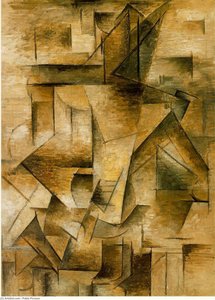
Woman with Book – A Surrealist Portrait of Marie-Thérèse Walter
Pablo Picasso’s “Woman with Book,” completed in 1932, stands as a cornerstone of Surrealism and exemplifies the artist's masterful exploration of form and emotion. More than just a depiction of a woman absorbed in reading, it’s a complex meditation on femininity, solitude, and the elusive nature of perception—themes that resonate powerfully even today.
- Style: Surrealism – Picasso deliberately eschewed traditional representational conventions, prioritizing dreamlike imagery and subconscious associations. This departure from Cubism marks a significant shift in his artistic trajectory.
- Technique: Oil on Canvas – Picasso employed thick impasto brushstrokes, layering pigment onto the canvas to create textured surfaces that convey both physicality and psychological depth. The bold use of color—primarily blues and reds—further enhances the painting’s dramatic impact.
- Composition: Geometric simplification – Picasso reduced the woman's figure and surroundings to essential geometric shapes, emphasizing flatness and creating a sense of spatial compression. This technique aligns with Surrealist principles of destabilizing visual reality.
The historical context surrounding “Woman with Book” is crucial to understanding its significance. Created during Picasso’s affair with Marie-Thérèse Walter—a young dancer who captivated him and became his muse—the painting captures a moment of intimacy and contemplation amidst the turbulent backdrop of their relationship. Walter herself was a subject of considerable fascination for Picasso, representing both sensual beauty and vulnerability.
Symbolism permeates every aspect of the artwork. The woman’s closed eyes suggest introspection and detachment from the external world, mirroring the artist's own preoccupation with psychological states. The book symbolizes knowledge and contemplation—yet its presence is ambiguous, hinting at unanswered questions and unspoken desires. Even the positioning of the chair and clock contributes to the painting’s symbolic resonance, emphasizing time’s passage and the fleeting nature of experience.
Emotionally, “Woman with Book” evokes a sense of melancholy beauty—a poignant portrayal of solitude and longing. Picasso's masterful manipulation of color and form captures not only visual details but also intangible feelings, inviting viewers to contemplate themes of identity, desire, and the complexities of human relationships. It’s a painting that lingers in the mind long after viewing, prompting reflection on the mysteries of consciousness and the enduring power of art.
- Notable Influences: Cubism – Picasso's earlier explorations of Cubism profoundly shaped his artistic vision, informing his approach to spatial representation and compositional structure.
- Related Works: Explore Picasso’s other masterpieces like “The Aubade,” “Claude with a ball,” and “Matador” for further insight into his stylistic evolution and thematic preoccupations.
“Woman with Book” remains an enduring testament to Picasso's genius—a captivating artwork that continues to inspire artists and collectors alike.
질의응답
"Woman with book"은 전체적으로 밝은 편인가요, 아니면 어두운 편인가요?
파블로 피카소의 "Woman with book"의 측정된 수치는 다음과 같습니다: 밝기 어두움, 휘도 부드러운 그림자.
파블로 피카소의 "Woman with book"의 색채는 얼마나 강렬한가요?
"Woman with book"의 색채 강도는 조화로운 균형입니다. 강도는 색상이 얼마나 선명하게 느껴지는지를 나타냅니다.
파블로 피카소의 "Woman with book"의 프린트물로 권장되는 사이즈와 방향은 무엇인가요?
파블로 피카소의 "Woman with book" 작품은 세로형 방향의 대형 크기로 인쇄하는 것을 추천합니다.
이 작품에 대해 더 알아보기
 미리보기
미리보기
 공유하기
공유하기 공유하기
공유하기
 상세 정보
상세 정보 가이드 보기

 다운로드
다운로드
 유사 작품 더 보기
 X-레이
X-레이 슬라이드 쇼 보기
 질의응답
질의응답 통계 정보
통계 정보