프린트 판매로 전환
 상세 보기
상세 보기







































 가로 또는 세로 중 어느 한 면이라도 105cm(약 41인치)를 초과하는 작품이나 복제화의 경우, 프레임은 분해된 키트 형태로 배송됩니다. 이는 안전한 배송을 보장하고 운송 중 발생할 수 있는 손상을 방지하기 위함입니다.


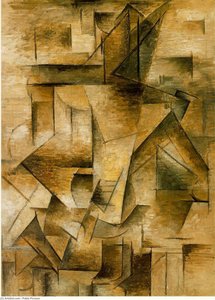
A Surrealist Reverie: Picasso’s “The Studio” – A Window into the Mind
Pablo Picasso's "The Studio," painted in 1928, isn’t merely a depiction of a horse and rider; it’s an intensely personal and profoundly unsettling exploration of memory, loss, and the fragmented nature of experience. Emerging from the fertile ground of Picasso’s post-war period, this work embodies the burgeoning surrealist movement while retaining his uniquely expressive Cubist sensibilities. The painting immediately arrests the viewer with its jarring composition – a horse, rendered in an almost cartoonish exaggeration with a disproportionately large head, dominates the foreground, seemingly poised for action yet utterly detached from any recognizable reality. The rider, positioned awkwardly before the animal, contributes to this sense of disorientation, their posture suggesting both vulnerability and a strange, unsettling control.
Decoding the Composition: Cubism Meets Dreamscape
Picasso’s masterful manipulation of perspective is central to “The Studio’s” power. He employs elements of Analytical Cubism, breaking down forms into geometric shapes and presenting multiple viewpoints simultaneously. The horse isn't depicted as a single, unified entity; instead, we see fragments of its body – sharp angles, overlapping planes – suggesting an attempt to capture its essence through deconstruction. This technique, combined with the flattened space and distorted proportions, creates a dreamlike atmosphere, pulling the viewer into a realm where logic yields to intuition. The placement of the secondary figures—a shadowy form at the top left and a more defined figure towards the bottom right—further destabilizes our perception, adding layers of mystery and inviting speculation about their relationship to the central scene.
- Color Palette: A restrained yet evocative palette of reds, yellows, and greens dominates the canvas. The vibrant reds draw attention to the horse’s head and rider, while the cooler greens and yellows contribute to the painting's overall sense of unease and psychological depth.
- Brushwork: Picasso’s brushstrokes are deliberately loose and expressive, reflecting his emotional state during this period. He utilizes a technique known as “alla prima,” working directly onto the canvas without extensive underpainting, resulting in a dynamic and immediate quality.
Symbolism and Personal Resonance – Echoes of Grief
Art historians often interpret "The Studio" through the lens of Picasso’s personal life. Painted after the tragic loss of his young daughter, Leonora, in 1925, the painting is widely believed to be a symbolic representation of grief and the enduring pain of absence. The horse, traditionally associated with strength and nobility, here embodies vulnerability and perhaps even a sense of mourning. The rider’s posture—a blend of command and despair—mirrors Picasso's own conflicted feelings towards his loss. Some scholars suggest the shadowy figure represents Leonora herself, lost within the confines of memory and imagination.
A Legacy of Innovation: Contextualizing “The Studio”
1928 marked a pivotal year for Picasso, both artistically and personally. He was deeply involved in the Surrealist movement, yet he remained fiercely independent, refusing to fully embrace its tenets. "The Studio" exemplifies this complex relationship – it’s undeniably influenced by surrealist ideas of dreamlike imagery and psychological exploration, but it retains Picasso's distinctive Cubist vocabulary and his unwavering commitment to personal expression. The painting stands as a testament to his ability to synthesize diverse influences into a uniquely powerful and emotionally resonant work. It’s a poignant reminder that even amidst the revolutionary currents of modern art, Picasso continued to grapple with deeply human themes – loss, memory, and the enduring search for meaning in a world increasingly defined by fragmentation.
OriginalUniqueArt offers meticulously crafted hand-painted reproductions of “The Studio,” allowing you to experience this iconic masterpiece in stunning detail and quality. Each reproduction is created using traditional oil painting techniques, ensuring an authentic representation of Picasso’s vision. Bring the evocative power of "The Studio" into your home or office – a captivating piece that speaks volumes about the complexities of human emotion and the genius of Pablo Picasso.
질의응답
증강 현실(AR)을 사용하여 제 방에 파블로 피카소의 "The Studio"를 배치해 볼 수 있나요?
"The Studio"은(는) 증강 현실 미리보기를 제공합니다. 작품의 AR 미리보기 페이지를 통해 호환 가능한 기기에서 여러분의 공간에 배치된 작품을 확인해 보세요.
파블로 피카소의 "The Studio"에서 예술 사조와 시대상은 어떻게 맞닿아 있나요?
파블로 피카소의 "The Studio"에서는 Surrealist Expressionism 사조와 근대 미술 시대가 만납니다.
파블로 피카소의 다른 이름이나 별칭에는 무엇이 있나요?
파블로 피카소은(는) 파블로 루이스 피카소라는 다른 이름으로도 알려져 있습니다.
More about this painting
 실제 크기로 보기
 보내기
보내기 공유하기
공유하기
 상세 보기
상세 보기 가이드 보기

 이미지 다운로드
 유사 작품 더 보기
 X-레이
X-레이 슬라이드 쇼 보기
 Q&A
Q&A 통계 정보
통계 정보