프린트 판매로 전환
 상세 보기
상세 보기







































 가로 또는 세로 중 어느 한 면이라도 105cm(약 41인치)를 초과하는 작품이나 복제화의 경우, 프레임은 분해된 키트 형태로 배송됩니다. 이는 안전한 배송을 보장하고 운송 중 발생할 수 있는 손상을 방지하기 위함입니다.


Knight, Page and Monk: A Fragmented Vision of Medieval Ideals
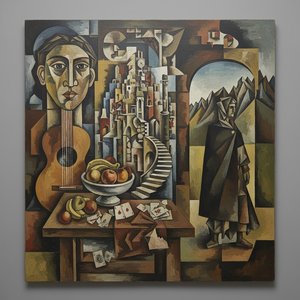
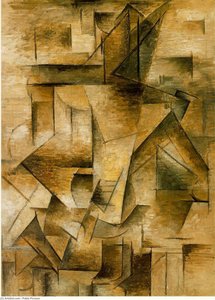
Pablo Picasso’s “Knight, Page and Monk” stands as a cornerstone of Cubist art—a daring departure from traditional representation that continues to fascinate viewers today. Painted sometime between 1946 and 1947, this monochrome masterpiece embodies the spirit of intellectual experimentation characteristic of Picasso's later years, reflecting his profound engagement with philosophical concepts and challenging conventional notions of perspective.
- Subject Matter: The painting depicts a knight, accompanied by a page and a monk, positioned within a stylized architectural space. These figures represent archetypal roles—power, youth, and piety—but Picasso dismantles their solidity through geometric abstraction, presenting them as fractured planes rather than recognizable individuals.
- Style & Technique: Picasso’s masterful application of oil paint on canvas exemplifies the Cubist method. He meticulously breaks down objects into constituent shapes – triangles, squares, rectangles – layering these forms to create a composite image that simultaneously reveals multiple viewpoints. The deliberate flattening of space contributes to an unsettling feeling of disorientation, mirroring the artist's own exploration of existential themes.
- Historical Context: Created during Picasso’s prolific period following World War II, “Knight, Page and Monk” speaks to anxieties about societal upheaval and the questioning of established values. The artwork aligns with Cubism’s broader critique of Western artistic conventions and its embrace of abstraction as a tool for conveying complex ideas.
- Symbolism: The inclusion of skulls in the lower left corner serves as a stark reminder of mortality—a recurring motif throughout Picasso's oeuvre—and underscores the painting’s preoccupation with themes of death and decay alongside notions of honor and faith. Similarly, the bird perched atop the building symbolizes aspiration and freedom, juxtaposed against the rigid geometry of the composition.
- Emotional Impact: “Knight, Page and Monk” evokes a palpable sense of unease and intellectual stimulation. Picasso’s masterful manipulation of light and shadow enhances the dramatic effect, emphasizing the geometric forms while simultaneously conveying an underlying melancholy. It compels viewers to confront questions about identity, perception, and the human condition—a testament to Picasso's enduring ability to provoke contemplation and inspire artistic dialogue.
A reproduction of this iconic artwork offers a captivating glimpse into Picasso’s groundbreaking vision—allowing collectors and interior designers alike to appreciate not only its aesthetic beauty but also its intellectual depth.
질의응답
파블로 피카소의 "Knight, Page and Monk"은 어떤 소재와 분위기를 결합하고 있나요?
파블로 피카소의 "Knight, Page and Monk"은(는) medieval figures, fragmentation, geometric shapes, skull symbolism, darkness, perspective distortion, picasso style와(과) Dramatic 분위기가 어우러진 작품입니다.
"Knight, Page and Monk"의 Cubist에는 어떤 국가적 배경이 담겨 있나요?
"Knight, Page and Monk"은 스페인 출신의 파블로 피카소가 Cubist 운동의 흐름 속에서 제작한 작품입니다. 작가의 출신 배경은 이 작품을 스페인 예술가들이 선보인 Cubist 양식과 연결해 줍니다.
"Knight, Page and Monk" 작품의 권장 인쇄 방식은 무엇인가요 - 크기와 방향은 어떻게 되나요?
"Knight, Page and Monk" 작품의 권장 인쇄 설정은 Large 크기와 Landscape 방향입니다.
More about this painting
 실제 크기로 보기
 보내기
보내기 공유하기
공유하기
 상세 보기
상세 보기 가이드 보기

 이미지 다운로드
 유사 작품 더 보기
 X-레이
X-레이 슬라이드 쇼 보기
 Q&A
Q&A 통계 정보
통계 정보