

 실제 크기로 보기
 보내기
보내기 공유하기
공유하기
 상세 보기
상세 보기 가이드 보기

 이미지 다운로드
 유사 작품 더 보기
 X-레이
X-레이 슬라이드 쇼 보기
 통계 정보
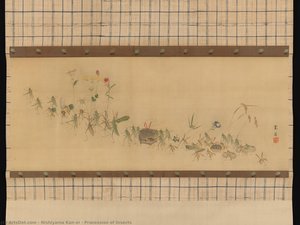
통계 정보Procession of Insects
 801
801 33.0cm x 82.0cm
 상세 보기
상세 보기
핸드메이드 유화 복제화
작가가 직접 캔버스에 손으로 그린 유화 작품으로, 원하는 크기와 액자로 맞춤 제작해 드립니다. ( 프린트 판매로 전환 디지털 이미지 판매 채널로 전환)




































작품의 원본 비율을 그대로 유지하는 프리셋 사이즈 중에서 선택해 보세요.

특정 프레임이나 공간에 맞춰 원하는 크기를 직접 입력하실 수 있습니다. 선택하신 크기가 원본 이미지의 비율과 일치하지 않을 경우, 작품을 자르거나 추가적인 수작업 요소를 더해 그림을 확장하여 제작합니다. 제작 시작 전, 최종 확인을 위해 디지털 목업을 보내드립니다.
화면상의 미리 보기는 실제 크롭(자르기)이나 확장된 상태를 완벽히 반영하지 않을 수 있습니다. 최종 구도는 오직 목업을 통해서만 정확하게 확인하실 수 있습니다.
맞춤 크기 제작도 가능하지만, 원본의 비율을 그대로 유지하기 위해서는 미리 정의된 목록에서 크기를 선택하시는 것을 권장합니다.
주문 완료 후 OriginalUniqueArt.com 팀에서 상세 안내를 위해 고객님께 이메일을 보내드리며, 미리보기 시안을 함께 제공해 드립니다.


 유리 옵션은 110cm 미만 크기에서만 선택 가능합니다.

Procession of Insects
재현 매체
복제본 규격
-


총 결제 금액
$ 300
작가 소개
The Legacy of Nishiyama Kan'ei: A Visionary of the Edo Landscape
Born in the vibrant cultural hub of Osaka in 1834, Nishiyama Kan'ei emerged as a profound voice within the landscape painting traditions of Edo Japan. His artistic identity was inextricably linked to his lineage, having been shaped by the rigorous discipline of his father, the esteemed painter Nishiyama Hoen. This early immersion into the world of classical aesthetics provided more than just technical instruction; it offered Kan'erb a deep-seated reverence for the natural world. Through his father’s guidance, Kan'ei mastered the delicate balance between precise observation and poetic interpretation, a skill that would become the hallmark of his mature work. His ability to translate the fleeting whispers of nature into enduring visual narratives allowed him to occupy a unique space in the Japanese art canon, bridging the gap between meticulous realism and ethereal beauty.
The heart of Kan'ei’s contribution to Japanese art lies in his mastery of kachōga, a genre dedicated to the exquisite depiction of flowers, birds, and insects. While many artists of his era sought grandeur or historical epicism, Kan'ei found profound meaning in the ephemeral. His work elevated the mundane aspects of the natural landscape into subjects of high art, capturing the quiet dignity of seasonal transitions. In his hands, a simple insect procession or the subtle change in a leaf’s hue became a meditation on the passage of time and the interconnectedness of all living things. This focus on the small, often overlooked details of the environment allowed him to create works that felt both intimately personal and universally resonant.
Technique and the Narrative of the Everyday
Kan'ei’s technical prowess was characterized by an extraordinary command of brushwork and tonal gradation. He possessed a rare ability to render textures—the translucency of a dragonfly's wing, the rugged bark of an ancient tree, or the soft mist clinging to a distant mountain—with such sensitivity that the viewer could almost feel the atmosphere of the scene. His landscapes were never static; they were imbued with a subtle sense of movement and narrative. By integrating scenes of human activity—farmers tending crops, fishermen navigating rivers, or artisans at their stations—into his naturalistic settings, he created a harmonious tapestry of life where humanity and nature exist in a state of graceful equilibrium.
This integration of the human element served to ground his more ethereal compositions, providing a sense of scale and relatability. The procession of insects, for instance, serves as a brilliant example of how he could take a biological phenomenon and infuse it with a sense of whimsical, organized life, mirroring the structured yet organic rhythms of human society. His use of color was equally sophisticated, employing subtle palettes that respected the natural hues of his subjects while utilizing light to create depth and emotional resonance.
Historical Significance and Artistic Enduring Spirit
As a figure operating during the twilight of the Edo period, Kan'ei’s work captures a world on the cusp of profound transformation. His commitment to the traditional values of kachōga and landscape painting preserved a specific Japanese aesthetic sensibility that celebrated the quietude and seasonal rhythms of the era. Even as Japan began to encounter the sweeping influences of Western modernity, Kan'ei’s oeuvre remained a steadfast testament to the power of observation and the beauty found in the transient. His legacy is not merely found in the technical perfection of his paintings, but in his ability to evoke a sense of peace and contemplation that transcends the century in which he lived.
Today, the works of Nishiyama Kan'ei continue to inspire awe for their meticulous detail and emotional depth. He remains a master of the tranquil landscape, an artist who taught us that within the smallest movement of a wing or the softest shadow on a hill, there lies an entire universe of meaning waiting to be discovered.
nishiyama kan'ei
1834 - 1897 , Japan
작가 정보 요약
- Artistic Movement Or Style: Kachoga Painting
- Artists Or Movements Influenced By This Artist: Ukiyo-e Inspired
- Artists Who Influenced This Artist: Nishiyama Hoen
- Date Of Birth: Osaka, Japan (1834)
- Full Name: Nishiyama Kan'ei
- Nationality: Japanese
- Notable Artworks: ['Procession of Insects']
- Place Of Birth: Osaka