 유화 원작 구매
 Conscience, Judas에 관한 모든 것







































 가로 또는 세로 중 어느 한 면이라도 105cm(약 41인치)를 초과하는 작품이나 복제화의 경우, 프레임은 분해된 키트 형태로 배송됩니다. 이는 안전한 배송을 보장하고 운송 중 발생할 수 있는 손상을 방지하기 위함입니다.


The Depiction of Conscience, Judas
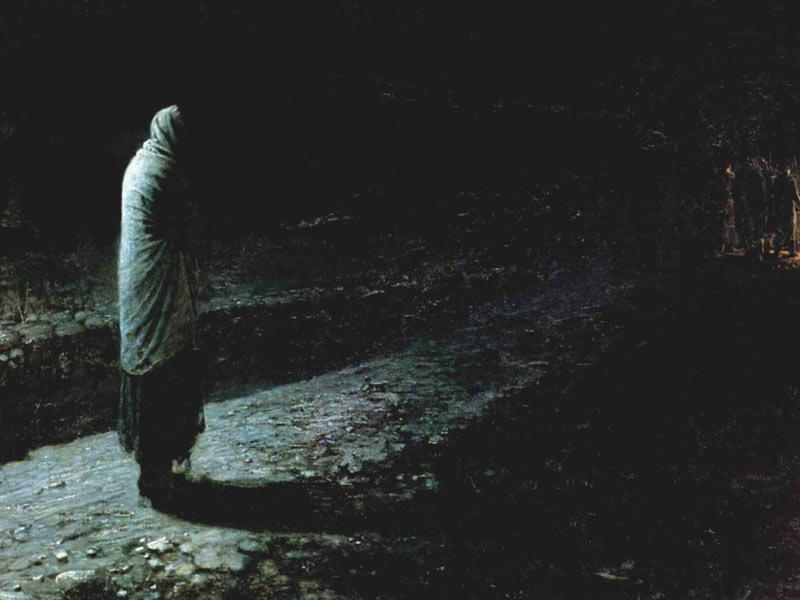
In "Conscience, Judas" by Nikolai Ge, a heavy silence hangs over the scene. Painted about 1891, the work captures a moment of profound isolation. The figure of Judas appears alone, caught in the immediate aftermath of his betrayal of Jesus. He does not move with purpose; instead, his entire being seems to collapse under the weight of his own actions. The darkness surrounding him feels thick, pressing in on a man who has lost his way.
His posture speaks of a soul in turmoil. Hunched over and looking downward, Judas carries a physical burden that mirrors his internal state. This downward gaze and the curve of his spine suggest a deep sense of remorse or perhaps a total surrender to despair. He is a man retreating into himself, seeking refuge in a shadow that offers no comfort. The solitude of the figure emphasizes the loneliness that follows such a monumental choice.
The atmosphere is thick with the scent of regret. Every line of his body conveys the struggle of a conscience that can no longer be ignored. He exists in a state of quiet, agonizing introspection, where the only reality is the darkness of his own making. The scene holds him in a frozen moment of grief, where the weight of what has been done meets the crushing reality of what must now be endured.
Composition and Visual Elements
The composition centers on a solitary figure, a man shrouded in deep shadow. He sits slightly off-center to the left, a placement that creates a subtle sense of imbalance and unease within the frame. The background offers no refuge, as it remains largely obscured by a heavy, enveloping darkness. A path or ground plane stretches out from his feet, receding into the distance and suggesting a movement toward an unknown fate.
Light enters the scene from a single source, appearing to descend from above or from slightly to the right. This illumination catches only fragments of the figure and the ground beneath him, leaving much of the surroundings to the gloom. This dramatic chiaroscuro effect pulls the viewer's focus directly into the emotional weight of the moment, highlighting the isolation of the subject against the void.
Color, Texture and Style
The scene is swallowed by a heavy, somber palette where darkness reigns. Deep blacks and shadowy grays press in from the edges, meeting muted greens that suggest a landscape lost to the gloom. Light struggles to pierce this shroud, catching only the pale edges of clothing and the uneven ground, creating a sharp contrast that pulls the eye toward the center of the isolation. This interplay of light and shadow creates a sense of profound weight, as if the very air is thick with the gravity of the moment.
Texture emerges through the subtle movement of brushstrokes and the shifting tonal variations within the dark expanses. One can sense the rough, uneven quality of the earth beneath the figure's feet and the heavy, weighted drape of the fabric clinging to the body. The human form itself is rendered with a simplified approach, focusing on the starkness of the silhouette rather than the fine details of anatomy. This choice emphasizes the shape of the man against the void, turning the figure into a vessel for the surrounding atmosphere.
The style moves between the precision of realism and the emotional intensity of Romanticism. It avoids the clinical for the sake of mood, prioritizing the internal state of the subject over a literal transcription of nature. The atmosphere feels thick and palpable, driven by the dramatic chiaroscuro that defines the space. Every shadow seems to hold a secret, and every highlight feels like a fleeting moment of clarity in a world of encroaching darkness.
Technique and Artistic Materials
The artist works with oil paints on a canvas that measures 149 x 210 cm. Through a careful layering of these pigments, a sense of depth emerges from the shadows. This method allows for subtle tonal variations that define the heavy drape of the figure's clothing and the rough texture of the ground. The paint builds up in layers, creating a physical presence that anchors the solitary figure within the gloom.
Visible brushstrokes move across the surface, though they remain restrained rather than prominent. They trace the contours of the landscape and the silhouette of the man without disrupting the overall smoothness of the composition. This controlled application of paint ensures that the focus remains on the atmospheric weight of the scene. The interplay of light and dark relies heavily on these precise applications of oil, which capture the dim, singular light source casting its glow across the scene.
질의응답
Conscience, Judas은(는) 수작업으로 그린 작품인가요, 아니면 프린트된 작품인가요?
수작업 제작: 숙련된 화가가 Conscience, Judas을(를) 리넨 캔버스 위에 유화로 재현합니다.
Conscience, Judas의 사이즈는 어떤 것을 선택해야 하나요?
원작의 크기는 149 x 210 cm입니다. 사이즈는 27.4 x 36.5 cm (₩269539)부터 182.4 x 243.1 cm (₩2210220)까지 있으며, 이 페이지의 표에 주요 단계별 가격이 안내되어 있습니다.
배송은 얼마나 걸리나요?
배송은 전 세계 무료 특송으로 4~5주가 소요되며, 본 페이지에서 긴급 제작 옵션을 선택하실 수 있습니다. 제품은 조건 없이 100일 이내에 반품하여 전액 환불받으실 수 있습니다.
니콜라이 게 작가는 Conscience, Judas 작품에 어떤 재료를 사용했나요?
Oil On Canvas
 미리보기

 공유하기
 공유하기
 상세 정보
 학습용 요약본


 다운로드
 유사 작품 더 보기
 X-레이
 슬라이드 쇼 보기
 질의응답

 통계 정보


