
 미리보기
미리보기
 공유하기
공유하기 공유하기
공유하기
 상세 정보
상세 정보 가이드 보기

 다운로드
다운로드
 유사 작품 더 보기
 X-레이
X-레이 슬라이드 쇼 보기
 질의응답
질의응답 통계 정보
통계 정보Bear hunting

- 107.0 x 57.0 cm


 더 보기
더 보기
지클레 / 아트 프린트
빠른 제작과 다양한 마감 옵션을 제공하는 박물관 수준의 지클레이 및 캔버스 프린트. ( 수작업 채색 복제본 주문하기 디지털 이미지로 전환)




P118B ₩10

P118H ₩10

P118W ₩10

P438Z ₩10

P508JH ₩12

P508YH ₩12

P805H ₩10

P805Z ₩10

P919BZ ₩10

P919G ₩10

P919XJ ₩10

P959ZH ₩10

P968JZ ₩12

W106C ₩8

W218G ₩10

W218JH ₩8

W218Y ₩10

W307PJ ₩10

W316G ₩10

W316PJ ₩8

W316Y ₩10

W398PJ ₩8

W4111J ₩10

W500HY ₩15

W500JH ₩15

W692G ₩12

W849H ₩8

W940BG ₩15

W953PJ ₩8




작품의 원본 비율을 그대로 유지하는 프리셋 사이즈 중에서 선택해 보세요.

액자나 벽면 크기에 맞춰 필요한 가로와 세로 길이를 입력해 주세요. 프린트는 원본 이미지보다 크게 제작할 수 없으며 오직 자르는 것만 가능하므로, 비율이 다른 사이즈를 선택할 경우 이미지의 일부가 잘려 나갈 수 있습니다. 인쇄 작업에 들어가기 전, 최종 확인을 위해 디지털 목업을 보내드립니다. 이 페이지에 표시된 이미지는 실제 잘리는 영역을 나타내지 않으며, 오직 목업을 통해서만 정확한 확인이 가능합니다.


 유리 옵션은 110cm 미만 크기에서만 선택 가능합니다.

Bear hunting
지클레 / 아트 프린트
복제본 크기
-


최종 결제 금액
₩ 108774
A Savage Symphony in Oilcloth: Niko Pirosmani’s “Bear Hunting”
Niko Pirosmani, a largely forgotten titan of Georgian art, possessed an extraordinary ability to distill the essence of rural life and primal emotion onto humble oilcloth canvases. His work, often dismissed as naive or primitive during his lifetime, now stands as a testament to raw honesty and a uniquely captivating vision. “Bear Hunting,” painted in the 1890s, is arguably Pirosmani’s most dramatic and compelling piece – a visceral depiction of a hunting expedition that transcends mere representation, plunging the viewer directly into the heart of Georgian wilderness and the brutal beauty of its traditions.
The scene unfolds within a dense, almost claustrophobic forest. A group of French chasseurs, clad in meticulously rendered uniforms of dark blue and brown, pursue a colossal bison – an animal rendered with astonishing power and scale. The composition is deliberately chaotic; figures are crammed together, limbs tangle, and the bison dominates the frame, its immense form dwarfing the hunters below. Pirosmani eschews traditional perspective, favoring instead a flattened, frontal approach that intensifies the drama and immediacy of the action. Lines are bold and directional, guiding the eye relentlessly across the canvas, mirroring the hunters’ desperate pursuit.
The Primitivist Palette: Color and Texture
Pirosmani's distinctive style is immediately recognizable through his masterful use of color and texture. He employs a restricted palette dominated by deep greens, earthy browns, and muted blues – colors that evoke the dampness and shadow of the forest floor. These somber tones are punctuated by flashes of brighter hues—the crimson of blood (implied), the ochre of the bison’s hide, and the occasional splash of yellow or white to highlight key figures. Crucially, Pirosmani worked on oilcloth, a readily available and inexpensive material in Georgia, which lends his paintings a unique tactile quality. The thick, impasto brushstrokes are visible throughout the composition, creating a palpable sense of physicality – you can almost feel the roughness of the bark beneath your fingers and the weight of the hunters’ clothing.
The technique itself is deliberately rough-hewn, reflecting Pirosmani's lack of formal training. He eschewed meticulous detail in favor of capturing the *feeling* of the scene – the tension, the urgency, the raw energy of the hunt. This approach aligns perfectly with the principles of Primitivism, a movement that sought to strip away academic conventions and return to a more direct, emotionally charged form of expression.
Symbolism of the Hunt: Power, Tradition, and Mortality
“Bear Hunting” is far more than just a depiction of a hunting scene; it’s laden with symbolic meaning. The hunt itself represents power, control, and the enduring traditions of Georgian rural life. For centuries, hunting had been a vital part of the region's economy and culture, providing sustenance and reinforcing social hierarchies. However, Pirosmani doesn’t glorify this activity. Instead, he presents it with a stark realism that acknowledges its inherent violence and potential for destruction.
The massive bison, a symbol of strength and wildness, embodies the forces of nature that the hunters seek to subdue. The implied bloodshed – hinted at through subtle color choices—underscores the cost of this conquest. Furthermore, Pirosmani’s unflinching portrayal of human figures engaged in such a brutal act raises questions about humanity's relationship with the natural world and the consequences of unchecked ambition. The painting subtly evokes themes of mortality and the fleeting nature of life, mirroring the precariousness of both hunter and hunted.
A Window into Georgian Soul: Pirosmani’s Legacy
Niko Pirosmani's work offers a rare glimpse into the soul of Georgia in the late 19th century. His paintings are not merely aesthetically pleasing; they are windows into a world of hardship, resilience, and profound connection to the land. Rediscovered in the mid-20th century, Pirosmani’s art has since gained international recognition as a cornerstone of Georgian primitivism and a powerful example of outsider art. Reproductions of “Bear Hunting” – available through OriginalUniqueArt – allow us to experience this extraordinary vision firsthand, inviting us to contemplate the enduring power of raw emotion and the timeless beauty of the Georgian landscape.
질의응답
니코 피로스마니의 "Bear hunting"의 재료와 크기는 어떻게 되나요?
"Bear hunting"은(는) Oil On Canvas 기법으로 제작되었으며, 원작의 크기는 107 x 57 cm입니다.
제 방에 "Bear hunting"을(를) 어떤 사이즈로 프린트하는 것이 좋을까요?
Living Room 공간에는 니코 피로스마니의 "Bear hunting" 작품을 Large 크기로 인쇄하시는 것을 추천합니다.
"Bear hunting"은(는) 니코 피로스마니의 다른 작품들과 어떤 공통점을 지니고 있나요?
"Bear hunting"은(는) 니코 피로스마니의 다른 작품들과 마찬가지로 Primitivism 양식과 더불어 작가의 반복되는 주제인 european realism influence, georgian rural life depiction, power & nature conflict, hunter's instincts shown, pirosmani's primitive style, iconic georgian portraiture, early 20th century vision, unique artistic voice를 공유합니다.
작가 정보
격동의 삶과 순수한 시선, 니코 피로스마니
1862년 조지아 카케티 지방의 작은 마을 미르자아니에서 태어난 니코 피로스마니는 격동적인 시대와 가혹한 현실 속에서도 자신만의 독특한 예술 세계를 구축한 화가입니다. 그의 어린 시절은 불행으로 점철되었습니다. 농부였던 부모님을 여의고 두 언니의 보살핌 아래 자랐지만, 삶은 그에게 쉽게 관대하지 않았습니다. 정규 교육을 받지 못했지만, 그는 자연과 사람들에 대한 깊은 애정을 품고 살았습니다. 피로스마니는 일찍부터 그림에 재능을 보였지만, 화가의 길을 걷는 것은 쉽지 않았습니다. 생계를 위해 다양한 직업을 전전하며 힘겹게 살아갔지만, 그의 예술에 대한 열정은 꺼지지 않았습니다.소박함 속에 빛나는 프루미티비즘
피로스마니의 그림은 흔히 ‘프루미티비즘’으로 분류됩니다. 이는 학문적인 기교나 정형화된 표현 방식을 따르지 않고, 순수하고 직관적인 시선으로 세상을 담아내는 예술 경향을 의미합니다. 그의 작품들은 화려하거나 복잡하지 않습니다. 오히려 소박하고 단순한 형태와 색채를 통해 강렬한 인상을 남깁니다. 특히 그는 기름천(oilcloth)이라는 독특한 재료를 주로 사용했는데, 이는 당시 가난했던 그의 처지를 반영하는 동시에, 그림에 거친 질감과 독특한 분위기를 부여했습니다. 피로스마니는 일상생활의 풍경, 농촌 사람들의 모습, 그리고 전통적인 결혼식 장면 등을 즐겨 그렸습니다. 그의 그림 속 인물들은 정면을 응시하며 관람객에게 직접적으로 다가오는 듯한 느낌을 줍니다. 이러한 표현 방식은 당시 유럽 미술계에서 유행하던 사실주의나 인상주의와는 확연히 다른 독창적인 스타일로 평가받고 있습니다.조지아 문화의 정수를 담은 작품들
피로스마니의 대표작으로는 무샤와 포도주 가죽통, 조지아 결혼식, 그리고 러시아 시인 미하일 레-단튜의 초상화 등이 있습니다. 무샤와 포도주 가죽통은 조지아 문화의 상징적인 이미지를 담고 있으며, 그의 뛰어난 관찰력과 표현력을 보여주는 작품입니다. 조지아 결혼식은 전통적인 조지아 결혼식의 활기 넘치는 분위기를 생생하게 묘사하고 있습니다. 특히 그는 인물들의 표정과 동작을 과장되게 표현하여 그림에 역동성을 부여했습니다. 미하일 레-단튜의 초상화는 러시아 시인 키릴 즈다네비치와 그의 동생 일리아 즈다네비치의 적극적인 후원을 받아 탄생한 작품입니다. 이 초상화를 통해 피로스마니는 예술계에 이름을 알리게 되었고, 이후 다양한 전시회에 참여할 수 있게 되었습니다.예술적 인정과 역사적 의미
피로스마니의 삶은 가난과 고독으로 점철되었지만, 그의 작품들은 사후에 큰 주목을 받았습니다. 1918년 조지아 화가들의 첫 번째 대규모 전시회에서 그의 작품들이 소개되면서 그는 비로소 예술가로서 인정받기 시작했습니다. 오늘날 그의 그림은 조지아 미술관과 시그나기의 역사-민족학 박물관에 소장되어 있으며, 매년 수십만 명의 관람객이 방문하고 있습니다. 피로스마니는 단순한 화가를 넘어 조지아 문화와 역사를 대표하는 상징적인 존재가 되었습니다. 그의 작품들은 조지아 사람들의 삶과 문화를 담고 있으며, 그들의 정체성을 형성하는 데 중요한 역할을 했습니다. 또한 그는 학문적인 교육을 받지 않고도 자신만의 독창적인 예술 세계를 구축했다는 점에서 많은 예술가들에게 영감을 주고 있습니다. 피로스마니의 이야기는 예술에 대한 열정과 끊임없는 노력으로 불가능을 극복하고 꿈을 이룰 수 있다는 희망을 보여주는 감동적인 사례입니다.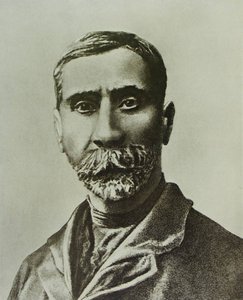
니코 피로스마니
1862 - 1918 , 조지아
작가 정보 요약
- 국적: 조지아인
- 사망일: 1918년 4월 9일
- 영향을 준 예술가: ['블라디미르 라도 구디아슈빌리']
- 예술 사조: 원시주의 미술
- 이름: 니콜라이 아슬라노비치 피로스마나슈빌리
- 주요 작품:
- 무샤 와인병과 함께
- 조지아 결혼식
- 즈다네비치 초상화
- 출생일: 1862년 5월 5일
- 출생지: 미르자아니, 카케티 지방, 조지아
관련 콘텐츠

The Enduring Legacy of Oil on Canvas: Technique, History & Aesthetic Impact
Explore the rich history & techniques of oil painting – from Renaissance masters to Impressionism. Discover pigments, layering methods, and why this timeless medium endures. Expert insights for artists & art enthusiasts.

The Enduring Power of Painting: A Historical & Contemporary Exploration of Form and Emotion
Explore the rich history & enduring techniques of oil painting with OriginalUniqueArt. Discover masterpieces, learn about art collecting, and find authentic handmade reproductions crafted by skilled artists.

Oil on Canvas: A Historical & Technical Exploration of a Timeless Artistic Medium
Explore the rich history & enduring techniques of oil painting on canvas. Discover the science behind its longevity, conservation practices, and contemporary relevance. Expert insights for art enthusiasts.
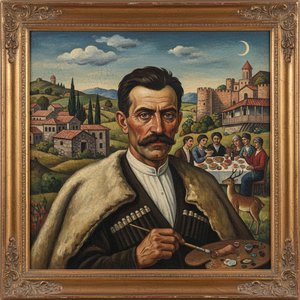
Niko Pirosmani: A Georgian Visionary – Life, Legacy, and the Poetics of Outsider Art
Discover the captivating life & art of Niko Pirosmani, Georgia’s celebrated primitivist painter. Explore his unique oilcloth paintings, lasting influence, and enduring legacy with OriginalUniqueArt.

캔버스의 유산: 기법, 역사 그리고 현대적 실천
유화의 역사와 기법부터 현대적 실천까지, 캔버스의 모든 것을 심도 있게 다룹니다. 주요 화가들의 작품 분석과 유화 제작 과정을 상세히 안내하며, 아트 컬렉션을 위한 최고의 정보를 제공합니다.
