
 미리보기
미리보기
 프린트 구매
 공유하기
공유하기 공유하기
공유하기
 상세 정보
상세 정보

 다운로드
다운로드
 유사 작품
유사 작품 X-레이
X-레이 슬라이드 쇼
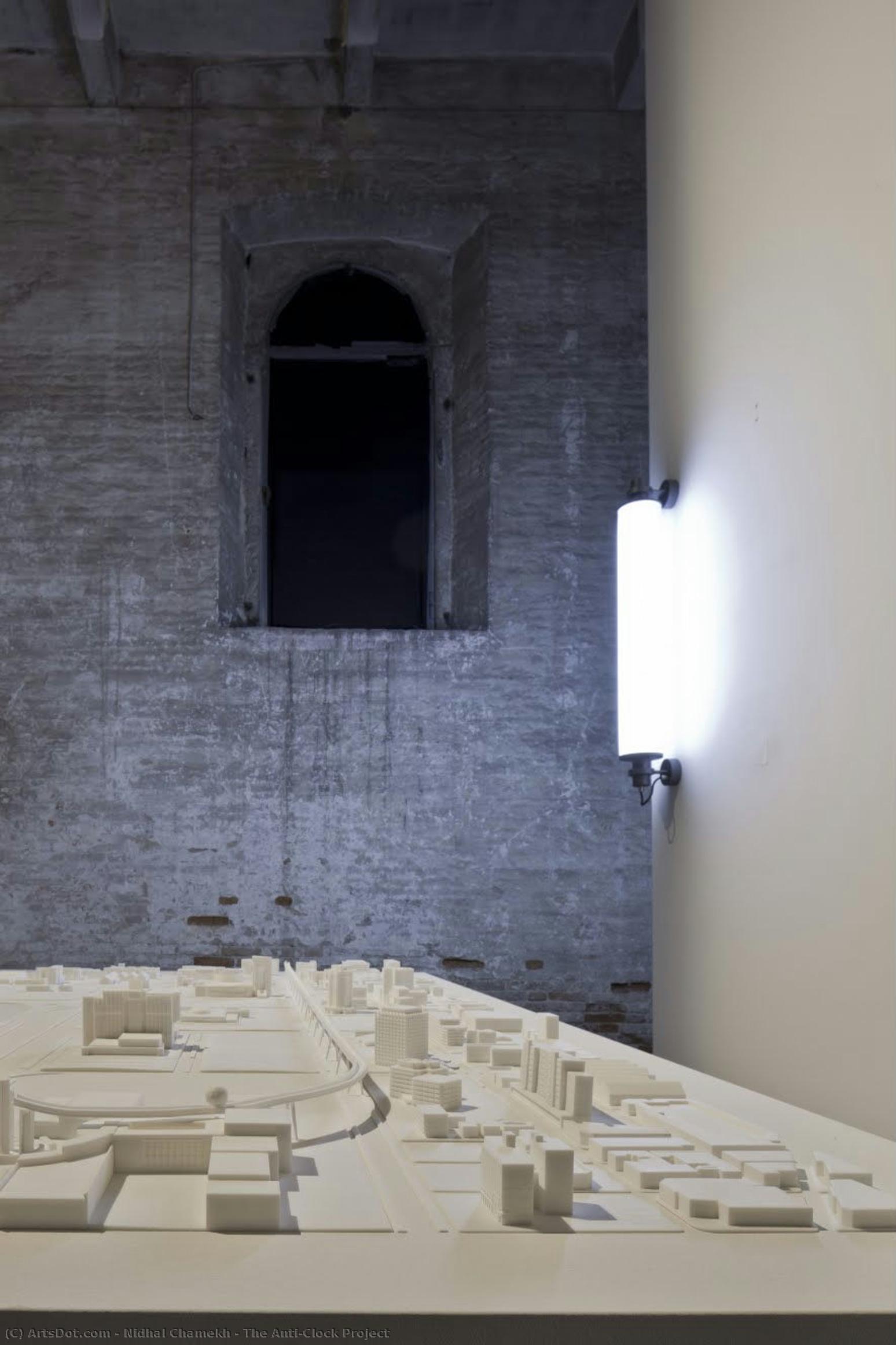
The Anti-Clock Project


 더 보기
더 보기




P118B $10

P118H $10

P118W $10

P438Z $10

P508JH $12

P508YH $12

P805H $10

P805Z $10

P919BZ $10

P919G $10

P919XJ $10

P959ZH $10

P968JZ $12

W106C $8

W218G $10

W218JH $8

W218Y $10

W307PJ $10

W316G $10

W316PJ $8

W316Y $10

W398PJ $8

W4111J $10

W500HY $15

W500JH $15

W692G $12

W849H $8

W940BG $15

W953PJ $8




작품의 원본 비율을 유지하는 미리 설정된 크기 중에서 선택하세요.

특정 프레임이나 공간에 맞도록 직접 크기를 입력할 수 있습니다. 선택하신 크기가 원본 이미지의 비율과 일치하지 않는 경우, 작품을 자르거나 추가적인 손으로 그린 요소를 사용하여 그림을 확장합니다. 제작 시작 전 승인을 위해 디지털 목업을 보내드립니다.
화면 미리 보기는 실제 자르기 또는 확장을 반영하지 않습니다. 최종 구성은 목업을 통해서만 정확하게 확인하실 수 있습니다.
맞춤 크기 제작도 가능하지만, 원본 비율을 유지하기 위해 사전 정의된 목록에서 크기를 선택하시는 것을 권장합니다.
주문 후 OriginalUniqueArt.com 팀에서 상세 안내를 위해 고객님께 이메일을 보내드리며, 미리보기 시안을 제공해 드립니다.


 유리 옵션은 110cm 미만 크기에서만 선택 가능합니다.

The Anti-Clock Project
재현 기법
복제본 크기
-


최종 결제 금액
$ 300
작품 상세 설명
The Weight of Monuments: Nidhal Chamekh’s “The Anti-Clock Project”
Nidhal Chamekh's "The Anti-Clock Project," created in 2015, isn’t merely a painting; it’s an unsettling meditation on memory, resistance, and the enduring scars of political upheaval. Emerging from a lineage deeply rooted in Tunisian activism – his family’s history intertwined with prominent figures challenging established power structures – Chamekh channels this legacy into a powerfully evocative visual language. The work immediately commands attention, not through overt grandeur, but through a carefully constructed tension between scale and detail, between the monumental and the intimately rendered.
At its core, “The Anti-Clock Project” presents a stark tableau: a pristine white table dominates the composition, bearing a meticulously detailed map or blueprint. This isn’t a conventional cartographic representation; rather, it feels like a schematic of urban decay, a fragmented landscape hinting at forgotten histories and unresolved conflicts. Surrounding this central element are carefully positioned resin figures – unsettlingly lifelike, almost anatomical in their precision – each carrying a weighty symbol: a gold-plated 9mm bullet affixed to the tip of a severed human finger. These aren’t idealized representations; they possess a raw, visceral quality, conveying both vulnerability and defiant strength.
Somatic Forms and Resin's Silent Testimony
Chamekh’s artistic signature lies in his masterful use of somatic forms – figures that seem to emerge from the body itself. He employs resin extensively, lending an almost fossilized quality to these sculpted elements. This technique isn’t simply about creating three-dimensional objects; it's a deliberate choice to imbue the figures with a sense of permanence and resilience, mirroring the enduring nature of memory and trauma. The cool, smooth surface of the resin contrasts sharply with the implied fragility of the human forms, amplifying the work’s emotional impact.
The meticulous detail evident in each figure – from the subtle curve of a finger to the precise rendering of a facial expression – speaks volumes about Chamekh's dedication to his craft. He doesn’t shy away from depicting difficult subjects; instead, he confronts them head-on with an unflinching honesty that is both unsettling and profoundly moving.
Echoes of Revolution: Symbolism and Historical Context
“The Anti-Clock Project” directly references the 2011 Arab Spring uprisings in Tunisia and across the Middle East. The title itself – “Anti-Clock Project” – subtly suggests a disruption of linear time, a rejection of established narratives, and an insistence on confronting the past. The inclusion of Arabic script alongside the anatomical sketches further anchors the work within its historical context, referencing the voices silenced by political repression.
The imagery—the severed fingers, the bullets, the maps—evokes the brutal realities of revolution: loss, violence, and the long-lasting consequences of conflict. It’s a poignant reminder that revolutions don't simply erase the past; they often leave behind a legacy of trauma and uncertainty. The reference to the fruit vendor who self-immolated in December 2010 – an act of desperation that ignited the Tunisian revolution – is particularly resonant, highlighting the personal sacrifices made in the pursuit of freedom.
A Haunting Resonance: Emotional Impact and Artistic Legacy
“The Anti-Clock Project” transcends mere representation; it’s a deeply felt exploration of human experience. The work possesses a haunting resonance that lingers long after viewing, prompting reflection on themes of memory, identity, and the enduring struggle for justice. Chamekh's ability to combine technical mastery with profound emotional depth establishes him as a significant voice within contemporary art.
Reproductions of this powerful piece offer an opportunity to bring its evocative imagery into any space, serving as a constant reminder of history’s complexities and the importance of bearing witness to difficult truths. It's a work that demands attention, invites dialogue, and ultimately compels us to confront our own understanding of the world.
작가 약력
The Somatic Resonance of Nidhal Chamekh
Born in Menzel Bouarab, Tunisia, in 1985, Nidhal Chamekh has emerged as a profound voice in contemporary visual art, weaving together the visceral realities of the human body with the heavy, often scarred, landscapes of political history. His artistic journey is one marked by intellectual rigor and a deep-seated engagement with the legacies of power and resistance. From his formative training at the Institut Supérieur des Beaux-Arts Tunis to his advanced doctoral research at Sorbonne Université in Paris, Chamekh has cultivated a practice that transcends mere representation, seeking instead to uncover the subcutaneous layers of memory and identity.
Chamekh’s work is deeply rooted in a lineage of activism; born into a family whose history is intertwined with prominent Tunisian figures who challenged established power structures, he channels this inherited spirit into a visual language that is both haunting and transformative. His practice is not confined to a single medium but flows through drawing, sculpture, video, and complex mixed-media installations. This versatility allows him to navigate the delicate boundary between the anatomical and the political, using the somatic—the lived experience of the body—as a primary site for exploring how historical traumas are etched into our very flesh.
Symbolism and the Weight of Memory
At the heart of Chamekh’s aesthetic is a preoccupation with forms that evoke vulnerability and resilience. He is masterfully skilled in utilizing resin to create ultrarealistic, almost fossilized, anatomical elements. These figures often appear as if they are emerging from or being reclaimed by the earth, serving as silent witnesses to the passage of time and the persistence of struggle. In his most striking works, one might encounter severed human fingers rendered in resin, tipped with gold-plated 9mm bullets—a jarring juxtaposition of the biological and the ballistic that forces a confrontation with the material reality of violence.
His installations frequently utilize symbolic imagery to provoke contemplation on the legacies of colonialism and oppression. By referencing ancient monuments and architectural structures, Chamekh interrogates how these permanent markers shape our collective memory. His work often presents a tension between the monumental and the intimate, where large-scale landscapes or blueprints are interrupted by the fragile, visceral presence of human remains or anatomical sketches. This creates an unsettling atmosphere, much like a dreamscape where the political becomes deeply personal.
Major Achievements and Global Dialogue
Chamekh’s contribution to the contemporary art canon has been recognized on the world's most prestigious stages. His participation in the Venice Biennale stands as a landmark achievement, particularly through his groundbreaking series, De quoi rêvent les martyrs? (What do martyrs dream of?). This collection of twelve drawings, produced during the height and aftermath of the Arab Spring, utilizes scientific sketches, Arabic script, and dystopian imagery to articulate the steep human cost of revolution. The work serves as a poignant meditation on the dream of martyrdom and the enduring scars left by social upheaval.
Beyond the Biennale, his exhibitions at the Musée d'Art Moderne de Paris and the musée national de Carthage underscore his role in fostering critical global dialogues. One of his most ambitious undertakings, “The Anti-Clock Project” (2015), serves as an unsettling meditation on resistance. Through a meticulously constructed tableau involving maps of urban decay and lifelike resin figures, Chamekh challenges the viewer to look beyond the surface of history and confront the unresolved conflicts that continue to haunt our modern landscape.
Through his evocative use of medium and theme, Nidhal Chamekh continues to push the boundaries of contemporary art, ensuring that the voices of the past and the struggles of the present are never truly silenced. His work remains a vital, breathing testament to the power of art to act as both a mirror to our trauma and a conduit for our collective remembrance.

nidhal chamekh
1985 - , Tunisia
주요 정보
- Artistic Movement Or Style: Contemporary drawing & installations
- Date Of Birth: 1985
- Full Name: nidhal chamekh
- Nationality: Tunisian
- Notable Artworks: ['The Anti-Clock Project']
- Place Of Birth: Menzel Bouarab, Tunisia
관련 기사 더 보기
The Commanding Presence: Architectural Integration & Proportional Strategies for Monumental Art Reproductions in Luxury Interiors
Discover the art of integrating monumental reproductions into luxury interiors. Expert guidance on spatial harmony, authentic materials & bespoke design for a commanding presence in your home. Elevate your space with OriginalUniqueArt.

The Aesthetic Catalyst: Leveraging Art Installations for Guest Engagement & Organic Social Marketing
Discover how strategic art installations elevate hotel experiences & drive organic social visibility. Expert insights on design, ROI, guest engagement, and creating unforgettable spaces for luxury hospitality brands.

Subverting Convention: Banksy's Identity, Art & Socio-Political Impact – A Critical Examination
Explore the complex world of Banksy's art & activism. This critical analysis delves into his identity, impact on the art market, and enduring socio-political relevance for discerning collectors.
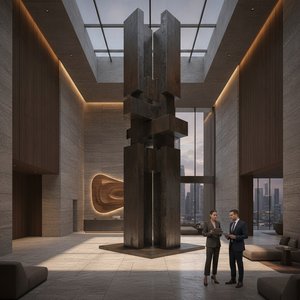
Monolithic Artworks: A Professional Buyer's Guide to Large-Scale Masterpieces for Modern Hospitality Interiors
A professional buyer's guide for hotel designers and procurement managers on selecting monolithic, large-scale artworks. Discover strategic approaches to integrating monumental sculptures and abstract paintings into modern hospitality interiors with ease and efficiency.
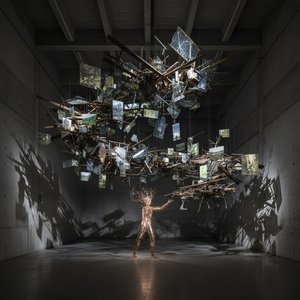
Richard Wilson: Deconstructing Landscape & Memory in Contemporary Installation Art
Explore Richard Wilson's groundbreaking landscape paintings & his enduring influence on contemporary installation art. Discover investment opportunities, provenance insights & the materiality of memory in this expert analysis.

