프린트 판매로 전환
 상세 보기
상세 보기







































 가로 또는 세로 중 어느 한 면이라도 105cm(약 41인치)를 초과하는 작품이나 복제화의 경우, 프레임은 분해된 키트 형태로 배송됩니다. 이는 안전한 배송을 보장하고 운송 중 발생할 수 있는 손상을 방지하기 위함입니다.


Way to Shambala – A Journey Through Symbolism
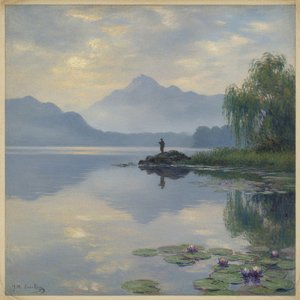
Nicholas Roerich’s “Way to Shambhala” stands as a monumental testament to the artist's profound engagement with Eastern mysticism and his unwavering belief in the interconnectedness of humanity and nature. Painted in 1933, during a period marked by fervent exploration of shamanic traditions and spiritual quests, this tempera on canvas masterpiece embodies Roerich’s distinctive Symbolism style—a movement characterized by its deliberate use of color, form, and imagery to convey abstract ideas and emotions rather than literal representations. The painting transports the viewer into a breathtaking Himalayan landscape dominated by towering peaks bathed in an ethereal purple sky, instantly establishing a mood of serenity and grandeur.- Composition: Roerich meticulously crafted a panoramic vista emphasizing horizontal lines, mirroring the expansive horizons of the Himalayas and symbolizing continuity and transcendence. Two prominent mountains dominate the scene on either side, representing stability and resilience amidst the turbulent forces of change—a recurring motif in Roerich’s oeuvre.
- Color Palette: The dominant hue is a deep violet – purple – which Roerich himself termed “Shambhala Violet,” reflecting his conviction that it embodies the essence of Shambhala, the mythical paradise at the center of Tibetan Buddhism and shamanic cosmology. Accompanying shades of ochre and crimson punctuate the canvas, symbolizing vitality and spiritual illumination.
- Technique: Roerich employed a layered technique—applying thin washes of pigment followed by thicker impasto strokes—to achieve remarkable textural depth and luminosity. This meticulous approach allowed him to capture not only the visual splendor of the mountains but also their vibrational energy, aligning with Roerich’s belief in the power of art to influence consciousness.
Historical Context & Roerich's Visionary Beliefs
Roerich’s artistic endeavors were inextricably linked to his spiritual explorations and his fervent advocacy for Agni Yoga—a mystical system he developed based on Hindu and Buddhist principles. Inspired by Tibetan shamanic rituals and the legends surrounding Shambhala, Roerich envisioned this landscape as a gateway to enlightenment—a symbolic representation of humanity's journey toward inner peace and cosmic harmony. The painting reflects Roerich’s conviction that art could serve as a catalyst for spiritual transformation, mirroring his broader philosophical stance on the importance of uniting science and mysticism.- Influence of Tibetan Buddhism: Roerich drew inspiration from Tibetan Buddhist cosmology, particularly the concept of Shambhala—a hidden paradise believed to exist beyond conventional perception—and its symbolic representation as a mountain range shrouded in mist.
- Symbolism Beyond Landscape: The mountains themselves are imbued with profound symbolism, representing stability, aspiration, and the ascent toward spiritual realization. Roerich’s meticulous attention to detail—the subtle gradations of color, the textured surface—aimed to evoke an emotional response that transcends mere visual representation.
- Roerichism: The painting exemplifies Roerich's overarching artistic philosophy known as Roerichism—a synthesis of Eastern mysticism and Western science—which sought to unlock the hidden potential of human consciousness through art and ritual.
Emotional Impact & Artistic Legacy
“Way to Shambhala” transcends its formal qualities, captivating viewers with its palpable sense of awe and wonder. Roerich’s masterful depiction of Himalayan grandeur evokes feelings of tranquility, contemplation, and reverence—a testament to the artist's ability to translate spiritual experience into visual form. The painting continues to resonate with audiences today as a symbol of hope for humanity’s future—a reminder that beauty, harmony, and enlightenment can be found in embracing both inner reflection and engagement with the natural world. Its enduring appeal underscores Roerich’s legacy as one of the most influential artists of the 20th century, whose work remains profoundly relevant to contemporary concerns about environmental stewardship and spiritual renewal.Reproductions & Further Exploration
High-quality reproductions of “Way to Shambhala” are available from reputable art dealers and online platforms like WikiArt.com, allowing enthusiasts worldwide to experience the painting’s breathtaking beauty and symbolic depth. For a deeper understanding of Roerich's artistic vision and his contribution to Symbolism, consider visiting the Nicholas Roerich Museum in New York City or delving into scholarly publications exploring his life and work.질의응답
니콜라이 로에리히의 "Way to Shambala"이(가) 인테리어에 어떤 분위기를 더해주나요?
니콜라이 로에리히의 "Way to Shambala"은(는) Mystical 분위기를 자아내며, Living Room에 추천하는 작품입니다. 무드란 작품이 주변 공간에 선사하는 정취를 의미합니다.
"Way to Shambala"의 작가는 누구인가요?
"Way to Shambala"은(는) 니콜라이 로에리히의 작품입니다. 이 페이지의 정보는 니콜라이 로에리히의 원작에 대해 설명합니다.
니콜라이 로에리히의 "Way to Shambala"의 방문객들은 어디에서 오나요?
니콜라이 로에리히의 "Way to Shambala"에 관한 통계 정보는 작품의 통계 페이지에서 확인하실 수 있습니다: 해당 작품의 월간 방문 횟수, 작가 작품의 방문 횟수, 그리고 최근 방문자의 국가 및 언어별 상세 현황을 제공합니다.
More about this painting
 실제 크기로 보기
 보내기
보내기 공유하기
공유하기
 상세 보기
상세 보기 가이드 보기

 이미지 다운로드
 유사 작품 더 보기
 X-레이
X-레이 슬라이드 쇼 보기
 Q&A
Q&A 통계 정보
통계 정보