
 프린트 구매
 공유하기
공유하기 공유하기
공유하기
 상세 정보
상세 정보

 다운로드
다운로드
 유사 작품
유사 작품 슬라이드 쇼
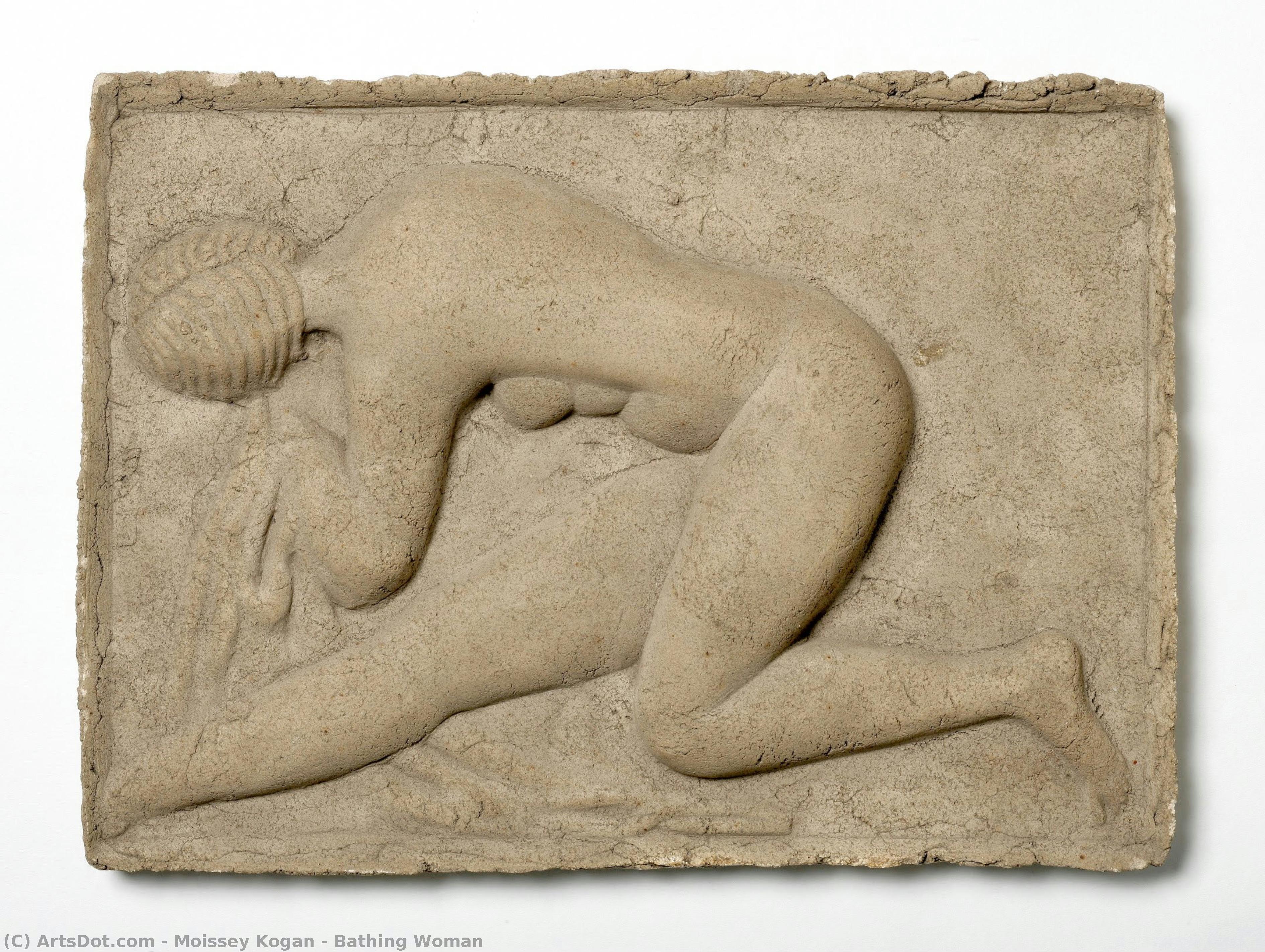
Bathing Woman
 Clay / Terracotta
- Sculpture
- Neoclassicism
 1928
1928- Modern
 38.0 x 28.0 cm
 Lehmbruck Museum
 더 보기
더 보기




































작품의 원본 비율을 유지하는 미리 설정된 크기 중에서 선택하세요.

특정 프레임이나 공간에 맞도록 직접 크기를 입력할 수 있습니다. 선택하신 크기가 원본 이미지의 비율과 일치하지 않는 경우, 작품을 자르거나 추가적인 손으로 그린 요소를 사용하여 그림을 확장합니다. 제작 시작 전 승인을 위해 디지털 목업을 보내드립니다.
화면 미리 보기는 실제 자르기 또는 확장을 반영하지 않습니다. 최종 구성은 목업을 통해서만 정확하게 확인하실 수 있습니다.
맞춤 크기 제작도 가능하지만, 원본 비율을 유지하기 위해 사전 정의된 목록에서 크기를 선택하시는 것을 권장합니다.
주문 후 OriginalUniqueArt.com 팀에서 상세 안내를 위해 고객님께 이메일을 보내드리며, 미리보기 시안을 제공해 드립니다.


 유리 옵션은 110cm 미만 크기에서만 선택 가능합니다.

Bathing Woman
재현 기법
복제본 크기
-


최종 결제 금액
$ 300
작품 상세 설명
The Grace of Form: Rediscovering Moissey Kogan’s Bathing Woman
In the quiet intimacy of Moissey Kogan’s Bathing Woman, we encounter a moment frozen in time, a delicate intersection of vulnerability and strength. Created in 1928, this evocative sculpture captures a woman caught in the private, rhythmic ritual of cleansing. There is an undeniable sense of movement within her stillness; as she reaches toward her back, her fingers tracing the contours of her own skin, the viewer is invited into a sanctuary of solitude. The piece does not merely depict a physical act but celebrates the profound elegance of the human silhouette, rendered with a sensitivity that speaks to the very essence of life and self-care.
The sculpture’s aesthetic is deeply rooted in the neoclassical traditions that Kogan mastered during his formative years in Paris. Influenced by the monumental legacies of Auguste Rodin and Aristide Maillol, Kogan moves away from dramatic tension toward a more serene, harmonious exploration of the female form. The texture of the medium—reminiscent of aged clay or weathered stone—adds a layer of historical weight to the work, suggesting an artifact unearthed from a classical era. This tactile quality provides a beautiful contrast against a minimalist backdrop, allowing the play of light and shadow across the woman's curves to become the primary storyteller.
A Legacy of Sensuality and Skill
To understand the emotional resonance of Bathing Woman, one must look to the artist’s unique journey through the École de Paris. Kogan, a sculptor of immense technical prowess, possessed a rare ability to imbue heavy materials with a sense of weightless grace. His mastery over the "Negativ-Scent" technique and his background in fine craftsmanship allowed him to treat every curve and fold as an opportunity for poetic expression. In this particular work, the composition is balanced yet dynamic; the placement of her hand on her hip provides a structural anchor, while the reaching motion of her other arm introduces a soft, organic flow that guides the eye around the entire figure.
For the discerning collector or interior designer, this piece serves as a sophisticated focal point. It possesses a timeless quality that transcends modern trends, making it an ideal addition to spaces that value understated luxury and classical beauty. Whether placed in a sunlit study or a contemporary living salon, the sculpture radiates a calming presence. Owning a high-quality reproduction of such a significant work allows one to bring the soulful, contemplative spirit of the interwar period into the modern home, offering a daily encounter with the enduring power of classical grace.
작가 약력
Early Life and Education
- Born: May 12, 1879, in Orhei, Bessarabia (now Orhei, Republic of Moldova)
- Jewish merchant family background
- Demonstrated early interest in craftsmanship
- Moved to Nagybánya, Hungary, in 1889
- Studied under painter Simon Hollósy in Nagybánya
- Enrolled at the Munich Academy of Fine Arts in 1903, studying sculpture under Wilhelm von Rümann.
Artistic Development and Influences
- Initially experimented with gems, producing medals, plaques, vases, embroidery, and drawings.
- Transitioned to sculpture after moving to Paris and encountering Rodin and Maillol.
- Focused on the female form and concepts of grace in his sculptures.
- Worked primarily with terracotta, gypsum, and occasionally bronze.
- Developed a unique "Negativ-Schnitt" (intaglio cut) technique that influenced other artists.
- Influenced by Auguste Rodin and Aristide Maillol.
- Associated with the École de Paris artistic circle.
Major Works and Artistic Style
- Primarily created small sculptures and reliefs in a neoclassical style.
- His works often featured soft contours, lines, and expressive body language.
- Produced numerous wood and linocuts as well as etchings.
- Drawings utilized chalk, coal, and pencils.
- Subjects frequently depicted female figures with an emphasis on grace and sensuality.
- Exhibited extensively at the Salon d'Automne in Paris, serving as a jury member and vice-president of the sculptural department from 1925.
Later Life, Persecution, and Legacy
- Lived between Paris and the Netherlands from 1925 until his death.
- Ceased travel to Germany in 1933 due to increasing anti-Semitism.
- Some of his works were exhibited at the "Entartete Kunst" (Degenerate Art) exhibition in Berlin, 1938.
- Deported from Drancy internment camp to Auschwitz on February 11, 1943, where he died two weeks later.
- His work was rediscovered and gained recognition in the 1960s.
- Works are now held in numerous museums including Stedelijk Museum Amsterdam, Lehmbruck Museum Duisburg, Kunsthalle Bremen, Folkwang Museum Essen, National Gallery Moritzburg Halle, Hamburger Kunsthalle, and MoMA.
Artistic Significance
- Kogan's art is characterized by its timeless quality and quiet world of grace.
- His sculptures embody a "hellenistic-looking cheerfulness" with fragile grace and sensual body language.
- Despite his tragic fate, Kogan left behind a significant body of work that reflects the artistic currents of his time while maintaining a unique personal style.
- The Moissey Kogan Catalogue Raisonné project aims to document and preserve his legacy for future generations.

Moissey Kogan
1879 - 1943 , Moldova
주요 정보
- Artistic Movement Or Style: Expressionism, Neoclassical
- Artists Who Influenced This Artist:
- Auguste Rodin
- Aristide Maillol
- Simon Hollósy
- Date Of Birth: March 12, 1879
- Date Of Death: March 3, 1943
- Full Name: Moissey Kogan
- Nationality: Bessarabian Jewish
- Place Of Birth: Orhei, Moldova
관련 기사 더 보기

Bronze Sculptures That Defined Art History | OriginalUniqueArt
Journey through art history with our Top 10 bronze sculptures! Explore masterpieces by Rodin, Michelangelo & more. Discover stories behind iconic statues and find museum-quality reproductions for your home decor at OriginalUniqueArt.com.

The Enduring Form: Exploring Themes & Techniques in Sculpture Across Historical Periods
Explore the rich history of sculpture from ancient masterpieces to contemporary innovations. Discover key techniques, influential artists & investment potential for discerning art collectors.
The Enduring Form: Sculpture Across History, Technique & Emotional Resonance
Explore the rich history of sculpture with OriginalUniqueArt. Discover key techniques, influential artists & investment potential for discerning collectors. Expert insights into valuing and collecting timeless masterpieces.

Bronze Age to Modern Masters: 10 Sculptures That Redefined Art | OriginalUniqueArt
Journey through art history with 10 legendary bronze sculptures – from Michelangelo's David to Rodin’s Thinker. Explore the stories, techniques & timeless beauty of these masterpieces. Find museum-quality reproductions & elevate your home decor on OriginalUniqueArt.com.
Henry Moore: Sculpting Modernity – Form, Emotion & the Human Condition
Explore the revolutionary sculptures of Henry Moore – abstract forms, reclining figures & powerful expressions of the human condition. Discover his legacy & artistic process with OriginalUniqueArt.

