

 프린트 구매
 공유하기
공유하기 공유하기
공유하기
 상세 정보
상세 정보

 다운로드
다운로드
 유사 작품
유사 작품 슬라이드 쇼
Medal


 더 보기
더 보기




































작품의 원본 비율을 유지하는 미리 설정된 크기 중에서 선택하세요.

특정 프레임이나 공간에 맞도록 직접 크기를 입력할 수 있습니다. 선택하신 크기가 원본 이미지의 비율과 일치하지 않는 경우, 작품을 자르거나 추가적인 손으로 그린 요소를 사용하여 그림을 확장합니다. 제작 시작 전 승인을 위해 디지털 목업을 보내드립니다.
화면 미리 보기는 실제 자르기 또는 확장을 반영하지 않습니다. 최종 구성은 목업을 통해서만 정확하게 확인하실 수 있습니다.
맞춤 크기 제작도 가능하지만, 원본 비율을 유지하기 위해 사전 정의된 목록에서 크기를 선택하시는 것을 권장합니다.
주문 후 OriginalUniqueArt.com 팀에서 상세 안내를 위해 고객님께 이메일을 보내드리며, 미리보기 시안을 제공해 드립니다.


 유리 옵션은 110cm 미만 크기에서만 선택 가능합니다.

Medal
재현 기법
복제본 크기
-


최종 결제 금액
$ 300
작품 상세 설명
A Testament to Faith: Mina Löwy's "Medal" – A Neoclassical Reverie
Mina Gertrude Löwy’s “Medal,” created in 1975, is more than a simple depiction of a bronze sculpture; it’s a meticulously rendered meditation on faith, history, and the enduring power of artistic representation. This piece, featuring Saint Elizabeth Ann Seton, offers a compelling glimpse into the neoclassical style favored by Löwy, a British artist working within the traditions of classical sculpture while subtly reflecting the anxieties and sensibilities of her time.
- Subject Matter & Symbolism: The central focus is undeniably Saint Elizabeth Ann Seton, America’s first native-born saint and a pivotal figure in the early Catholic Church. Her portrait, presented in bust-length with her characteristic habit, immediately establishes the artwork's religious context. The symbolic weight of the habit – representing devotion and service – combined with the solemnity of her pose, evokes a profound sense of reverence.
- Neoclassical Style & Technique: Löwy’s approach aligns closely with neoclassical principles, prioritizing realism and detail in a manner reminiscent of Roman portrait sculpture. The lost wax casting technique is evident in the smooth transitions between forms and the sharp definition of Seton's features. This meticulous execution speaks to a dedication to capturing not just likeness but also the inherent dignity of the subject.
- Material & Patina: Crafted from bronze, the medal’s surface is treated with a protective patina – likely a dark green or brown – that enhances its color and provides lasting durability. The tactile quality of the raised relief, achieved through this casting process, invites contemplation and emphasizes the artwork's physical presence.
Historical Context & Artistic Influences
Created in 1975, “Medal” reflects a period where religious iconography continued to hold significant cultural importance. Löwy’s work can be understood within the broader context of British art history, drawing inspiration from both classical traditions and the burgeoning modernist movements of the early 20th century. While firmly rooted in neoclassical ideals, there's an underlying sensitivity to light and form that hints at Hopper’s influence – a subtle echo of his exploration of human emotion through carefully controlled visual elements.
- Edward Hopper & Neoclassical Echoes: Although Löwy’s biography doesn’t explicitly detail her direct engagement with Hopper, the shared emphasis on realism and emotional depth suggests a common artistic sensibility. Both artists sought to capture the essence of their subjects – Seton in terms of faith and devotion, and individuals in terms of isolation and introspection.
- The Rise of Religious Art: The 1970s witnessed a renewed interest in religious art, partly fueled by social changes and spiritual searching. Löwy’s “Medal” can be seen as part of this trend, offering a timeless representation of a significant figure within the Catholic faith.
Formal Analysis & Emotional Impact
The artwork's composition is strikingly centered, directing the viewer's attention immediately to Saint Elizabeth Ann Seton. The flat perspective and diffuse lighting contribute to a sense of stillness and solemnity, reinforcing the emotional impact of the piece. The circular shape of the medal further enhances its visual appeal and tactile quality, inviting close examination.
- Color & Texture: The bronze material itself contributes significantly to the artwork’s aesthetic. The subtle variations in color – achieved through the patina – create a sense of depth and richness, while the highly pronounced texture invites touch and further engagement with the piece.
- Emotional Resonance: Ultimately, “Medal” evokes a powerful emotional response – reverence, solemnity, and perhaps even a quiet contemplation of faith and devotion. It’s a testament to Löwy's skill in translating complex ideas into a visually compelling and emotionally resonant work of art.
Perfect for Display & Collection
This hand-painted reproduction captures the essence of Löwy’s original “Medal,” offering an exceptional piece for any discerning collector or interior designer. Its neoclassical style, meticulous detail, and profound symbolism make it a timeless addition to any space – a reminder of faith, history, and the enduring power of artistic representation.
작가 약력
Edward Hopper: A Portrait of American Isolation
Edward Hopper, born in Nyack, New York, on July 22, 1882, into a middle-class family that encouraged his artistic pursuits, stands as one of the most recognizable and enduring figures in American art. His work, characterized by stark realism, evocative lighting, and a profound sense of loneliness and alienation, continues to resonate deeply with viewers today. Hopper’s journey from illustration to painting was shaped by key influences – notably Robert Henri, whose teachings at the New York School of Art emphasized capturing the everyday realities of life in a truthful manner, and the modernist painters Edgar Degas and Édouard Manet, whose compositional techniques and depictions of modern urban existence profoundly impacted his style. His early years were spent studying illustration, but he ultimately found his true calling in exploring the complexities of human experience through painting.Early Life and Artistic Training
Hopper’s formal artistic training began at the Correspondence School of Illustrating in New York City (1899-1900), followed by classes at the New York School of Art (1900-1906). It was within this environment that he encountered Robert Henri, a pivotal figure who championed painting “from life” and encouraged his students to observe and depict the world around them with honesty and directness. Hopper’s classmates included notable artists like George Bellows, Rockwell Kent, and Guy Pène du Bois – a group whose shared artistic vision would later influence Hopper's own development. His travels abroad in the early 1900s—first to Paris and various European locations (1906-7), then again to Paris (1909) and Spain (1910)—exposed him to new artistic movements, though he never fully embraced the radicalism of Fauvism or Cubism. Instead, he absorbed elements of their techniques, particularly Degas’s use of cropped compositions and Manet's focus on modern urban life, integrating them into his own distinct style.The Development of Hopper’s Style
Hopper’s artistic style is instantly recognizable—characterized by a meticulous attention to detail, sharply defined forms, and an almost cinematic use of light and shadow. He frequently depicted solitary figures in seemingly empty spaces – diners, train stations, motels, and city streets—creating a mood of quiet contemplation and subtle unease. His paintings often convey a sense of isolation and detachment, reflecting the anxieties and uncertainties of modern American life. The use of strong diagonals and carefully arranged compositions draws the viewer's eye through the scene, emphasizing the loneliness of the subject. Hopper’s mastery of light is particularly noteworthy; he skillfully employed it to create dramatic contrasts and heighten the emotional impact of his works. He also developed a remarkable ability to capture fleeting moments in time, imbuing his paintings with a sense of immediacy and authenticity.Key Themes and Motifs
Hopper’s art consistently explores themes of isolation, loneliness, urban alienation, and the tension between tradition and progress. His subjects—often ordinary people going about their daily routines—are frequently depicted in moments of quiet contemplation or solitude. The absence of direct interaction between figures contributes to the overall sense of detachment and melancholy that pervades his work. Recurring motifs include trains (symbolizing journeys and separation), diners (representing transient encounters and social isolation), and city streets (reflecting the anonymity and impersonality of urban life). Hopper’s paintings are not simply representations of scenes; they are carefully constructed narratives that invite viewers to contemplate the complexities of human relationships and the challenges of navigating a rapidly changing world.Legacy and Influence
Edward Hopper's work achieved widespread recognition in the 1930s, particularly after his first one-person exhibition at the Whitney Studio Club in 1920. His success led to a series of commercial exhibitions, culminating in a groundbreaking show at the Frank K. M. Rehn Galleries in New York in 1930, where every painting sold. He continued to exhibit and paint throughout his career, establishing himself as one of America’s most important artists. Hopper's influence on subsequent generations of American painters is undeniable. His distinctive style—characterized by its realism, evocative lighting, and exploration of psychological themes—has been imitated and admired by countless artists. His paintings continue to be exhibited in major museums around the world and remain a powerful reflection of the American experience. He died on May 15, 1967, leaving behind a body of work that continues to captivate and challenge viewers with its poignant portrayal of human isolation and the complexities of modern life.
mina gertrude löwy
1882 - 1966 , United Kingdom
주요 정보
- Artistic Movement Or Style: Realism, American Scene
- Artists Or Movements Influenced By This Artist:
- Edgar Degas
- Édouard Manet
- Artists Who Influenced This Artist:
- William Merritt Chase
- Robert Henri
- Date Of Birth: July 22, 1882
- Date Of Death: May 15, 1967
- Full Name: Edward Hopper
- Nationality: American
- Notable Artworks:
- Nighthawks
- Gas Station
- Automat
- Place Of Birth: Nyack, New York, USA
관련 기사 더 보기

Bronze Age to Modern Masters: 10 Sculptures That Redefined Art | OriginalUniqueArt
Journey through art history with 10 legendary bronze sculptures – from Michelangelo's David to Rodin’s Thinker. Explore the stories, techniques & timeless beauty of these masterpieces. Find museum-quality reproductions & elevate your home decor on OriginalUniqueArt.com.

Bronze Sculptures That Defined Art History | OriginalUniqueArt
Journey through art history with our Top 10 bronze sculptures! Explore masterpieces by Rodin, Michelangelo & more. Discover stories behind iconic statues and find museum-quality reproductions for your home decor at OriginalUniqueArt.com.

The Enduring Legacy of Bronze: A Historical & Artistic Exploration for the Collector
Explore the rich history & enduring appeal of bronze sculpture with expert insights for collectors at OriginalUniqueArt. Learn about casting techniques, iconic artists, collecting tips & contemporary interpretations.
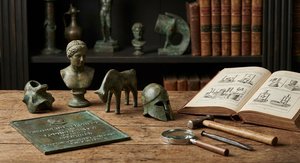
The Enduring Legacy of Bronze: History, Technique & Artistic Expression for the Collector
Explore the rich history & enduring appeal of bronze sculpture with expert insights for collectors at OriginalUniqueArt. Learn about casting techniques, iconic artists, and collecting tips.

The Enduring Legacy of Bronze Sculpture: Technique, Symbolism & Cultural Impact
Explore the rich history & enduring appeal of bronze sculpture with expert insights for collectors. Learn about casting techniques, iconic artists, collecting tips & contemporary interpretations at OriginalUniqueArt.

