

 미리보기
미리보기
 공유하기
공유하기 공유하기
공유하기
 상세 정보
상세 정보

 다운로드
다운로드
 유사 작품
유사 작품 X-레이
X-레이 슬라이드 쇼
Figures in a Tree-lined Avenue
 Oil On Canvas
- WallArt
- Baroque Art
 1640
1640- Early Modern
 130.0 x 97.0 cm
 갤러리아 나자날 드 아트 안티카
 더 보기
더 보기
지클레 / 아트 프린트
빠른 제작과 다양한 마감 옵션을 제공하는 박물관 품질의 지클레이 또는 캔버스 프린트. ( 손으로 그린 그림 구매 이미지 구매)




P118B $10

P118H $10

P118W $10

P438Z $10

P508JH $12

P508YH $12

P805H $10

P805Z $10

P919BZ $10

P919G $10

P919XJ $10

P959ZH $10

P968JZ $12

W106C $8

W218G $10

W218JH $8

W218Y $10

W307PJ $10

W316G $10

W316PJ $8

W316Y $10

W398PJ $8

W4111J $10

W500HY $15

W500JH $15

W692G $12

W849H $8

W940BG $15

W953PJ $8




작품의 원본 비율을 유지하는 미리 설정된 크기 중에서 선택하세요.

특정 프레임이나 공간에 맞춰 직접 치수를 입력하실 수 있습니다. 선택하신 사이즈가 원본 이미지의 비율과 일치하지 않을 경우, 작품을 크롭(자르기)하거나 이미지를 대칭 또는 단색 채우기로 확장하여 제작합니다. 제작 시작 전, 최종 확인을 위해 디지털 목업이 전송됩니다.
화면상의 미리보기는 실제 크롭이나 확장 상태를 반영하지 않으므로, 최종 구도는 오직 목업을 통해서만 정확하게 확인하실 수 있습니다.
맞춤 사이즈 제작도 가능하지만, 원본 비율을 유지하기 위해서는 사전 정의된 목록에서 치수를 선택하시는 것을 권장합니다.


 유리 옵션은 110cm 미만 크기에서만 선택 가능합니다.

Figures in a Tree-lined Avenue
지클레 / 아트 프린트
복제본 크기
-


최종 결제 금액
$ 80
작품 상세 설명
A Serene Escape into the Baroque Landscape
In the quietude of Michelangelo Cerquozzi’s Figures in a Tree-lined Avenue, we are transported back to the year 1640, stepping into a world where time seems to slow to the rhythm of rustling leaves and gentle conversation. This oil on canvas masterpiece serves as a window into the leisurely pursuits of a bygone era, capturing a moment of profound tranquility amidst the lush greenery of a seventeenth-century landscape. As one gazes upon the composition, the eye is immediately drawn to the figures scattered throughout the verdant setting; some recline in the cool shadows of ancient trees, while others stand in quiet contemplation or engage in soft dialogue. There is an undeniable intimacy to the scene, a sense that we are witnessing a private, stolen moment of peace within a sprawling, sun-dappled parkland.
The artist, often celebrated by his moniker Michelangelo delle battaglie, demonstrates here a remarkable departure from the frenetic energy of battle scenes to embrace the delicate nuances of genre painting. His technique is a masterclass in the Baroque style, utilizing a sophisticated interplay of light and shadow to breathe life into the foliage and the human form. The palette is dominated by rich, earthy tones—deep mossy greens, warm ochres, and soft umbers—which ground the painting in a profound naturalism. Every fold of the figures' historical attire and every intricate detail of the dense canopy is rendered with an exacting precision that speaks to Cerquozzi’s immense skill, inviting the viewer to linger on the textures of the canvas.
Historical Resonance and Artistic Legacy
To understand this work is to understand the influence of the Bamboccianti movement in Rome. Cerquozzi, deeply influenced by the Flemish and Dutch masters, brought a unique perspective to the Italian Baroque, focusing on the everyday lives and landscapes that offered a more grounded, humanistic view of existence. In Figures in a Tree-lined Avenue, this influence is palpable; the painting does not seek to overwhelm with grand mythological drama, but rather to enchant through the beauty of the mundane. The overcast sky provides a soft, diffused light that eliminates harsh contrasts, creating an atmosphere of even, gentle illumination that enhances the sense of stillness and permanence.
For the discerning collector or interior designer, this painting offers more than mere decoration; it provides an emotional anchor for a room. Its ability to evoke nostalgia and a sense of pastoral calm makes it an ideal centerpiece for spaces designed for reflection and elegance. Whether placed in a sunlit gallery or a sophisticated study, the artwork’s subtle expressions and rhythmic composition command attention without disrupting the peace of its surroundings. Owning a high-quality reproduction of such a significant work allows one to bring the timeless grace of the Galleria Nazionale d'Arte Antica into the modern home, preserving the legacy of Cerquozzi’s genius for generations to come.
작가 약력
The Master of the Battlefield: The Life and Legacy of Michelangelo Cerquozzi
In the vibrant, tumultuous heart of 17th-century Rome, a painter emerged who could capture not just the grandeur of history, but the raw, kinetic energy of movement itself. Michelangelo Cerquozzi, affectionately remembered by history as Michelangelo delle Battaglie—Michelangelo of the Battles—was a virtuoso of the Italian Baroque. Born in 1602 to a prosperous Roman family, Cerquozzi was destined for a life steeped in the cultural richness of his city. His journey into the world of fine art began at the tender age of twelve, when he entered the studio of Giuseppe Cesari. This apprenticeship placed him within a lineage of profound importance, as Cesari’s studio was the very same space where the legendary Caravaggio had once honed his transformative skills. It was in this atmosphere of dramatic light and shadow that Cerquozzi first learned to observe the world.
As his talent matured, Cerquozzi became a pivotal figure in a unique artistic movement known as the Bamboccianti. This group of painters, largely comprised of Flemish and Dutch artists active in Rome, sought to move away from the idealized, lofty subjects of high Renaissance art in favor of something far more intimate and grounded. They turned their brushes toward the everyday lives of the lower classes—the peasants, travelers, and laborers inhabiting the Roman countryside. Cerquiozzi embraced this spirit with remarkable fervor. His genre scenes are masterclasses in narrative intimacy, capturing the unvarnished reality of street life and rural landscapes with a delicate touch that feels both spontaneous and deeply observed.
A Fusion of Northern Realism and Italian Grandeur
The brilliance of Cerquozzi’s technique lies in his ability to synthesize the meticulous detail of Northern European realism with the dramatic flair of the Italian Baroque. His early years were marked by a profound connection to the Dutch and Flemish masters residing in Rome. He lived and worked alongside figures such as Jacob de Hase, a specialist in battle scenes, and the Dutch painters Paulus Bor and Jan Harmansz. These associations were not merely social; they were transformative. From these masters, he inherited a fascination with texture, light, and the precise rendering of small-scale details that define the "cabinet painting" style—works designed for the private contemplation of sophisticated collectors.
This influence is most evident in his celebrated battle paintings. Unlike the sweeping, epic compositions of history painters who focused on political triumphs, Cerquozzi’s battles often feel visceral and immediate. He captures the dust rising from galloping hooves, the glint of steel, and the chaotic, swirling motion of cavalry engagements. Yet, even within these scenes of conflict, there is a profound sense of composition and balance. His ability to manage large numbers of figures without losing the clarity of the central action earned him his enduring nickname and solidified his reputation as one of the premier battle painters of the first half of the 17th century.
Artistic Versatility and Historical Significance
Beyond the smoke of the battlefield, Cerquozzi demonstrated a remarkable breadth of skill that allowed him to navigate various genres with ease. He was an accomplished still-life painter, often imitating the exquisite precision of Pietro Paolo Bonzi. In these works, he displayed a sensitive command over the depiction of organic forms, textures, and the play of light on inanimate objects, bringing a sense of quiet dignity to the simplest of subjects. His repertoire also extended into the realm of mythological and religious works, though it was in the depiction of the "lowly" and the "everyday" where his soul truly resided.
Cerquozzi’s professional standing was formally recognized when he joined the Accademia di San Luca in 1634. While he remained a member for nearly two decades, he famously resisted the strict academic decorum that demanded a certain level of idealized nobility in art. He preferred the grit and truth of the Roman streets. This rebellious spirit—a commitment to realism over artifice—is what makes his work so enduringly modern. When he passed away in 1660, he left behind a legacy that bridged the gap between the high drama of the Baroque and the intimate realism of Northern genre painting, ensuring that the humble scenes of Roman life would be immortalized through his brush.

michelangelo cerquozzi
1602 - 1660 , Italy
주요 정보
- Artistic Movement Or Style: Baroque, Bamboccianti
- Artists Who Influenced This Artist:
- Giuseppe Cesari
- Jacob de Hase
- Pietro Paolo Bonzi
- Date Of Birth: 1602
- Date Of Death: 1660
- Full Name: Michelangelo Cerquozzi
- Nationality: Italian
- Place Of Birth: Rome, Italy
관련 기사 더 보기
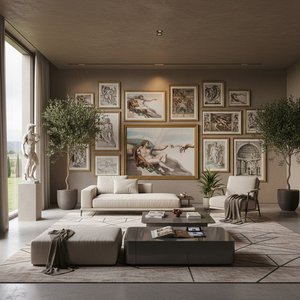
미켈란젤로의 걸작 25선: 예술과 영혼을 담은 명화 컬렉션 | OriginalUniqueArt
미켈란젤로의 불멸의 걸작 25선을 만나보세요. 르네상스 미술의 정수를 담은 '다비드', '천지창조' 등 명화들의 숨겨진 이야기와 예술적 의미를 OriginalUniqueArt에서 감상하고, 특별한 인테리어으로 공간에 영감을 불어넣으세요. 지금 바로 컬렉션을 탐험하세요!

Epic Drama & Dark Vibes: The Ultimate Collector's Guide to Baroque Landscapes
Master the art of drama with our ultimate guide to Baroque landscapes. Discover the power of chiaroscuro, explore legendary masters, and learn how to curate epic, dark-vibe masterpieces for your collection with expert insights from OriginalUniqueArt.

Drama and Light: A Definitive Guide to the Italian Baroque Masterpieces and the Revolution of Chiaroscuro
Explore the dramatic world of Italian Baroque art. Discover how masters like Caravaggio used chiaroscuro and tenebrism to revolutionize painting through light, shadow, and profound realism. A definitive guide for history lovers and art collectors.

Arboreal Echoes: A Historical & Artistic Exploration of Trees in Painting
Explore the rich history of trees in painting! Discover symbolism, Romantic masterpieces by Caspar David Friedrich & beyond. A curated journey for art enthusiasts.

낭만 풍경화의 황홀! 예술사에 빛난 10대 걸작 탐구 | 와후아트
낭만주의 시대, 예술혼을 불태운 10대 풍경화 걸작! 터너부터 프리드리히까지, 시대를 초월하는 아름다움을 와후아트에서 만나보세요. 고흐의 색채와 코로의 섬세함이 당신의 공간에 영감을 더합니다. 지금 바로 와후아트에서 명품 미술 작품을 감상하고 구매하세요!

