

 미리보기
미리보기
 프린트 구매
 공유하기
공유하기 공유하기
공유하기
 상세 정보
상세 정보

 다운로드
다운로드
 유사 작품
유사 작품 X-레이
X-레이 슬라이드 쇼
LOUIS JACQUES MAIGRET


 더 보기
더 보기




P118B $10

P118H $10

P118W $10

P438Z $10

P508JH $12

P508YH $12

P805H $10

P805Z $10

P919BZ $10

P919G $10

P919XJ $10

P959ZH $10

P968JZ $12

W106C $8

W218G $10

W218JH $8

W218Y $10

W307PJ $10

W316G $10

W316PJ $8

W316Y $10

W398PJ $8

W4111J $10

W500HY $15

W500JH $15

W692G $12

W849H $8

W940BG $15

W953PJ $8




작품의 원본 비율을 유지하는 미리 설정된 크기 중에서 선택하세요.

특정 프레임이나 공간에 맞도록 직접 크기를 입력할 수 있습니다. 선택하신 크기가 원본 이미지의 비율과 일치하지 않는 경우, 작품을 자르거나 추가적인 손으로 그린 요소를 사용하여 그림을 확장합니다. 제작 시작 전 승인을 위해 디지털 목업을 보내드립니다.
화면 미리 보기는 실제 자르기 또는 확장을 반영하지 않습니다. 최종 구성은 목업을 통해서만 정확하게 확인하실 수 있습니다.
맞춤 크기 제작도 가능하지만, 원본 비율을 유지하기 위해 사전 정의된 목록에서 크기를 선택하시는 것을 권장합니다.
주문 후 OriginalUniqueArt.com 팀에서 상세 안내를 위해 고객님께 이메일을 보내드리며, 미리보기 시안을 제공해 드립니다.


 유리 옵션은 110cm 미만 크기에서만 선택 가능합니다.

LOUIS JACQUES MAIGRET
재현 기법
복제본 크기
-


최종 결제 금액
$ 300
작품 상세 설명
A Portrait of Innocence and Formal Grace: Michel Martin Drolling’s Reverie
Michel Martin Drolling's “Louis Jacques Maigret” is more than just a depiction of a young boy; it’s a masterful distillation of Neoclassical ideals, encapsulating the spirit of its time within an exquisitely crafted miniature portrait. Executed around 1794-1795 during the Fourth Estate—a period marked by profound social and political upheaval—the painting stands as a testament to Drolling's ability to transcend the turbulent currents of revolution with serene beauty.
- Subject Matter: The portrait focuses on Louis Jacques Maigret, likely from a privileged family. His gaze is calm, contemplative, conveying an aura of youthful seriousness—a characteristic found frequently in portraits commissioned during this era to commemorate young heirs and solidify familial lineage.
- Style & Technique: Drolling adheres rigorously to the principles of Neoclassical art, prioritizing clarity, balance, and idealized form. The meticulous application of oil paint on ivory creates a surface texture that subtly reflects light, enhancing the realism of skin tones and fabric folds. Notice the careful blending—a hallmark of Drolling’s technique—which achieves an astonishing level of detail without sacrificing compositional harmony.
- Composition & Color Palette: The oval format lends itself perfectly to centering the boy's figure, emphasizing his presence within the frame. Dominating the palette are muted earth tones – browns, tans, creams – punctuated by delicate greens and a hint of crimson in the clothing. This restrained color scheme contributes to the painting’s overall sense of tranquility and sophistication.
The Language of Line and Texture: Craftsmanship and Classical Influence
Lines are employed with precision, defining the contours of Maigret's face and garments with graceful curves. The subtle folds of his shirt introduce textural variation, mirroring the drapery found in classical sculptures—a deliberate reference to Drolling’s artistic influences. These lines aren’t merely descriptive; they convey a sense of dignified composure.
- Texture: The ivory surface lends itself beautifully to capturing subtle textures. Skin tones are rendered realistically, demonstrating Drolling's mastery of chiaroscuro—the interplay of light and shadow—creating depth and dimensionality within the portrait.
- Material Considerations: Pigments mixed with oil were painstakingly applied to prepare the ivory panel, ensuring optimal adhesion and luminosity. This meticulous process underscores the dedication to artistic excellence that characterized Drolling’s era.
Symbolism Beyond Appearance: Reflecting Enlightenment Values
Beyond its formal beauty, “Louis Jacques Maigret” embodies the core tenets of Enlightenment thought—reason, order, and idealized virtue. The boy's serene expression speaks to a belief in moral fortitude and intellectual contemplation—values championed by philosophers like Voltaire and Rousseau during the period.
A Legacy of Elegance: Drolling’s Contribution to Neoclassical Portraiture
Michel Martin Drolling cemented his place as one of the foremost portraitists of his time, producing works that continue to captivate audiences today. “Louis Jacques Maigret” stands as a poignant reminder of an era defined by artistic refinement and intellectual curiosity—a timeless masterpiece deserving of admiration and contemplation.
작가 약력
Michel Martin Drolling: A Life in Neoclassical Art
Early Life and Education
Michel Martin Drolling was born on March 7, 1786, in Paris, France. He came from an artistic family; his father, Martin Drolling, was also a painter. This familial influence sparked young Michel’s interest in art, and he began his training under his father's supervision. In 1806, he furthered his education by studying with the renowned Neoclassical artist Jacques-Louis David, a pivotal moment that shaped his artistic trajectory.The Prix de Rome and Early Career
Drolling’s talent quickly became apparent, culminating in his winning of the prestigious Prix de Rome in 1810. This award granted him a scholarship to study at the French Academy in Rome. His winning submission was “The Wrath of Achilles,” demonstrating his mastery of classical themes and techniques. After completing his studies in Rome, he returned to Paris and began establishing himself as a painter.Artistic Style and Major Works
Drolling’s paintings are characterized by the hallmarks of Neoclassicism: theatricality, bright colors, dramatic contrasts of light and shadow, and meticulous attention to detail. He excelled in both historical painting and portraiture. Some of his most significant works include:- “The Death of Abel” (1817) – This work brought him considerable recognition after its exhibition at the Salon.
- “The Lord Descends to Earth to Establish his Empire and Spread his Good Deeds” – A large-scale ceiling painting for the Room of Illustrious Men at the Louvre.
- “The States-General of Tours” (1836) and “The Convention of Alexandria” (1837) – Both commissioned for the Museum of History in the Palace of Versailles.
- “Jesus Among the Doctors” (1840) – Created for the Church of Our-Lady-of-Loretto in Paris.
Recognition and Influence
Drolling’s talent was widely acknowledged, leading to his election as a member of the Académie des Beaux-Arts in 1837. He was subsequently appointed a professor at the École Nationale Supérieure des Beaux-Arts, where he shared his knowledge and expertise with aspiring artists. His students included notable figures such as Paul Baudry, Jules Breton, Roger Fenton, and many others.Historical Significance and Legacy
Michel Martin Drolling represents a key figure in the transition from Neoclassicism to later 19th-century artistic styles. While firmly rooted in classical principles, his work also foreshadows some of the dramatic flair that would characterize Romanticism. His large-scale historical paintings contributed significantly to the visual narrative of French history and national identity during a period of political and social change. He died in Paris on January 9, 1851, leaving behind a legacy of skillfully executed and historically significant artworks.
Michel Martin Drolling
1786 - 1851 , France
주요 정보
- Birth Date: 1786
- Birth Place: Paris, France
- Death Date: 1851
- Influenced:
- Paul Baudry
- Victor Biennourry
- Jules Breton
- Theodor Aman
- Roger Fenton
- Influenced By: Jacques-Louis David
- Movement: Neoclassicism
- Name: Michel Martin Drolling
- Nationality: French
- Notable Works:
- The Wrath of Achilles
- Death of Abel
- Lord Descends to Earth
- States-General of Tours
- Convention of Alexandria
- Jesus Among the Doctors
관련 기사 더 보기

Jacques-Louis David: Neoclassical Ideals & Revolutionary Witness
Explore the life & art of Jacques-Louis David, leading Neoclassical painter of the French Revolution. Discover iconic works like 'The Death of Marat' and his lasting impact on art history. Expert analysis & high-quality reproductions at OriginalUniqueArt.
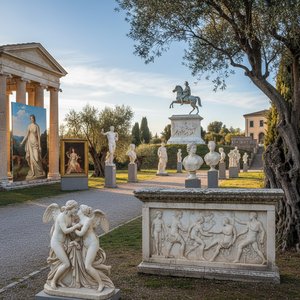
고전주의 거장의 혼을 담아낸 10대 명작: 예술과 인테리어의 조화
고전주의 미술의 정수를 담은 10대 명작을 OriginalUniqueArt에서 만나보세요. 다비드, 앵그르 등 거장의 작품 세계를 깊이 있게 탐구하고, 당신의 공간에 예술적 영감을 더하세요. 지금 바로 OriginalUniqueArt.com에서 모든 걸 발견하세요!

Neoclassical Portraiture: The Timeless Elegance of Order, Grace, and Academic Mastery
Explore the refined world of Neoclassical portraiture. Discover the mastery of line, light, and order through an expert exploration of academic art history, from Jacques-Louis David to Jean-Antoine Houdon. Immerse yourself in the timeless elegance of classical realism.

The Revival of Antiquity: Exploring Neoclassical Art's Ideals & Enduring Legacy
Explore the revival of classical ideals in Neoclassical art! Discover Jacques-Louis David & the movement's impact on painting, sculpture & architecture. Expert insights & high-quality reproductions at OriginalUniqueArt.
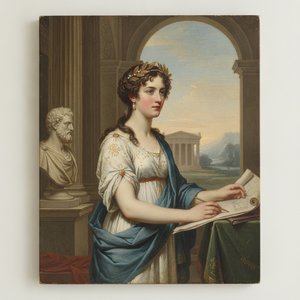
The Revival of Antiquity: Exploring Ideals of Beauty & Power in Neoclassical Portraiture
Explore the captivating world of Neoclassical portraiture! Discover the power & ideals behind masterpieces by David, Girodet & more. Expert analysis, custom reproductions & art appraisal at OriginalUniqueArt.

