

 실제 크기로 보기
 보내기
보내기 공유하기
공유하기
 상세 보기
상세 보기 가이드 보기

 이미지 다운로드
 유사 작품 더 보기
 X-레이
X-레이 슬라이드 쇼 보기
 통계 정보
통계 정보Cocktail Party- Three
 Oil On Canvas
- WallArt
- Fauvism
 1967
1967- Modern
 121.0 x 91.0 cm
 Canada Council Art Bank
 상세 보기
상세 보기
핸드메이드 유화 복제화
작가가 직접 캔버스에 손으로 그린 유화 작품으로, 원하는 크기와 액자로 맞춤 제작해 드립니다. ( 프린트 판매로 전환 디지털 이미지 판매 채널로 전환)




P118B ₩10

P118H ₩10

P118W ₩10

P438Z ₩10

P508JH ₩12

P508YH ₩12

P805H ₩10

P805Z ₩10

P919BZ ₩10

P919G ₩10

P919XJ ₩10

P959ZH ₩10

P968JZ ₩12

W106C ₩8

W218G ₩10

W218JH ₩8

W218Y ₩10

W307PJ ₩10

W316G ₩10

W316PJ ₩8

W316Y ₩10

W398PJ ₩8

W4111J ₩10

W500HY ₩15

W500JH ₩15

W692G ₩12

W849H ₩8

W940BG ₩15

W953PJ ₩8




작품의 원본 비율을 그대로 유지하는 프리셋 사이즈 중에서 선택해 보세요.

특정 프레임이나 공간에 맞춰 원하는 크기를 직접 입력하실 수 있습니다. 선택하신 크기가 원본 이미지의 비율과 일치하지 않을 경우, 작품을 자르거나 추가적인 수작업 요소를 더해 그림을 확장하여 제작합니다. 제작 시작 전, 최종 확인을 위해 디지털 목업을 보내드립니다.
화면상의 미리 보기는 실제 크롭(자르기)이나 확장된 상태를 완벽히 반영하지 않을 수 있습니다. 최종 구도는 오직 목업을 통해서만 정확하게 확인하실 수 있습니다.
맞춤 크기 제작도 가능하지만, 원본의 비율을 그대로 유지하기 위해서는 미리 정의된 목록에서 크기를 선택하시는 것을 권장합니다.
주문 완료 후 OriginalUniqueArt.com 팀에서 상세 안내를 위해 고객님께 이메일을 보내드리며, 미리보기 시안을 함께 제공해 드립니다.


 유리 옵션은 110cm 미만 크기에서만 선택 가능합니다.

Cocktail Party- Three
재현 매체
복제본 규격
-


총 결제 금액
₩ 620055
A Symphony of Modernist Chaos: Exploring Cocktail Party- Three
In the vibrant, swirling energy of Cocktail Party- Three, created in 1967, we encounter the masterful hand of Maxwell Bennett Bates at the height of his expressive powers. This oil on canvas is not merely a depiction of a social gathering; it is a profound exploration of human interaction through the lens of Canadian modernism. The scene unfolds as a crowded, dynamic assembly where figures overlap and intertwine, creating a sense of movement that feels almost breathless. As one gazes upon the composition, there is an immediate sensation of being swept into the thick of a social event—an art gallery opening or a lively soirée where the air is heavy with conversation, observation, and the subtle tension of shared space.
Bates, a pivotal figure who brought European modernist sensibilities to the Canadian prairies, utilizes a style that leans heavily toward figurative expressionism. The painting eschews the polite boundaries of realism in favor of a bold, Fauvist-inspired palette. Intense, saturated colors collide across the canvas, driving the viewer's eye through a labyrinth of simplified forms and flattened perspectives. There is no singular light source to guide us; instead, a generalized, atmospheric glow illuminates the subjects, casting shadows that serve more to define emotional weight than physical depth. This deliberate distortion of space creates an immersive, almost dreamlike quality, where the boundaries between individuals and their environment begin to blur.
The Texture of Human ConnectionTechnically, the work is a triumph of texture and tactile energy. Bates employs thick, visible brushstrokes that build up layers of pigment, lending a sculptural quality to the figures. This impasto-like application does more than just create depth; it mirrors the psychological complexity of the subject matter. The heavy application of paint captures the "broken up" forms and shifting planes that became Bates's signature, allowing the viewer to feel the physical presence of the crowd. Every stroke contributes to a sense of dynamism, suggesting that the figures are caught in a fleeting moment of transition—a snapshot of life that is simultaneously chaotic and deeply structured.
Beyond the surface beauty lies a deeper layer of symbolic resonance. Within this crowded social landscape, one can detect themes of alienation and the complexities of human relationships. While the characters are physically close, many appear lost in their own private thoughts, observing others or retreating into internal monologues. This creates a poignant contrast between the outward vibrancy of the "cocktail party" and the inward solitude of the individual. For the collector or interior designer, this piece offers more than just a splash of color; it provides a sophisticated narrative anchor for a room, inviting contemplation on the nature of community and the beautiful, messy reality of social existence.
Whether displayed in a contemporary gallery setting or as a centerpiece in a curated residential collection, Cocktail Party- Three serves as a testament to Bates's ability to distill the essence of an era. It is a work that demands attention, rewarding the observer with every subsequent viewing through its intricate interplay of color, form, and emotion.
작가 소개
Paul Cézanne: Bridging Impressionism and Modernity
Paul Cézanne, born in Aix-en-Provence in 1839, stands as a pivotal figure in the transition from late 19th-century Impressionism to the burgeoning movements of early 20th-century modern art. His life, though relatively short – he died in 1906 – was marked by an intense and deeply personal exploration of form, color, and perspective, fundamentally altering how artists approached representation. Initially influenced by the academic traditions of his time and the vibrant colors of Impressionism, Cézanne ultimately forged a unique path, laying the groundwork for Cubism and other radical developments in art history. He wasn’t merely painting what he saw; he was dissecting reality to understand its underlying structure, a process that profoundly impacted generations of artists.Early Influences and Artistic Development
Cézanne's early artistic training reflected the prevailing trends of his era. He studied at the École des Beaux-Arts in Paris, where he initially embraced the techniques of academic painting – meticulous detail, realistic representation, and a focus on historical or mythological subjects. However, it was during his time in Paris that he encountered the Impressionists, particularly Monet and Pissarro, whose emphasis on capturing fleeting moments of light and color proved influential. He spent several years absorbing their methods, experimenting with plein air painting and exploring the effects of atmospheric perspective. Yet, Cézanne never fully adopted the Impressionist’s aim to simply record visual sensations; he sought something deeper – a fundamental understanding of the objects he depicted.The Mont Sainte-Victoire Series and Formal Innovation
Perhaps the most defining aspect of Cézanne's artistic development was his obsessive study of Mont Sainte-Victoire, the towering mountain that dominated the landscape near his home in Aix-en-Provence. Over a period of decades, he painted this subject countless times, each iteration revealing a subtle shift in his approach. These paintings weren’t simply depictions of a mountain; they were explorations of form and structure. Cézanne broke away from traditional perspective, flattening space and simplifying forms into geometric shapes – cylinders, cones, and planes. He employed thick, broken brushstrokes to build up surfaces, creating an illusion of solidity and volume. The repetition of this subject allowed him to refine his techniques and develop a vocabulary of visual elements that would later inspire artists like Picasso and Braque. His work during this period, including *The Bathers* (c. 1906) and the numerous Mont Sainte-Victoire paintings, demonstrate this radical shift in artistic thinking.Connections to Symbolism and the Rise of Modernity
While Cézanne’s work is often categorized as Post-Impressionist, his influence extended beyond a simple rejection of Impressionistic techniques. He engaged with the burgeoning Symbolist movement, exploring themes of memory, emotion, and the subconscious. His interest in geometry and structure also resonated with the emerging ideas of modernism, which sought to challenge traditional artistic conventions and explore new ways of representing reality. His work anticipated the abstract tendencies that would become central to 20th-century art, demonstrating a willingness to experiment with form and color in ways that were revolutionary for his time. The influence of Cézanne can be seen in the works of artists who followed, including Van Gogh, Gauguin, and, crucially, Picasso and Braque, whose Cubist explorations directly built upon Cézanne’s groundbreaking investigations into perspective and form.Legacy and Historical Significance
Paul Cézanne's impact on art history is undeniable. He didn’t invent new techniques, but he radically transformed the way artists thought about painting – moving beyond mere representation to explore the underlying structure of objects and the expressive potential of color and form. His emphasis on simplification, geometric abstraction, and the use of broken brushstrokes paved the way for Cubism and other modern art movements. Cézanne’s legacy lies not only in his individual paintings but also in the profound influence he exerted on subsequent generations of artists, shaping the course of 20th-century art and leaving an enduring mark on our understanding of visual representation. His work continues to be studied and admired for its innovative spirit, technical mastery, and emotional depth.
maxwell bennett bates
1906 - 1980 , Canada
작가 정보 요약
- Artistic Movement Or Style: Post-Impressionism
- Artists Or Movements Influenced By This Artist:
- Cubism
- Impressionism
- Artists Who Influenced This Artist:
- Jean-Auguste-Dominique Ingres
- William-Adolphe Bouguereau
- Date Of Birth: January 19, 1839
- Date Of Death: October 22, 1906
- Full Name: Paul Cézanne
- Nationality: French
- Notable Artworks:
- The Card Players
- The Bathers
- Mont Sainte-Victoire
- Place Of Birth: Paris, France
관련 기사
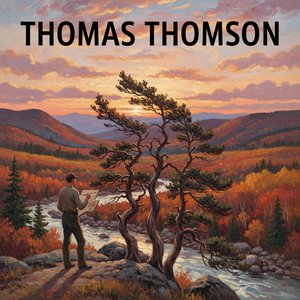
Thomas Thomson: Pioneering Canadian Landscape & the Pursuit of National Identity
Explore the evocative landscapes of Tom Thomson, a pivotal figure in Canadian art & precursor to the Group of Seven. Discover his bold style, lasting legacy, and profound impact on shaping a national artistic identity.

Arthur Lismer: A Pioneer of Canadian Modernism & the Group of Seven's Visionary Spirit
Explore the life & art of Arthur Lismer, a pivotal figure in Canadian Modernism and founding member of the Group of Seven. Discover his landscapes, teaching legacy & lasting influence on Canadian art history.
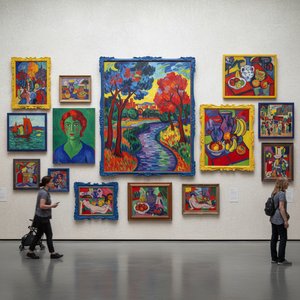
fauve 미술을 정의한 10대 걸작: 강렬한 색채와 혁신적인 표현의 세계
fauve 미술의 심장을 뛰게 하는 10대 걸작! 모리스 드니, 마티스 등 거장의 강렬한 색채와 혁신적인 표현을 만나보세요. 예술 작품 감상부터 인테리어 디자인 영감까지, OriginalUniqueArt.com에서 명품 아트 프린트를 찾아보세요.
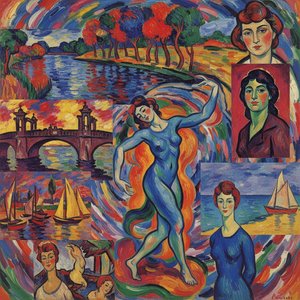
Fauvism's Boldest Visions: 10 Masterpieces That Revolutionized Modern Art | OriginalUniqueArt
Explore 10 Fauvist masterpieces by Matisse, Derain & Vlaminck that ignited Modern Art! Discover bold colors, expressionist landscapes & the history of this revolutionary movement. Find museum-quality prints at OriginalUniqueArt.com.

George Agnew Reid: A Canadian Impressionist's Pursuit of Light, Colour, and National Identity
Explore the life & work of George Agnew Reid, a pivotal figure in Canadian Impressionism. Discover his genre paintings, mural commissions, and lasting influence on art education & national identity. A comprehensive guide for collectors & enthusiasts.