

 실제 크기로 보기
 보내기
보내기 공유하기
공유하기
 상세 보기
상세 보기 가이드 보기

 이미지 다운로드
 유사 작품 더 보기
 X-레이
X-레이 슬라이드 쇼 보기
 Q&A
Q&A 통계 정보
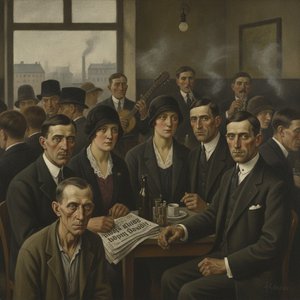
통계 정보Untitled (Man brawling)
 New Objectivity
 12.0 x 8.0 cm
 해머 미술관
 상세 보기
상세 보기
이 페이지에 표시된 작품은 저작권법의 보호를 받으며, 이에 따라 동일한 복제품을 제작하거나 판매하는 것은 법으로 금지되어 있습니다. 이러한 권리 보호는 다음과 같은 국제 협약에 따라 시행됩니다. 베른 협약 또한 다음에서 명시하는 법률을 포함한 국내법에 의해 보호됩니다. 미국 저작권법 제17조.
이 방식은 저작권 보호를 받는 예술 작품을 복제하거나 그대로 재현하는 것이 아니기에 저작권 규정을 완벽히 준수합니다. 대신, 이는 창의적인 재해석의 과정을 거칩니다. 즉, 원작에서 영감을 받되 원작과 동일하지 않은 새로운 회화 작품을 의미합니다.
지클레 / 아트 프린트
빠른 제작과 다양한 마감 옵션을 선택할 수 있는 박물관 수준의 지클레이 및 캔버스 프린트. ( 수작업 채색 복제본 주문하기 디지털 이미지 판매 채널로 전환)




































작품의 원본 비율을 그대로 유지하는 프리셋 사이즈 중에서 선택해 보세요.

액자나 벽면 크기에 맞춰 필요한 가로와 세로 길이를 입력해 주세요. 프린트는 원본 이미지보다 크게 제작할 수 없으며 오직 자르는 것만 가능하므로, 비율이 다른 사이즈를 선택할 경우 이미지의 일부가 잘려 나갈 수 있습니다. 인쇄 작업에 들어가기 전, 최종 확인을 위해 디지털 목업을 보내드립니다. 이 페이지에 표시된 이미지는 실제 잘리는 영역을 나타내지 않으며, 오직 목업을 통해서만 정확한 확인이 가능합니다.


 유리 옵션은 110cm 미만 크기에서만 선택 가능합니다.

Untitled (Man brawling)
지클레 / 아트 프린트
복제본 규격
-


총 결제 금액
₩ 108446
작가 소개
Max Unold: A Chronicle of Urban Realism and German Modernity
Born in Memmingen, Bavaria, in 1885, Max Unold emerged as a pivotal figure within the burgeoning landscape of early 20th-century German art. His career spanned several decades, marked by a dedication to capturing the gritty realities of urban life and a profound engagement with the philosophical currents of his time. While often categorized within the “New Objectivity” movement – a reaction against the prevailing sentimentality of Expressionism – Unold’s work possessed a unique strength, rooted in meticulous observation and a strikingly direct approach to depicting the social fabric of Germany.
Unold's artistic journey began with formal training at the Moritz Heymann art school in 1906, followed by studies at the Munich Academy under Hugo von Habermann. This early exposure to academic traditions provided a solid foundation, but it was his involvement with the “Münchener Neue Secession” – a group of artists seeking to break from established norms and explore new modes of representation – that truly shaped his artistic vision. This association proved particularly significant during the turbulent years leading up to and including World War I, forcing the group to dissolve under the pressures of the Nazi regime. Unold’s experience as its last president instilled in him a deep awareness of social injustice and the fragility of artistic freedom.
The Language of the Street: Style and Technique
Unold's distinctive style is immediately recognizable through his masterful use of woodcuts, lithographs, and engravings. He eschewed romanticized depictions in favor of stark realism, focusing on the often-unpleasant aspects of urban existence – poverty, conflict, and social alienation. His compositions are typically dynamic, filled with movement and a palpable sense of tension. Bold lines, dramatic shadows, and a limited color palette contribute to an atmosphere of immediacy and emotional intensity.
A key element of his technique was his meticulous attention to detail. He studied the faces of ordinary people – laborers, street vendors, and marginalized figures – with an almost photographic precision, capturing their weariness, resilience, and quiet dignity. His depictions of crowded marketplaces, bustling streets, and dimly lit taverns are not merely illustrations; they are powerful social commentaries, offering a glimpse into the lives of those often overlooked by mainstream society. The influence of late 19th-century printmaking is evident in his compositions, particularly in their use of cross-hatching and tonal variations to create depth and texture.
Themes of Social Commentary and Modernity
Unold’s work consistently grappled with the social and political realities of his time. The rise of industrialization, urbanization, and class inequality were central themes in his oeuvre. He frequently depicted scenes of poverty, unemployment, and social unrest, implicitly critiquing the injustices inherent in a rapidly changing society. His images are not overtly propagandistic, but they subtly expose the human cost of modernity – the alienation, hardship, and disillusionment experienced by many.
Furthermore, Unold’s art reflects a broader engagement with philosophical ideas prevalent during this period. The influence of thinkers like Nietzsche and Bergson is discernible in his exploration of subjectivity, perception, and the fragmented nature of modern experience. He sought to capture not just what he *saw*, but also how he *felt* about what he saw – a deeply personal response to the world around him.
Legacy and Significance
Despite facing censorship and persecution during the Nazi era, Max Unold continued to produce significant work throughout his career. His commitment to social realism and his unflinching portrayal of urban life cemented his place as one of the most important exponents of the New Objectivity movement in Germany. His art remains a powerful testament to the enduring relevance of social commentary and a poignant reflection on the challenges of modernity.
Today, Unold’s work is exhibited widely and studied by scholars of German art history. His images continue to resonate with audiences, offering a compelling window into the past and prompting us to consider the complexities of contemporary society. His legacy lies not only in his artistic skill but also in his unwavering dedication to truth and social justice.

Max Unold
1885 - 1964 , Germany
작가 정보 요약
- Artistic Movement Or Style: New Objectivity
- Artists Or Movements Influenced By This Artist: ['Münchener Neue Secession']
- Artists Who Influenced This Artist: ['Hugo von Habermann']
- Date Of Birth: 1885
- Date Of Death: 1964
- Full Name: Max Unold
- Nationality: German
- Notable Artworks: ['Untitled (Man brawling)']
- Place Of Birth: Memmingen, Germany
관련 기사

The Soul of the Grain: Discovering the Timeless Beauty and Artistic Legacy of Woodcut Art
Explore the profound beauty of woodcut art. From ancient traditions to modern mastery, discover the tactile soul of relief printing and its enduring legacy in fine art collections.

German Expressionism's 10 Defining Masterpieces | Art for Your Home
Explore 10 defining German Expressionism masterpieces – from Munch's 'The Scream' to Kandinsky’s abstracts. Discover the artists, stories & bold colors behind this powerful art movement. Find museum-quality reproductions at OriginalUniqueArt.com.

Unblinking Truths: The Clinical Realism of Germany’s Neue Sachlichkeit
Explore the clinical precision of German New Objectivity through masters like Otto Dix. Discover the truth behind the Weimar era's raw realism.
Neue Sachlichkeit: The Unflinching Realism and Social Critique of German New Objectivity
Explore the raw realism of Neue Sachlichkeit. Discover how German New Objectivity artists like Otto Dix and George Grosz captured the turbulent Weimar Republic through unflinching social critique and precise detail. A definitive guide for art historians and collectors.

맥스 어른스트 최고 걸작 25선: 꿈과 무의식의 화가, 공간에 예술을 더하다
맥스 어른스트 최고 걸작 25선을 만나보세요. 초현실주의 화가 어른스트의 꿈, 무의식, 혁신적인 기법이 담긴 명화들을 감상하고, 공간에 예술적 영감을 불어넣으세요. OriginalUniqueArt.com에서 고품질 미술 작품을 컬렉션하세요.