 유화 원작 구매
 Chéri Bibi에 관한 모든 것







































 가로 또는 세로 중 어느 한 면이라도 105cm(약 41인치)를 초과하는 작품이나 복제화의 경우, 프레임은 분해된 키트 형태로 배송됩니다. 이는 안전한 배송을 보장하고 운송 중 발생할 수 있는 손상을 방지하기 위함입니다.


A Fragment of Surreal Reverie: The Enigmatic Presence of Chéri Bibi
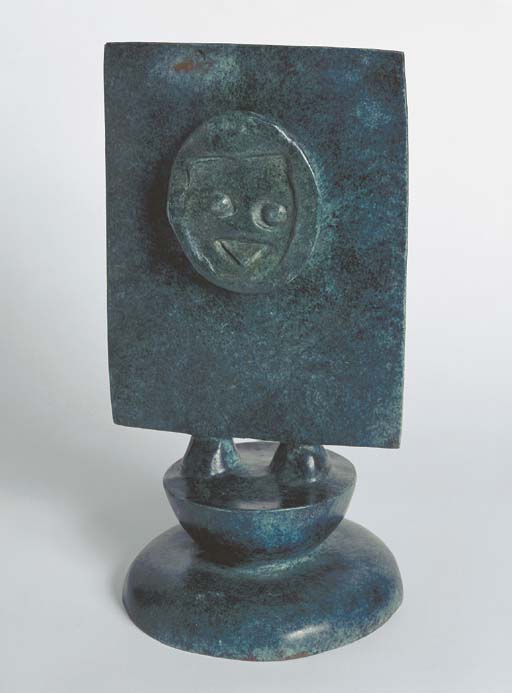
In the vast, labyrinthine landscape of Surrealism, few objects possess the quiet, unsettling charm of Max Ernst’s Chéri Bibi. Crafted in the mid-1930s, this sculpture serves as a profound window into the artist's psyche, acting less like a static object and more like a fragment of a dream captured in metal. At first glance, the work presents a striking simplicity, yet beneath its surface lies a complex tapestry of philosophical inquiry and psychological depth. The piece is composed of three interconnected elements—a sturdy rectangular base, a central pedestal, and a stylized face relief—that together create a vertical ascent toward a whimsical, yet enigmatic, expression. It is an artwork that does not merely occupy space; it commands attention through its ability to bridge the gap between the tangible world and the boundless reaches of the subconscious.
The materiality of Chéri Bibi is central to its emotional resonance. Utilizing bronze or patinated metal, Ernst embraced a texture that feels intentionally raw and uneven. This deliberate manipulation of the surface avoids the polished perfection often found in classical sculpture, instead leaning into a primitive, almost tribal aesthetic. The rough contours invite the viewer to touch with their eyes, sensing the weight and history embedded in the patina. Through this technique, Ernst disrupts the illusion of reality, using the interplay of light and shadow across the textured metal to evoke primal emotions. For the discerning collector or interior designer, this piece offers a sophisticated textural element that brings an organic, historical soul to any contemporary setting.
Symbolism and the Architecture of the Subconscious
To understand Chéri Bibi, one must look through the lens of Ernst’s academic background in philosophy, psychology, and psychiatry. The sculpture is a masterclass in the juxtaposition of opposites: the rigid, geometric precision of the rectangular base and cylindrical pedestal stands in stark contrast to the soft, organic curves of the facial relief. This tension between the rational and the irrational mirrors the core tenet of the Surrealist movement—the desire to liberate the imagination from the constraints of logic. The face itself, with its oversized eyes, small nose, and a wide, playful smile, transcends literal representation. It taps into archetypal imagery, reminiscent of ancient masks, suggesting a sense of timelessness and universality that speaks to the shared human experience of joy and mystery.
The emotional impact of the work is found in its duality. While the smile suggests a sense of whimsy or even amusement, there is an underlying enigmatic quality that prevents the piece from feeling merely decorative. It invites contemplation about vulnerability, desire, and the repressed layers of the human mind. For those seeking to curate a space filled with intellectual depth, Chéri Bibi provides a focal point that stimulates conversation and introspection. As a high-quality reproduction, it allows the spirit of Ernst’s revolutionary vision to inhabit modern interiors, offering a touch of Surrealist magic that transforms a room into a sanctuary for the imagination.
질의응답
Chéri Bibi은(는) 수작업으로 그린 작품인가요, 아니면 프린트된 작품인가요?
수작업 제작: 숙련된 화가가 Chéri Bibi을(를) 리넨 캔버스 위에 유화로 재현합니다.
Chéri Bibi의 사이즈는 어떤 것을 선택해야 하나요?
사이즈는 36.8 x 27.2 cm (₩269539)부터 245.0 x 181.0 cm (₩2210220)까지 있으며, 이 페이지의 표에 주요 단계별 가격이 안내되어 있습니다.
배송은 얼마나 걸리나요?
배송은 전 세계 무료 특송으로 4~5주가 소요되며, 본 페이지에서 긴급 제작 옵션을 선택하실 수 있습니다. 제품은 조건 없이 100일 이내에 반품하여 전액 환불받으실 수 있습니다.
막스 에른스트 작가는 Chéri Bibi 작품에 어떤 재료를 사용했나요?
Bronze
 공유하기
 공유하기
 상세 정보
 학습용 요약본


 다운로드
 유사 작품 더 보기
 슬라이드 쇼 보기
 질의응답

 통계 정보





