프린트 판매로 전환
 더 보기
더 보기







































 가로 또는 세로 중 어느 한 면이라도 105cm(약 41인치)를 초과하는 작품이나 복제화의 경우, 프레임은 분해된 키트 형태로 배송됩니다. 이는 안전한 배송을 보장하고 운송 중 발생할 수 있는 손상을 방지하기 위함입니다.


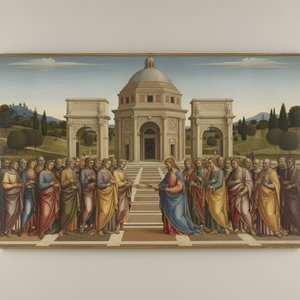
The Annunciation by Mariotto Albertinelli: A Renaissance Echo of Divine Grace
The year is 1503, Florence pulses with the fervor of the High Renaissance. Within the bustling workshop of Cosimo Rosselli, a young painter named Mariotto Albertinelli was honing his craft, absorbing the lessons of masters like Perugino and Piero di Cosimo – artists who were themselves deeply influenced by the innovations arriving from Northern Europe. Albertinelli’s “Annunciation,” now housed within the hallowed halls of the Uffizi Gallery, isn't merely a depiction of a biblical event; it’s a carefully constructed meditation on faith, humility, and the profound mystery at the heart of Christian belief. The painting immediately draws the eye with its dramatic use of light and shadow – a technique known as *chiaroscuro* – that sculpts the figures from a dark, almost brooding background, emphasizing their ethereal beauty and conveying a sense of sacred space.
Albertinelli’s style is characterized by an exquisite attention to detail, a hallmark of Florentine painting during this period. He masterfully renders the folds of Mary's robe with delicate precision, while the angel Gabriel’s wings are depicted in subtle shades of green – a color often associated with life, hope, and the divine. The composition itself is meticulously balanced, employing a pyramidal structure that lends stability and grandeur to the scene. Notice how Albertinelli doesn’t simply present the event; he orchestrates it, guiding the viewer's eye through the narrative arc from Gabriel’s initial announcement to Mary’s accepting response.
A Dialogue of Faith: Symbolism and Narrative
The “Annunciation” is rich in symbolic meaning. The setting, though seemingly simple – a modest room within a Florentine dwelling – is imbued with significance. The architectural details, reminiscent of classical Roman designs, represent the enduring legacy of human reason and order, subtly juxtaposed against the transcendent nature of the divine revelation. Gabriel’s gesture, pointing towards Mary, isn't merely an indication; it’s a visual embodiment of God’s grace reaching out to humanity. Mary’s expression is one of profound contemplation – she’s not startled or overwhelmed, but rather receptive and yielding to the message she receives.
The presence of Elizabeth, depicted kneeling in prayer, reinforces the theme of divine intervention and the importance of faith. Her role as a herald of the coming Messiah underscores the continuity of God's plan throughout history. Furthermore, the inclusion of various religious symbols – halos, crosses, and depictions of angels – subtly elevates the scene to a realm beyond the earthly, reminding the viewer of the eternal significance of this pivotal moment.
The Techniques of a Master: Brushwork and Color
Albertinelli’s skill as a painter is evident in his masterful use of oil paint on canvas. The texture of the brushstrokes is visible, creating a sense of depth and realism that was revolutionary for its time. He employed *sfumato*, a technique popularized by Leonardo da Vinci, to soften edges and create hazy transitions between colors, lending an air of mystery and serenity to the scene. The palette is predominantly earthy – ochres, browns, and muted greens – which contributes to the painting’s solemn atmosphere. However, the vibrant blue of Mary's robe provides a striking contrast, drawing attention to her role as the Mother of God.
Notably, Albertinelli worked in close collaboration with Fra Bartolomeo for many years, sharing techniques and ideas. The influence of Flemish painting is also discernible in Albertinelli’s meticulous rendering of details and his use of light and shadow – a characteristic feature of Northern European art that was gaining popularity in Florence during this period. The careful attention to detail, combined with the dramatic composition and evocative symbolism, makes “Annunciation” a truly remarkable achievement of the High Renaissance.
A Timeless Testament: Emotional Resonance and Artistic Legacy
More than five centuries after its creation, the “Annunciation” continues to resonate with viewers. It’s not simply a historical record of a biblical event; it's an invitation to contemplate the mysteries of faith, grace, and divine love. The painting’s serene atmosphere and profound symbolism evoke a sense of peace and contemplation, inviting us to reflect on our own relationship with the sacred.
Reproductions of this masterpiece offer a remarkable opportunity to bring its beauty and spiritual depth into any setting. Whether adorning a chapel, a private study, or a corporate lobby, Albertinelli’s “Annunciation” serves as a timeless testament to the enduring power of art to inspire and uplift the human spirit.
질의응답
"Annunciation" 작품은 어떤 사이즈로 출력하는 것을 추천하시나요?
Mariotto Albertinelli의 "Annunciation"의 권장 인쇄 사이즈는 Medium입니다.
"Annunciation"은 어떤 색채와 어떤 감정을 담아내고 있나요?
Mariotto Albertinelli의 "Annunciation"의 Earthy 색조는 작품 특유의 Tranquil 분위기와 조화를 이룹니다. 색채는 작품이 감정을 전달하는 핵심적인 요소 중 하나입니다.
"Annunciation"은(는) 어떤 감정을 전달하나요?
Mariotto Albertinelli의 "Annunciation"은(는) Tranquil 분위기를 자아냅니다.
이 작품에 대해 더 알아보기
 미리보기
미리보기
 공유하기
공유하기 공유하기
공유하기
 상세 정보
상세 정보 가이드 보기

 다운로드
다운로드
 유사 작품 더 보기
 X-레이
X-레이 슬라이드 쇼 보기
 질의응답
질의응답 통계 정보
통계 정보