

 실제 크기로 보기
 보내기
보내기 공유하기
공유하기
 상세 보기
상세 보기 가이드 보기

 이미지 다운로드
 유사 작품 더 보기
 X-레이
X-레이 슬라이드 쇼 보기
 Q&A
Q&A 통계 정보
통계 정보St Jerome
 Oil On Panel
- WallArt
- Northern Renaissance
 81.0 x 109.0 cm
 국립 미술관
 상세 보기
상세 보기
웹 미리보기 화면을 훨씬 뛰어넘는 인쇄용 파일을 만나보세요. 저희가 판매하는 모든 디지털 이미지는 스톡 데이터베이스 내의 고해상도 마스터 파일(일반적으로 가로 5,000~15,000픽셀)을 기반으로 합니다. 따라서 대형 인쇄나 정밀한 크롭 작업 시에도 세밀한 디테일을 자신 있게 구현할 수 있습니다.
저희 스튜디오를 거치는 모든 파일은 정교한 손길을 거칩니다. 디지털 전문가가 원작과 대조하여 색상을 점검하고 필요 시 보정하며, 전문 리터칭 도구를 사용하여 선명도와 디테일을 높입니다. 이 과정에서 작가의 붓 터치와 화풍을 충실히 유지하는 것을 원칙으로 합니다. 그 결과, 단순한 스캔본에 필터를 입힌 듯한 느낌이 아닌, 마치 실제 회화 작품을 보는 듯한 이미지를 구현해냅니다.
최종 완료 전 확인 단계가 있습니다. 전문가가 검토하실 수 있도록 72시간 이내에 이메일로 이미지를 보내드립니다. 결과물이 만족스럽지 않으신가요? 수정이나 보완을 요청하시거나, 품질이 기대에 미치지 못할 경우 환불을 요청하실 수 있습니다.
출판사, 디자인 스튜디오, 갤러리 및 인쇄소가 신뢰하는 바로 그 품질입니다.
디지털 이미지
개인 소장 및 전시, 인쇄, 창작 프로젝트를 위한 고해상도 파일을 다운로드하세요. ( 프린트 판매로 전환 수작업 채색 복제본 주문하기)
모든 디지털 이미지 주문 시 제공되는 혜택
전문적인 디지털 이미지 전송 보장
OriginalUniqueArt.com를 선택하시면 단순히 이미지를 받는 것을 넘어, 정밀한 보정 과정을 거쳐 완성된 전문적인 디지털 예술 작품을 만나보실 수 있습니다. 모든 작품에는 만족 보장 서비스가 함께 제공되며, 주문 시 다음과 같은 사항들이 자동으로 포함됩니다:

빠른 이메일 수령
주문 후 72시간 이내에 고해상도 디지털 이미지 파일이 이메일로 발송되며, 즉시 사용하실 수 있습니다.

AI 기술로 최적화된 디지털 파일
귀하의 작품은 고급 AI 기술과 정교한 수동 편집 과정을 거쳐 전문적으로 최적화되며, 이를 통해 디테일과 선명도, 색상의 정확도를 극대화합니다.

평생 무료 재전송 서비스
파일을 실수로 삭제하거나 분실하셨나요? 걱정 마세요. 언제든 무료로 다시 보내드립니다.

추가 수입 비용 없음 - 언제나
관세나 부가세, 배송비 부담 없이 작품을 즉시 소장하세요 - 디지털 다운로드는 언제나 면세 혜택이 적용됩니다.

정확한 색상 보장
전문적인 도구와 색상 관리 시스템을 통해 디지털 이미지가 원본의 색상을 최대한 정확하게 구현하도록 보장합니다.

100일 만족 보장제
구매하신 디지털 이미지에 만족하지 못하실 경우, 100일 이내에 별도의 조건 없이 수정 또는 100% 환불을 진행해 드립니다.

100% 환불 보장
만족스럽지 않으신가요? 디지털 파일을 받으신 후 100일 이내에 조건 없이 전액 환불해 드립니다.

대량 주문 할인
이미지 3매 구매 시 10% 할인 - 5매 구매 시 15% 할인 - 10매 이상 구매 시 20% 할인. 크리에이티브 프로젝트, 갤러리, 에이전시에 매우 유용합니다.
The Scholar’s Sanctuary: Marinus van Reymerswaele's St. Jerome
Marinus van Reymerswaele’s “St. Jerome in His Study,” housed within the venerable halls of the Museo Nacional del Prado, is more than a mere depiction of a biblical figure; it’s a meticulously crafted window into the mind and world of a 16th-century Dutch artist grappling with faith, scholarship, and mortality. Painted around 1545, this oil-on-panel masterpiece offers a profound glimpse into the contemplative life of the saint, revealing a complex interplay of religious devotion, humanist learning, and the ever-present awareness of human frailty.
The scene unfolds within a modestly appointed study—a space deliberately devoid of ostentation. Jerome, rendered with remarkable realism for his time, is seated at a sturdy wooden desk, its surface laden with the paraphernalia of intellectual pursuit: open books, scattered parchment, and a meticulously crafted quill pen. His posture suggests both diligence and weariness, reflecting the arduous task of translating scripture and engaging in theological reflection. The artist’s choice to portray Jerome not as an ascetic hermit but as a learned scholar subtly shifts the focus from monastic seclusion to the intellectual life of faith – a prevalent theme within Northern Renaissance art.
A Symphony of Detail: Technique and Materials
Reymerswaele's mastery lies in his ability to imbue this seemingly simple scene with an astonishing level of detail. The artist’s meticulous observation is evident in the textures of the fabrics, the worn wood of the desk, and the subtle nuances of Jerome’s face—the furrowed brow, the deep-set eyes, and the carefully rendered lines of his beard. The use of oil paint allowed for a remarkable degree of luminosity and depth, capturing the play of light across the surfaces and creating a sense of tangible reality within the painted space.
Notably, the panel itself—oak wood treated with multiple layers of gesso and primer—contributes to the painting’s rich texture and durability. The artist skillfully employed glazing techniques to build up layers of color, achieving a remarkable depth and richness of tone. The careful attention to detail extends even to the background, where a partially drawn curtain reveals a glimpse of daylight filtering through a window, suggesting both the natural world and the potential for divine illumination.
Symbolism and Mortality
Beyond its technical brilliance, “St. Jerome in His Study” is laden with symbolic meaning. The prominent skull positioned beside the quill—a direct reference to mortality—serves as a constant reminder of the fleeting nature of earthly existence. It’s a stark contrast to the saint's intellectual pursuits, highlighting the tension between worldly concerns and spiritual aspirations. The inclusion of spectacles further emphasizes Jerome’s role as a scholar, while the open book suggests his dedication to biblical study.
Furthermore, the statue of Christ on the cross visible in the background—a deliberate inclusion by Reymerswaele—underscores the saint's devotion and his connection to the broader Christian narrative. It elevates the scene beyond a mere portrait of an individual, transforming it into a meditation on faith, knowledge, and redemption. The placement of the statue is carefully considered, drawing the viewer’s eye towards the central theme of sacrifice and salvation.
A Window into a Renaissance Mind
“St. Jerome in His Study” offers a compelling glimpse into the intellectual and spiritual landscape of 16th-century Europe. It reflects the burgeoning interest in classical learning, the rise of humanism, and the ongoing debate between faith and reason. Reymerswaele’s masterful execution—his meticulous attention to detail, his skillful use of color and light, and his profound understanding of symbolism—elevates this painting beyond a simple depiction of a biblical figure; it becomes a timeless meditation on the complexities of the human condition.
Reproductions of this captivating artwork capture much of its original power. Consider commissioning a high-quality hand-painted reproduction to bring this evocative scene into your home or office—a testament to the enduring legacy of Marinus van Reymerswaele and his profound exploration of faith, knowledge, and mortality.
질의응답
"St Jerome"의 고해상도 다운로드 버전을 구매할 수 있나요?
마리누스 반 라이머스와엘의 "St Jerome"의 디지털 파일을 소장하시려면, 디지털 이미지 페이지에서 고해상도 디지털 이미지 다운로드을(를) 주문해 주세요.
마리누스 반 라이머스와엘의 "St Jerome"에 대한 가이드가 있나요?
"St Jerome"에 대한 안내는 작품의 가이드 페이지에서 확인하실 수 있습니다. 이 페이지는 작품의 캡션, 크레딧, 그리고 상세 정보 표(작가, 제작 연도, 재료, 원본 크기, 소장처)를 포함하여 출력 가능한 형태의 팩트시트로 제공됩니다.
마리누스 반 라이머스와엘의 "St Jerome"의 복제본을 어떻게 미리 볼 수 있나요?
마리누스 반 라이머스와엘의 "St Jerome"의 복제본을 미리 보려면 작품의 미리보기 페이지를 열어주세요.
아티스트 프로필
The Enigmatic Master of Antwerp's Shadows
In the bustling, mercantile heart of the sixteenth-century Low Countries, a painter emerged whose brush captured the profound tension between spiritual devotion and worldly greed. Marinus van Reymerswaele, an artist whose very name evokes the coastal town of Reimerswaal where he was born, remains one of the most fascinating enigmas of the Dutch Renaissance. His life followed the typical trajectory of a skilled craftsman; after studying in Leuven, he found professional footing within the prestigious Antwerp Guild of Saint Luke. Registered as a pupil of the glass painter Symon van Daele, Reymerswaele possessed an eye for detail and light that would later define his mastery of texture and atmosphere.
As he established himself in Antwerp, the epicenter of European trade, his work began to mirror the city's own complex identity. He operated a prolific workshop, a bustling studio capable of producing numerous versions of his most celebrated themes. This industriousness allowed his specific visual language—a blend of meticulous realism and biting social commentary—to permeate the collections of the era. His paintings did not merely depict scenes; they staged moral dramas that reflected the anxieties of an era caught between medieval piety and the rising tide of capitalism.
A Gallery of Greed and Grace
To look upon a work attributed to Reymerswaele is to enter a space where the sacred and the profane collide. He was a master of a very specific, recurring iconography that captured the imagination of the sixteenth-century public. His compositions often centered on four pivotal themes that explored the human condition through various lenses:
- The intense study of St. Jerome, representing scholarly devotion and religious contemplation.
- The bustling activity of tax collectors, serving as a satirical commentary on greed and corruption.
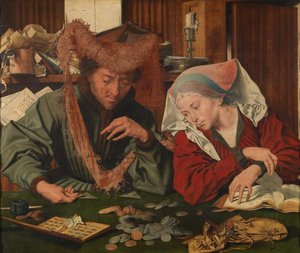
- A money changer and his wife, capturing the intersection of domestic life and commerce.
- The legal world, such as a lawyer in his office, reflecting the growing complexity of civic bureaucracy.
His masterpiece, Two Tax Gatherers, stands as a striking example of Northern Renaissance art. Through the use of oil on oak wood, he achieved a sense of depth and texture that brought his subjects to life. The painting serves as a vivid commentary on the corruption of tax officials, using the detailed depiction of clothing and surroundings to ground his satire in a recognizable reality. In these works, the heavy, old-fashioned garments of his characters add a layer of social critique, reminding the viewer of the era's shifting moral landscape.
Legacy and Artistic Influence
The stylistic development of Marinus van Reymerswaele shows the profound influence of the Antwerp painter Quentin Matsys. This connection helped shape his ability to blend elements of realism with a sharp, often caricatural sense of humor. His work is characterized by an attention to detail that allows the viewer to witness the minute textures of manuscripts, legal documents, and coins, all of which serve as symbols of the era's preoccupation with wealth and law.
While he worked extensively in Antwerp, his journey eventually led him back to the Northern Netherlands. After working in Antwerp until at least 1540, he moved to Goes, where his life reached its conclusion. Though many of his panels are known through attribution rather than signature, his impact on the genre scene remains undeniable. He left behind a visual legacy that continues to captivate, offering a profound glimpse into the mind of an artist grappling with faith, scholarship, and the ever-present shadows of human avarice.
마리누스 반 라이머스와엘
1490 - 1546