
 미리보기
미리보기
 공유하기
공유하기 공유하기
공유하기
 상세 정보
상세 정보 가이드 보기

 다운로드
다운로드
 유사 작품 더 보기
 X-레이
X-레이 슬라이드 쇼 보기
 질의응답
질의응답 통계 정보
통계 정보To Have the Apprentice in the Sun


 더 보기
더 보기
이 페이지에 표시된 작품은 저작권법의 보호를 받으며, 이에 따라 동일한 복제품을 제작하거나 판매하는 것은 법으로 금지되어 있습니다. 이러한 권리 보호는 다음과 같은 국제 협약에 따라 시행됩니다. 베른 협약 또한 다음에서 명시하는 법률을 포함한 국내법에 의해 보호됩니다. 미국 저작권법 제17조.
이 방식은 저작권 보호를 받는 예술 작품을 복제하거나 그대로 재현하는 것이 아니기에 저작권 규정을 완벽히 준수합니다. 대신, 이는 창의적인 재해석의 과정을 거칩니다. 즉, 원작에서 영감을 받되 원작과 동일하지 않은 새로운 회화 작품을 의미합니다.
지클레 / 아트 프린트
빠른 제작과 다양한 마감 옵션을 제공하는 박물관 수준의 지클레이 및 캔버스 프린트. ( 수작업 채색 복제본 주문하기 디지털 이미지로 전환)




P118B ₩10

P118H ₩10

P118W ₩10

P438Z ₩10

P508JH ₩12

P508YH ₩12

P805H ₩10

P805Z ₩10

P919BZ ₩10

P919G ₩10

P919XJ ₩10

P959ZH ₩10

P968JZ ₩12

W106C ₩8

W218G ₩10

W218JH ₩8

W218Y ₩10

W307PJ ₩10

W316G ₩10

W316PJ ₩8

W316Y ₩10

W398PJ ₩8

W4111J ₩10

W500HY ₩15

W500JH ₩15

W692G ₩12

W849H ₩8

W940BG ₩15

W953PJ ₩8




작품의 원본 비율을 그대로 유지하는 프리셋 사이즈 중에서 선택해 보세요.

액자나 벽면 크기에 맞춰 필요한 가로와 세로 길이를 입력해 주세요. 프린트는 원본 이미지보다 크게 제작할 수 없으며 오직 자르는 것만 가능하므로, 비율이 다른 사이즈를 선택할 경우 이미지의 일부가 잘려 나갈 수 있습니다. 인쇄 작업에 들어가기 전, 최종 확인을 위해 디지털 목업을 보내드립니다. 이 페이지에 표시된 이미지는 실제 잘리는 영역을 나타내지 않으며, 오직 목업을 통해서만 정확한 확인이 가능합니다.


 유리 옵션은 110cm 미만 크기에서만 선택 가능합니다.

To Have the Apprentice in the Sun
지클레 / 아트 프린트
복제본 크기
-


최종 결제 금액
₩ 108463
A Bicycle Sonata: Duchamp’s Provocative Meditation on Art and Leisure
Marcel Duchamp's To Have the Apprentice in the Sun, created in 1914, is not merely a depiction of a man riding a bicycle; it’s a carefully constructed paradox, a deliberate disruption of conventional artistic expectations. This seemingly simple image—a figure on sheet music against the backdrop of a piano—resonates with layers of meaning that speak to Duchamp's core philosophy: challenging the very definition of art and questioning its relationship to everyday life. The year 1914, a period marked by immense global upheaval, provides a crucial context for understanding Duchamp’s work – a world on the brink of war, prompting artists to reconsider established norms and explore new modes of expression.
The Composition: Music, Movement, and the Unconventional Subject
The artwork immediately arrests the viewer with its unusual subject matter. A man, dressed in a helmet – a detail that subtly suggests both protection and a certain vulnerability – is engaged in the act of cycling on what appears to be a sheet of music. The positioning is deliberate; the bicycle isn’t simply placed beside the piano, but actively occupies the space *of* the music itself. This fusion of the mechanical and the musical creates an intriguing tension. Duchamp masterfully utilizes black and white, lending the image a stark, almost photographic quality that emphasizes the geometric forms and the figures' placement. The lack of color further directs attention to the composition’s inherent structure and the interplay between the bicycle and the music.
- The Bicycle: Represents movement, progress, and perhaps even a rejection of traditional artistic conventions.
- Sheet Music: Symbolizes art, creativity, and the established order of artistic practice.
- Piano: Suggests harmony, structure, and the potential for both beauty and rigidity.
Dadaist Roots and a Rejection of Representation
Created during Duchamp’s involvement with the Dada movement, To Have the Apprentice in the Sun embodies Dada's core tenets: anti-art, absurdity, and a rejection of traditional artistic values. Dada artists sought to dismantle established hierarchies and expose the arbitrary nature of aesthetic judgment. Duchamp’s work directly reflects this ethos by presenting an image that defies easy interpretation. It isn’t a portrait, a landscape, or a still life; it's a conceptual arrangement designed to provoke thought rather than provide visual pleasure in the conventional sense. The bicycle, a symbol of modernity and industrial progress, is juxtaposed with the music, representing the artistic realm, creating an unsettling yet compelling dialogue.
Symbolism and Duchamp’s Philosophical Inquiry
Beyond its Dadaist context, the image operates on a deeper symbolic level. The “apprentice” – a term suggesting someone in training or learning – could be interpreted as representing the artist himself, grappling with the challenges of forging his own artistic path. The act of riding a bicycle *on* music suggests an attempt to integrate the mundane and the extraordinary, the practical and the aesthetic. Duchamp wasn’t simply depicting a scene; he was engaging in a philosophical inquiry into the nature of art, its relationship to reality, and the role of the artist within society. The helmet worn by the cyclist adds another layer – is it protection from the world, or a shield against the judgment of established artistic norms?
To Have the Apprentice in the Sun remains a powerfully evocative work, demonstrating Duchamp’s genius for disrupting expectations and inviting viewers to reconsider their assumptions about art. A reproduction captures not only the image's striking composition but also the spirit of intellectual rebellion that defines this pivotal moment in modern art history.
질의응답
마르셀 뒤샹의 "To Have the Apprentice in the Sun"의 기법은 무엇인가요?
마르셀 뒤샹의 "To Have the Apprentice in the Sun"의 재료는 Acrylic On Canvas입니다. 복제화는 이 기법 특유의 질감을 그대로 구현하는 것을 목표로 합니다.
마르셀 뒤샹의 "To Have the Apprentice in the Sun"에는 어떤 색상 팔레트가 사용되었나요?
마르셀 뒤샹의 "To Have the Apprentice in the Sun"은(는) Pastels 색조의 팔레트를 사용합니다. 이 팔레트는 작품 전체의 색채적 특징을 집약적으로 보여줍니다.
마르셀 뒤샹의 "To Have the Apprentice in the Sun"에 대한 안내 페이지가 있나요?
마르셀 뒤샹의 "To Have the Apprentice in the Sun"의 학습 가이드 페이지에서는 인쇄 가능한 두 장 분량의 학습용 팩트시트를 제공합니다. 여기에는 작품과 상세 정보표, 작가의 생애 속 시기를 보여주는 연대기, 해당 작가의 다른 작품들, 추출된 컬러 팔레트, 그리고 네 가지 스타일로 바로 복사하여 사용할 수 있는 인용 문구가 포함되어 있습니다.
작가 정보
마르셀 뒤샹: 예술의 경계를 허문 선구자
마르셀 뒤샹, 1887년 프랑스 블랭빌에서 태어나 1968년 뉴욕에서 세상을 떠난 그는 단순한 화가가 아닌, 예술의 본질을 근본적으로 질문하고 현대 미술의 지형을 완전히 바꿔놓은 사상가이자 선구자였다. 뒤샹은 어린 시절부터 예술적 환경 속에서 성장하며 그림과 조각에 대한 재능을 보였지만, 전통적인 예술 교육을 거치면서도 끊임없이 기존의 틀을 벗어나려는 실험 정신을 불태웠다. 그는 단순히 세상을 묘사하는 것을 넘어, 우리가 세상을 인식하고 예술이라는 개념 자체를 정의하는 방식에 도전하고자 했다. 이러한 지적 호기심은 그의 전 생애에 걸쳐 펼쳐진 다채로운 작품 활동의 원동력이 되었다.입체주의에서 다다이즘으로: 관습과의 단절
뒤샹의 예술 여정은 끊임없는 진화와 변화로 점철되어 있다. 초기에는 입체주의의 영향을 받아 형태를 분해하고 다양한 시점을 탐구하는 작품들을 선보였지만, 곧 순수한 미적 가치에만 머무르는 것을 거부하며 더 깊이 있는 질문을 던지기 시작했다. 제1차 세계대전의 참혹함은 그의 예술적 혼란을 더욱 심화시켰고, 그는 기존의 논리와 이성, 그리고 전통적인 예술 가치를 부정하는 다다이즘에 몸을 담게 된다. 다다이즘 안에서 뒤샹은 예술의 의미를 해체하고 재정립하기 위한 과감한 시도를 감행했다. 아름다움을 추구하는 대신, 그는 생각과 논쟁을 불러일으키고 관습적인 판단 기준을 폭로하고자 했다.르디메이드와 예술의 전복
뒤샹이 남긴 가장 획기적인 유산은 바로 ‘르디매이드(ready-made)’라는 개념이다. 이는 일상적인 오브제를 약간의 변형 없이 그대로 작품으로 제시하는 기법으로, 기존의 예술적 숙련도와 창조성에 대한 통념을 완전히 뒤흔들었다. 1917년, 그는 변기를 가져다 놓고 ‘R. Mutt’라는 가명을 써서 ‘샘(Fountain)’이라는 제목으로 전시회에 출품했다. 이 사건은 예술의 정의를 둘러싼 격렬한 논쟁을 불러일으켰고, 예술가의 손기술이 아닌 아이디어가 작품의 가치를 결정한다는 개념을 확립하는 데 결정적인 역할을 했다. L.H.O.O.Q.(1919)는 모나리자의 초상화에 콧수염과 오리를 그린 단순한 콜라주이지만, 예술사의 상징을 해체하고 관습적인 미적 가치관에 도전하는 강력한 메시지를 담고 있다. 뒤샹은 예술이 눈으로 감상하는 것을 넘어, 정신으로 사유하는 활동이어야 한다고 믿었다.유산과 지속적인 영향력
마르셀 뒤샹의 작품은 현대 미술에 지대한 영향을 미쳤으며, 개념 미술, 미니멀리즘, 팝 아트 등 수많은 예술 운동의 토대가 되었다. 그의 아이디어 중심의 예술관은 오늘날까지도 수많은 예술가들에게 영감을 주고 있으며, 창작과 예술의 본질에 대한 끊임없는 질문을 던지고 있다. 입체주의, 다다이즘, 그리고 개념 미술 등 다양한 사조를 섭렵하며 그는 예술의 경계를 허물고 새로운 가능성을 제시했다. 뒤샹은 단순한 예술가가 아니라, 철학자이자 선동가였으며, 예술에 대한 우리의 고정관념을 깨뜨리고 끊임없이 질문하게 만드는 혁명가였다. 그의 작품은 예술이 무엇인가를 정의하는 것이 아니라, 그 의미를 끊임없이 재고하도록 촉구하며 현대 미술의 지평을 넓혔다. 특히 대 유리(The Large Glass)(1915-1923)는 복잡한 상징과 불가사의한 이미지로 뒤샹의 지적 깊이와 지속적인 영향력을 증명하는 작품으로 평가받는다. 뒤샹의 예술은 답을 제공하기보다는 질문을 던지는 방식으로, 오늘날까지도 우리를 사유하게 하고 영감을 불어넣고 있다.주요 작품
- 샘 (Fountain)
- L.H.O.O.Q.
- 대 유리 (The Large Glass)
- 보이테-앙-발리즈 (Boîte-en-valise)

마르셀 뒤샹
1887 - 1968 , 프랑스
작가 정보 요약
- 국적: 프랑스-미국 국적
- 영향을 받은 예술가/운동:
- 개념 미술
- 팝 아트
- 미니멀리즘
- 예술 운동/스타일:
- 입체주의
- 다다이즘
- 개념 미술
- 전체 이름: 마르셀 뒤샹
- 주요 작품:
- 퐁튀(Fountain)
- L.H.O.O.Q.
- 대형 유리 (The Large Glass)
- 보이트-앙-발리즈(Boîte-en-valise)
- 출생일: 1887년 7월 28일
관련 콘텐츠

The Symphony of Canvas: Capturing the Timeless Resonance of Musical Instruments in Fine Art Masterpieces
Explore the profound connection between music and fine art. From ancient iconography to Impressionist masterpieces, discover how legendary instruments are captured on canvas with unparalleled artistry and historical depth for the discerning collector.

Dadaism Explained: The Anti-Art Movement That Redefined Modernity
Explore the radical origins of Dadaism. From the chaos of WWI to Marcel Duchamp's revolutionary readymades, discover how this anti-art movement dismantled tradition and birthed modern conceptual art. An essential guide for students and collectors of fine art history.
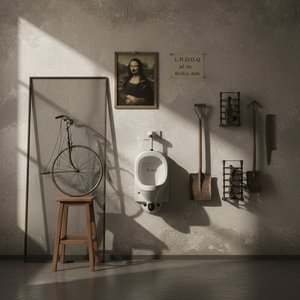
Marcel Duchamp: Challenging Conventions & Redefining Art in the 20th Century
Explore the revolutionary art of Marcel Duchamp! Discover how his Dadaist readymades challenged artistic conventions & redefined modern art. A deep dive into 'Fountain', conceptual shifts, and his lasting impact.
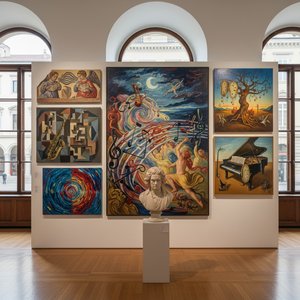
Harmonies on Canvas: Exploring the Visual Representation of Music in Art History
Explore the fascinating history of music's visual representation in art! From ancient symbolism to modern abstraction, discover how artists have captured sound and emotion on canvas. Expert insights & stunning examples.
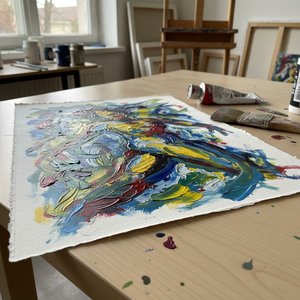
Acrylic on Paper: A Modern Canvas for Contemporary Expression
Explore the versatility of acrylic painting on paper! Discover expert techniques, artist insights & archival practices for creating stunning contemporary art. Learn more at OriginalUniqueArt.


