 프린트 판매로 전환
 더 보기
더 보기







































 가로 또는 세로 중 어느 한 면이라도 105cm(약 41인치)를 초과하는 작품이나 복제화의 경우, 프레임은 분해된 키트 형태로 배송됩니다. 이는 안전한 배송을 보장하고 운송 중 발생할 수 있는 손상을 방지하기 위함입니다.


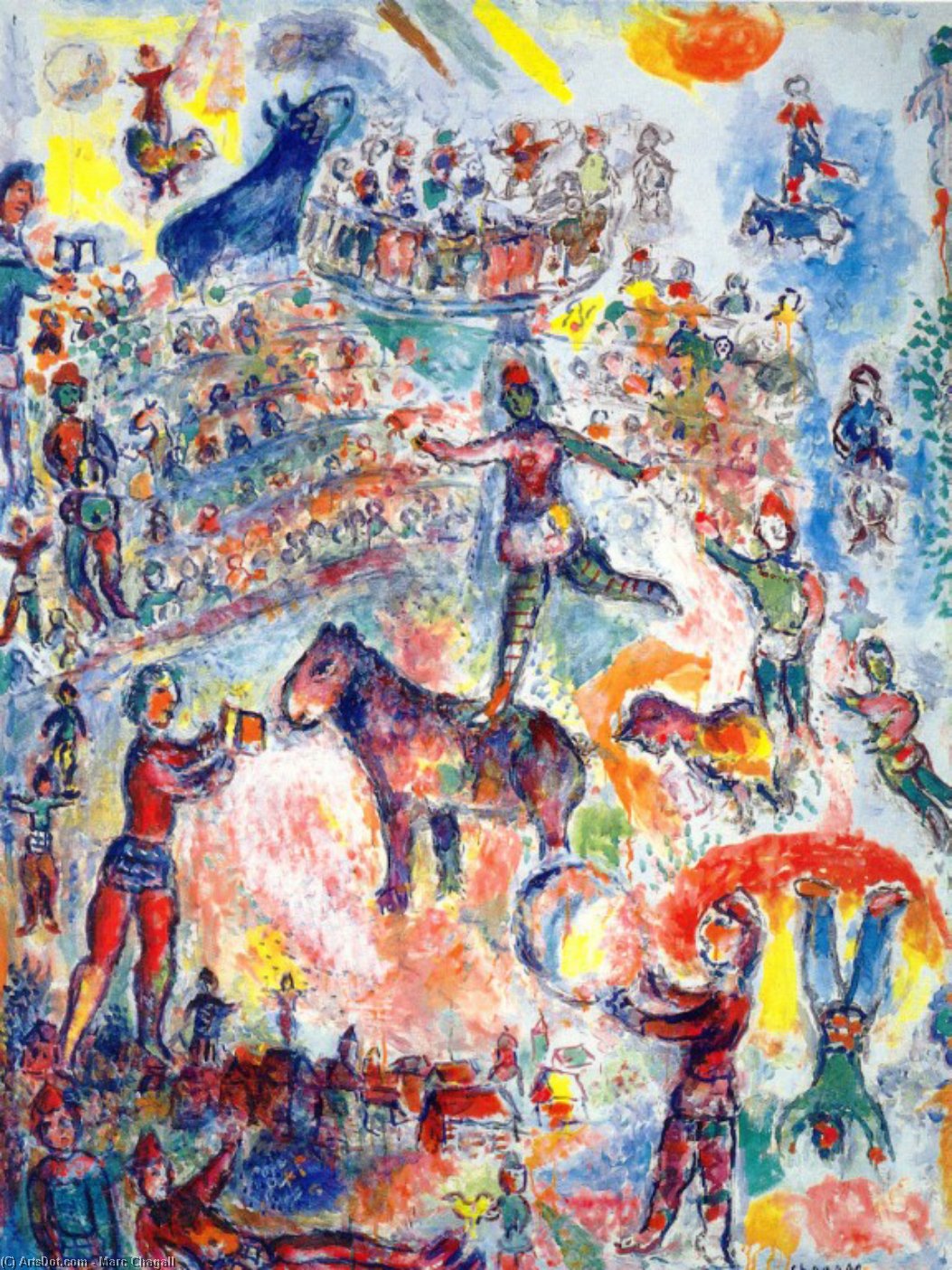
Great Circus – A Surrealist Dreamscape by Marc Chagall
Marc Chagall’s “Great Circus,” completed in 1984, isn't merely a depiction of an itinerant spectacle; it’s a profound meditation on memory, faith, and the fantastical realm of childhood imagination—themes consistently explored throughout Chagall’s prolific oeuvre. Painted during a period marked by significant artistic experimentation and personal upheaval, this monumental canvas embodies the spirit of Surrealism while firmly anchoring itself in Chagall's deeply rooted Jewish heritage.
- Subject Matter: The painting captures a vibrant circus scene—a familiar motif for Chagall—populated by figures both human and animal. Dominating the composition is a man perched atop a horse, symbolizing strength and aspiration, surrounded by an array of fellow performers and equine companions.
- Style & Technique: “Great Circus” exemplifies Chagall’s signature style, characterized by flattened perspectives, stylized forms, and luminous color palettes. Employing tempera on canvas—a technique he favored throughout his career—Chagall achieved a remarkable textural richness and vibrancy that defies conventional realism. The artist's meticulous brushwork contributes to an ethereal quality, blurring the boundaries between dream and reality.
- Historical Context: Chagall’s artistic journey coincided with the tumultuous years following World War II and the rise of Soviet influence in Europe. Despite facing censorship and political pressures, he persevered in his pursuit of artistic expression, reflecting the anxieties and hopes of a generation grappling with profound societal changes. The circus imagery itself speaks to themes of escapism and illusion—a deliberate choice mirroring the artist’s desire to transcend the constraints of everyday life.
- Symbolism: Recurring elements within “Great Circus” resonate with Jewish folklore and biblical narratives. Birds, frequently appearing in Chagall's paintings, represent freedom and spiritual aspiration, soaring above the earthly realm. The horse symbolizes nobility and resilience—a motif that appears repeatedly throughout Chagall’s work as a symbol of faith and perseverance.
- Emotional Impact: Viewing “Great Circus” evokes a sense of wonder and nostalgia—a feeling palpable in its dazzling colors and whimsical arrangements. Chagall's masterful use of color imbues the scene with an emotional intensity, transporting the viewer into a realm of dreamlike beauty. The painting’s enduring appeal lies in its ability to capture the essence of childhood innocence and the yearning for transcendence—themes that continue to resonate powerfully with audiences today.
질의응답
"Great Circus"은(는) 언제 제작되었나요?
마르크 샤갈의 "Great Circus"은(는) 1984년에 제작되었습니다.
"Great Circus"이(가) 공간에 어떤 분위기를 선사할까요?
마르크 샤갈의 "Great Circus"의 Romantic한 분위기는 추천 공간인 Living Room과 완벽하게 어우러집니다.
마르크 샤갈의 "Great Circus"의 휘도는 어느 정도인가요?
마르크 샤갈의 "Great Circus"의 휘도는 Bright Balance입니다. 휘도는 색상이 빛을 얼마나 반사하는지를 나타냅니다.
이 작품에 대해 더 알아보기
 미리보기
미리보기
 공유하기
공유하기 공유하기
공유하기
 상세 정보
상세 정보 가이드 보기

 다운로드
다운로드
 유사 작품 더 보기
 X-레이
X-레이 슬라이드 쇼 보기
 질의응답
질의응답 통계 정보
통계 정보