Surrealism
Non-Euclidian Object (맨 레이)
맨 레이 (1890–1976) 작가의 Non-Euclidian Object Surrealism 운동에 속합니다. Assemblage(으)로 제작되었습니다. 쿠리치바, 브라질에 위치한 오스카 니메이어 박물관에 소장되어 있습니다.
- Assemblage
- 오스카 니메이어 박물관, 쿠리치바

 수작업 유화 작품
 공유하기
 공유하기
 학습용 요약본


 다운로드
 유사 작품 더 보기
 슬라이드 쇼 보기
 질의응답

 통계 정보
Non-Euclidian Object 요약
- 제목
- Non-Euclidian Object
- 작가
- 맨 레이 (1890–1976)
- 작가 출생지
- 필라델피아, 미국
- 매체
- Assemblage
- 전시 장소
- 오스카 니메이어 박물관, 쿠리치바, 브라질
- 운동성
- Surrealism
- 주제
- sculpture, man ray, surrealism, geometry, sphere, metal
Non-Euclidian Object은(는) 무엇을 묘사하고 있나요?
The Geometry of Dreams: Man Ray’s “Non-Euclidian Object”
Man Ray's "Non-Euclidian Object," crafted in 1932 and meticulously realized in 1973, isn’t merely a sculpture; it’s an invitation to contemplate the very nature of perception and reality. Born Emmanuel Radnitzky, Man Ray—a name he adopted with deliberate artistry—was a pivotal figure in the Dada and Surrealist movements, a restless innovator who consistently challenged conventional artistic boundaries. This particular piece embodies his fascination with geometric abstraction, combined with a subtle, almost unsettling, sense of spatial distortion. It’s a work that rewards prolonged observation, revealing layers of meaning within its deceptively simple form.
The sculpture itself is constructed from a striking array of materials: polished silver, sturdy steel tubing, and flexible rubber, all anchored to a subtly textured wooden base. The central element—a polyhedron with a precisely drilled hole—appears to defy the laws of Euclidean geometry, hinting at alternate dimensions and suggesting that our familiar understanding of space may be fundamentally flawed. This deliberate disruption of established rules aligns perfectly with the core tenets of Surrealism, which sought to unlock the subconscious through unexpected juxtapositions and illogical arrangements. Ray’s choice of materials – the cold gleam of silver representing precision and intellect, contrasted against the yielding softness of rubber – creates a compelling tension, mirroring the interplay between logic and intuition within the human psyche.
A Legacy Forged in Paris
Ray's artistic journey began in Philadelphia, where he honed his skills as a commercial artist before being drawn to the vibrant avant-garde scene of New York City. It was through his connections with Marcel Duchamp and the burgeoning Dada movement that Ray’s work began to shift towards abstraction and experimentation. Paris became his adopted home, and it's here, amidst the intellectual ferment of the 1920s and 30s, that he truly blossomed as a photographer and sculptor. The “Non-Euclidian Object” reflects this Parisian influence – a synthesis of American pragmatism with European artistic sophistication.
The sculpture’s creation coincided with Ray's exploration of photograms, or "rayographs," techniques he pioneered to capture ethereal images without the use of traditional cameras. This interest in manipulating light and shadow—in creating illusions of depth and form—clearly informed his approach to sculptural design. The piece can be seen as a continuation of this photographic experimentation, translating the principles of image-making into three dimensions.
Symbolism and the Unconscious
Beyond its purely geometric qualities, “Non-Euclidian Object” is rich in symbolic potential. The hole within the polyhedron could represent an opening to another realm—a portal to the subconscious mind, as explored by Surrealists like Freud. The deliberate distortion of space suggests a questioning of established norms and a desire to break free from conventional thinking. Some art historians have interpreted the piece as a meditation on time itself, with the hole acting as a visual representation of an infinite void.
Furthermore, the use of silver—a material often associated with spirituality and reflection—adds another layer of meaning. It invites contemplation and encourages viewers to engage with their own perceptions and beliefs. The sculpture’s inherent ambiguity allows for multiple interpretations, making it a truly engaging and thought-provoking work of art.
A Timeless Masterpiece
“Non-Euclidian Object” stands as a testament to Man Ray's innovative spirit and his profound understanding of the relationship between form, space, and perception. It’s a sculpture that transcends its materials—wood, metal, and rubber—to become a powerful symbol of artistic exploration and intellectual curiosity. Reproductions capture the essence of this work, offering a glimpse into the mind of one of the 20th century's most influential artists. Its unique geometry continues to challenge our assumptions about reality, inviting us to embrace the beauty of the unexpected and the power of the unconscious.
Non-Euclidian Object은(는) 어느 미술관에 소장되어 있나요?
오스카 니메이어 박물관
쿠리치바, 브라질
건축의 혁신과 예술적 영감을 담은 오스카 니메이어 박물관 소개 브라질 쿠리티바에 위치한 오스카 니메이어 박물관은 현대 건축 철학과 예술 표현의 정수를 보여주는 독특한 성취입니다. 단순한 미술품 보관소 그 이상으로 방문객에게는 눈부신 건축적 재능과 니메이어 건축가의 비전을 반영하는 여정입니다. MON은 쿠리티바의 혁신적인 도시 계획과 지속가능성에 대한 약속을 자랑하는 브라질의 상징적인 문화 유적지이며, 오스카 니메이어 박물관이라는 애칭으로 불립니다.


Non-Euclidian Object의 고해상도 이미지

맨 레이, Non-Euclidian Object, 오스카 니메이어 박물관.
Non-Euclidian Object에 관한 질문과 답변
현재 맨 레이의 "Non-Euclidian Object"은(는) 어디에서 관람할 수 있나요?
맨 레이의 "Non-Euclidian Object"의 원작은 오스카 니메이어 박물관, 쿠리치바, 브라질에 소장되어 있습니다. 복제화를 통해 이 작품을 집에서도 감상하실 수 있습니다.
맨 레이의 "Non-Euclidian Object"에는 어떤 기법이 사용되었나요?
맨 레이의 "Non-Euclidian Object"의 재료는 Assemblage입니다. 복제화는 이 기법 특유의 질감을 그대로 구현하는 것을 목표로 합니다.
맨 레이의 "Non-Euclidian Object"에는 어떤 소재가 등장하나요?
맨 레이의 "Non-Euclidian Object"에 담긴 주제: sculpture, man ray, surrealism, geometry, sphere, metal, wood, object
맨 레이의 "Non-Euclidian Object"의 이미지를 자유롭게 복제할 수 있나요?
맨 레이의 "Non-Euclidian Object"은(는) 저작권 보호 대상입니다 상태입니다. 이 상태에 따라 해당 작품 이미지의 복제 가능 여부가 결정됩니다.
"Non-Euclidian Object"은(는) 어느 작가의 작품인가요?
"Non-Euclidian Object"은(는) 맨 레이의 작품입니다. 이 페이지의 정보는 맨 레이의 원작에 대해 설명합니다.
맨 레이의 "Non-Euclidian Object"은(는) 어떤 미술 사조에 속하나요?
"Non-Euclidian Object"은(는) Surrealism 양식의 작품입니다. 이 사조는 해당 작품이 속한 예술적 전통을 나타냅니다.
"Non-Euclidian Object"은(는) 맨 레이의 예술적 발전 단계 중 어느 시기를 나타냅니까?
맨 레이의 작품 세계에서 "Non-Euclidian Object"은(는) Surrealist Period 시기의 작품입니다. 이 시기는 작가의 다른 작품들과 비교해 보는 데 유용한 지표가 됩니다.
맨 레이의 "Non-Euclidian Object"은(는) 퍼블릭 도메인에 해당하나요? 그 이유는 무엇인가요?
맨 레이의 "Non-Euclidian Object"은(는) 저작권 보호 대상입니다 상태입니다. 저작권 보호 기간은 작가 사후를 기준으로 산정되며, 맨 레이은(는) 1976년에 작고하였습니다.
맨 레이의 "Non-Euclidian Object" 작품은 작가의 본국에 보관되어 있나요?
아니요 - 해당 작품은 해외에 보관되어 있습니다. "Non-Euclidian Object"은(는) 브라질에 소장되어 있는 반면, 맨 레이의 출생지는 미국입니다.
아티스트 맨 레이 소개

1890–1976, 미국
맨 레이
A Life Illuminated by Shadows Emmanuel Radnitzky, 세상에 Man Ray로 알려진 그는 쉽게 규정하기 어려운 불안정한 영혼이었습니다. 1890년 러시아 유대인 이민자 부모에게서 태어나 필라델피아에서 화가를 꿈꾸던 그의 여정은 20세기 초 급진적인 예술적 발효를 구현합니다. “매니” Radnitzky에서 수수께끼 같은 “Man Ray”로의 변화는 관습에 얽매이지 않은 새로운 정체성을 확립하려는 예술가의 결연한 의지를 보여줍니다. 가족이 뉴욕시로 이사하면서 떠오르는 모더니스트 장면과 실험에 대한 평생의 매혹을 경험하게 되었습니다.
맨 레이의 다른 작품들
 La Galerie Surréaliste, rue Jacques Callot
 Pisces1938
 Rayograph (The Kiss)1922
 Solarisation1931
Non-Euclidian Object 관련 에세이
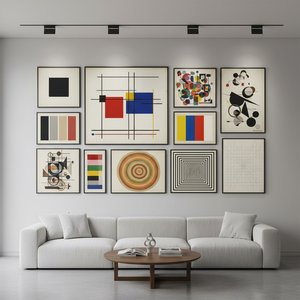 기하학적 추상 미술을 정의한 명작 10가지 | OriginalUniqueArt.com몬드리안, 말레비치 등 거장들의 기하학적 추상 미술 명작 10선을 만나보세요. 각 작품의 예술사적 의미와 색채, 구성을 탐구하고 OriginalUniqueArt.com에서 고품질 아트 프린트를 소장하세요. 지금 바로 온라인 컬렉션을 확인하세요!
 The Radical Legacy of Marcel Duchamp: What Was He Known For?Explore the radical legacy of Marcel Duchamp from his iconic readymades to his portable museum and find ways to bring his vision into your …
 Geometry with Purpose: Distinguishing Suprematism from ConstructivismMaster the differences between Suprematism and Constructivism with our expert guide. Discover the soul of the Russian avant-garde now.