

 보내기
보내기 공유하기
공유하기
 상세 보기
상세 보기 가이드 보기

 이미지 다운로드
 유사 작품 더 보기
 슬라이드 쇼 보기
 통계 정보
통계 정보4 Seated Figures


 상세 보기
상세 보기
이 페이지에 표시된 작품은 저작권법의 보호를 받으며, 이에 따라 동일한 복제품을 제작하거나 판매하는 것은 법으로 금지되어 있습니다. 이러한 권리 보호는 다음과 같은 국제 협약에 따라 시행됩니다. 베른 협약 또한 다음에서 명시하는 법률을 포함한 국내법에 의해 보호됩니다. 미국 저작권법 제17조.
저희는 존중을 담은 합법적인 대안으로서, 원작에서 영감을 받은 맞춤형 수제 유화 작품을 제공합니다. 저희의 숙련된 전문 화가들은 원작의 스타일, 분위기, 예술적 정수를 면밀히 연구하여, 그 자체로 독창적인 창작물이면서도 원작과 동일한 감동을 불러일으키는 새로운 작품을 만들어냅니다.
이 방식은 저작권 보호를 받는 예술 작품을 복제하거나 그대로 재현하는 것이 아니기에 저작권 규정을 완벽히 준수합니다. 대신, 이는 창의적인 재해석의 과정을 거칩니다. 즉, 원작에서 영감을 받되 원작과 동일하지 않은 새로운 회화 작품을 의미합니다.
핸드메이드 유화 복제화
작가가 직접 캔버스에 손으로 그린 유화 작품으로, 원하는 크기와 액자로 맞춤 제작해 드립니다. ( 프린트 판매로 전환 디지털 이미지 판매 채널로 전환)




































작품의 원본 비율을 그대로 유지하는 프리셋 사이즈 중에서 선택해 보세요.

액자나 벽면 크기에 맞춰 필요한 가로와 세로 길이를 입력해 주세요. 본 작품은 수작업으로 제작되므로, 요청하신 비율에 따라 작가가 그림의 가장자리를 조금 더 넓게 그리거나 일부를 조정하여 작업할 수 있습니다. 작업 시작 전, 최종 확인을 위해 디지털 목업 이미지를 보내드립니다. 이 페이지에 표시된 이미지는 실제 결과물과 다를 수 있으며, 오직 목업 이미지만이 정확한 결과물을 보여줍니다.
주문 완료 후 OriginalUniqueArt.com 팀에서 상세 안내를 위해 고객님께 이메일을 보내드리며, 미리보기 시안을 함께 제공해 드립니다.


 유리 옵션은 110cm 미만 크기에서만 선택 가능합니다.

4 Seated Figures
재현 매체
복제본 규격
-


총 결제 금액
₩ 406798
Magdalena Abakanowicz’s “4 Seated Figures”: A Meditation on Vulnerability and Collective Experience
The sculpture "4 Seated Figures" by Magdalena Abakanowicz, created in 2002, stands as a testament to the artist's profound exploration of human psychology and her masterful manipulation of textile sculpture—a medium she revolutionized. More than just aesthetically striking, this piece delves into complex themes of anonymity, resilience, and the enduring legacy of trauma, reflecting Abakanowicz’s own harrowing memories of wartime Poland.The Artist’s Vision: Beyond Formal Aesthetics
Magdalena Abakanowicz (1930-2017) emerged from a formative period marked by significant political upheaval—the Nazi occupation and subsequent Soviet rule—experiences that instilled within her an unwavering commitment to artistic freedom and a deep empathy for the human condition. Her academic training at Warsaw and Sopot academies initially steered her toward Socialist Realism, but Abakanowicz swiftly rejected its propagandistic constraints, prioritizing instead a deeply personal vision rooted in confronting difficult truths about history and identity. This conviction informs every aspect of her oeuvre, including “4 Seated Figures,” where she abandons conventional sculptural conventions to prioritize emotional resonance over technical precision.Technique and Material: Bark-Like Texture and Resin Binding
Abakanowicz’s innovative approach to textile sculpture distinguishes "4 Seated Figures" from many contemporary works. Rather than carving or modeling traditional materials, she employs a technique that mimics the texture of tree bark—a deliberate choice reflecting her fascination with natural forms and their inherent vulnerability. The sculptures themselves are created by pressing burlap soaked in resin and glue into plaster molds derived from human models crafted in the late 1970s. This process yields a surface reminiscent of weathered wood, conveying a sense of exposed musculature and hinting at underlying skeletal structure—a visual metaphor for fragility and resilience.Historical Context: Witnessing Trauma and Embracing Anonymity
The sculpture’s genesis is inextricably linked to Abakanowicz's personal history. She recounted witnessing her mother being shot in the hands during a Nazi raid on their home in Poland, an event that profoundly shaped her worldview and instilled within her a visceral understanding of suffering and resistance. Recognizing the universality of human experience—the shared vulnerability inherent in our existence—Abakanowicz deliberately eschewed gendered or racial distinctions in her figures. As she herself stated, “They are naked, exposed, and vulnerable, just as we all are.” This deliberate anonymity underscores Abakanowicz’s belief that art should transcend specific identities to communicate fundamental truths about the human condition.Symbolism: Exploring Resilience Amidst Decay
The "4 Seated Figures" embody a powerful symbolic representation of endurance amidst inevitable decay—a concept central to Abakanowicz's artistic philosophy. The sculptures’ posture conveys stillness and contemplation, yet simultaneously communicates an underlying tension—the suggestion that these figures are grappling with internal struggles. The bark-like texture serves as a visual reminder of the natural world’s cyclical processes of growth, decline, and renewal, mirroring the human experience of confronting adversity and maintaining inner strength. Ultimately, “4 Seated Figures” invites viewers to contemplate the complexities of existence and to appreciate the beauty found within vulnerability—a timeless message conveyed with remarkable artistic subtlety.질의응답
Magdalena Abakanowicz의 "4 Seated Figures"은(는) 세로형, 가로형 또는 정사각형 구도인가요?
Magdalena Abakanowicz의 "4 Seated Figures"은(는) Landscape 형식입니다. 이 형식은 작품 구성의 비율을 나타냅니다.
Magdalena Abakanowicz의 "4 Seated Figures"은 강렬한 대비를 사용하나요, 아니면 부드러운 조화를 이루고 있나요?
Magdalena Abakanowicz의 "4 Seated Figures"의 색채 구성은 Balanced한 대비와 Balanced Harmony한 조화를 동시에 보여줍니다.
Magdalena Abakanowicz의 다른 이름이나 별칭에는 무엇이 있나요?
Magdalena Abakanowicz은(는) Abakanowicz(으)로도 알려져 있습니다.
작가 소개
The Weaver of Human Shadows: The Life and Legacy of Magdalena Abakanowicz
To encounter the work of Magdalena Abakanowicz is to step into a visceral landscape where the boundaries between organic matter and human emotion dissolve. Born Marta Magdalena Abakanowicz in 1930 in the quiet, noble estate of Falenty, Poland, her early life was shadowed by the profound traumas of the twentieth century. The Nazi occupation of her homeland during World War II was not merely a historical backdrop but a formative crucible; witnessing the resilience and resistance of her family instilled in her a lifelong preoccupation with the themes of survival, vulnerability, and the collective struggle of the human spirit. This early exposure to the fragility of existence would later manifest in sculptures that feel as though they are breathing, decaying, and enduring all at once.
Her artistic education took place within the rigid confines of the Academy of Fine Arts in Sopot and Warsaw during the 1950s, a period dominated by the suffocating aesthetic of Socialist Realism. This state-imposed doctrine demanded art that served as propaganda, yet Abakanowicz found a way to subvert these constraints through the medium of fiber. By turning away from the hard, didactic lines of traditional sculpture and toward the soft, tactile world of textiles, she began to develop a language that was entirely her own. She moved beyond the decorative, transforming woven strands into monumental, three-scale entities that challenged the very definition of what sculpture could be.
The Revolution of the Abakans
In the 1960s, Abakanowicz achieved international renown through the creation of her "abakans"—massive, organic forms crafted from interwoven jute and hessian. These were not mere tapestries hung upon a wall; they were woven forms that descended from ceilings like heavy, biological organisms. These works pioneered a new form of installation art, creating immersive environments that functioned as both objects and spaces. The texture of the coarse fibers, combined with their ambiguous, hollow shapes, evoked a sense of primordial life and existential dread. To walk among the abakans was to navigate a forest of textile shadows, reflecting the anxieties of a generation living under the watchful eye of communist surveillance.
As her career progressed into the 1970s, Abakanowicz’s focus shifted from the purely abstract toward the figurative, though never without maintaining her signature sense of ambiguity. She began to create fragmented, headless, and limb-less human forms that appeared as if they were emerging from—or being consumed by—the earth itself. These sculptures, often cast in bronze, wood, or clay, spoke to the loss of individuality within a mass society. Her ability to use materials like stone and metal to mimic the softness of flesh or the roughness of bark allowed her to explore the human condition with an unflinching, almost haunting honesty.
A Monumental Legacy
The significance of Abakanowicz’s contribution to contemporary art cannot be overstated. She bridged the gap between the traditional craft of weaving and the avant-garde movements of Postminimalism, proving that "soft" materials could carry the weight of profound political and philosophical inquiry. Her influence stretched far beyond the borders of Poland, as she served as a professor in Poznań and later as a visiting professor at UCLA, sharing her radical vision with a global audience.
Her achievements are marked by numerous prestigious accolades, including:
- The Herder Prize (1979), recognizing her cultural impact.
- The Leonardo da Vinci World Award of Arts (1999), celebrating her mastery of form.
- The Lifetime Achievement Award from the International Sculpture Center (2005), cementing her status as a titan of the medium.
Today, her work remains a haunting presence in the world's most esteemed institutions, from the Tate Modern to the National Museum of Women in the Arts. Whether through the towering, hollowed-out figures of her public installations or the intimate, textured surfaces of her early textiles, Magdalena Abakanowicz continues to remind us of our shared capacity for both immense strength and profound fragility. She remains an artist who did not merely represent the human form, but captured its very essence—the struggle to remain whole in a world that seeks to fragment us.

Magdalena Abakanowicz
1930 - 2017 , Poland
작가 정보 요약
- Full Name: Marta Magdalena Abakanowicz
- Nationality: Polish
- Date Of Birth: 1930
- Date Of Death: 2017
- Place Of Birth: Falenty, Poland
- Notable Artworks:
- Agora
- Birds of Knowledge
- Artistic Movement Or Style: Constructivism & Socialist Realism
- Artists Who Influenced This Artist: ['Minimalism']
- Artists Or Movements Influenced By This Artist: ['Contemporary Fiber Art']
관련 기사

The Enduring Form: Exploring Themes & Techniques in Sculpture Across Historical Periods
Explore the rich history of sculpture from ancient masterpieces to contemporary innovations. Discover key techniques, influential artists & investment potential for discerning art collectors.
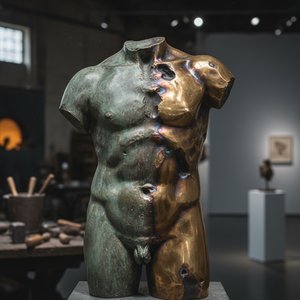
고대 금속의 유산: 청동 조각의 역사, 기법 및 현대적 해석
고대 금속 공예의 정수, 청동 조각의 역사와 기법을 심층 분석합니다. 중국, 그리스, 로마의 대표 작품부터 현대적 해석까지, 미술품 투자 및 컬렉션을 위한 전문가 가이드.

Bronze Sculptures That Defined Art History | OriginalUniqueArt
Journey through art history with our Top 10 bronze sculptures! Explore masterpieces by Rodin, Michelangelo & more. Discover stories behind iconic statues and find museum-quality reproductions for your home decor at OriginalUniqueArt.com.

The Enduring Form: Sculpture Across History, Technique & Emotional Resonance
Explore the rich history of sculpture with OriginalUniqueArt. Discover key techniques, influential artists & investment potential for discerning collectors. Expert insights into valuing and collecting timeless masterpieces.

Bronze Age to Modern Masters: 10 Sculptures That Redefined Art | OriginalUniqueArt
Journey through art history with 10 legendary bronze sculptures – from Michelangelo's David to Rodin’s Thinker. Explore the stories, techniques & timeless beauty of these masterpieces. Find museum-quality reproductions & elevate your home decor on OriginalUniqueArt.com.