

 실제 크기로 보기
 보내기
보내기 공유하기
공유하기
 상세 보기
상세 보기 가이드 보기

 이미지 다운로드
 유사 작품 더 보기
 X-레이
X-레이 슬라이드 쇼 보기
 통계 정보
통계 정보Work Table
 60.0 x 50.0 cm
 상세 보기
상세 보기
이 페이지에 표시된 작품은 저작권법의 보호를 받으며, 이에 따라 동일한 복제품을 제작하거나 판매하는 것은 법으로 금지되어 있습니다. 이러한 권리 보호는 다음과 같은 국제 협약에 따라 시행됩니다. 베른 협약 또한 다음에서 명시하는 법률을 포함한 국내법에 의해 보호됩니다. 미국 저작권법 제17조.
이 방식은 저작권 보호를 받는 예술 작품을 복제하거나 그대로 재현하는 것이 아니기에 저작권 규정을 완벽히 준수합니다. 대신, 이는 창의적인 재해석의 과정을 거칩니다. 즉, 원작에서 영감을 받되 원작과 동일하지 않은 새로운 회화 작품을 의미합니다.
지클레 / 아트 프린트
빠른 제작과 다양한 마감 옵션을 선택할 수 있는 박물관 수준의 지클레이 및 캔버스 프린트. ( 수작업 채색 복제본 주문하기 디지털 이미지 판매 채널로 전환)




































작품의 원본 비율을 그대로 유지하는 프리셋 사이즈 중에서 선택해 보세요.

액자나 벽면 크기에 맞춰 필요한 가로와 세로 길이를 입력해 주세요. 프린트는 원본 이미지보다 크게 제작할 수 없으며 오직 자르는 것만 가능하므로, 비율이 다른 사이즈를 선택할 경우 이미지의 일부가 잘려 나갈 수 있습니다. 인쇄 작업에 들어가기 전, 최종 확인을 위해 디지털 목업을 보내드립니다. 이 페이지에 표시된 이미지는 실제 잘리는 영역을 나타내지 않으며, 오직 목업을 통해서만 정확한 확인이 가능합니다.


 유리 옵션은 110cm 미만 크기에서만 선택 가능합니다.

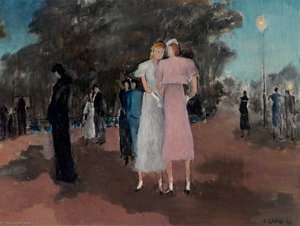
Work Table
지클레 / 아트 프린트
복제본 규격
-


총 결제 금액
₩ 108744
작가 소개
Lynton Harold Lamb: A Londoner’s Eye for the Everyday
Lynton Harold Lamb, a name perhaps less familiar than many of his contemporaries in early 20th-century British art, nevertheless possessed a remarkable talent for capturing the essence of urban life. Born in Hyderabad, India, in 1907 – a detail often overlooked – and returning to England as a young boy, Lamb’s artistic journey was deeply intertwined with London itself. His work isn't grand landscapes or heroic portraits; instead, he offered intimate glimpses into the city’s streets, its people, and the quiet moments that defined daily existence. This unassuming approach, coupled with his meticulous attention to detail and a subtly evocative style, has earned him recognition as a significant chronicler of London’s Victorian and Edwardian periods.
Lamb's early life was shaped by his father’s role as a Wesleyan Methodist minister. This upbringing instilled in him a keen observation of human nature and a respect for the ordinary – qualities that would profoundly influence his artistic vision. After his father’s death, Lamb moved to London and pursued formal training at Camberwell School of Arts and Crafts, studying under influential figures like Noel Rooke and Bernard Meninsky. It was here he honed his skills in lithography and illustration, disciplines that proved crucial to his later career. Notably, during World War II, Lamb’s artistic abilities were put to a different purpose – designing camouflage patterns for the military, demonstrating a versatility often underestimated by those who only knew him for his civilian work.
The Book Jacket and Beyond
Lamb's most enduring legacy lies in his contributions to the world of book design. He quickly established himself as a sought-after illustrator for publishers like Oxford University Press, creating striking and memorable book jackets that became instantly recognizable. His style was characterized by a precise realism, often employing a limited palette of muted tones – browns, greys, and ochres – to create a sense of understated elegance and atmosphere. He wasn’t interested in flamboyant displays; rather, he aimed for an almost photographic quality, capturing the subtle nuances of light and shadow, and the expressions on people's faces.
Beyond book jackets, Lamb expanded his repertoire into posters, architectural decoration, and postage stamp designs. His work for Orient Lines ships, particularly during the 1930s and 40s, showcased his ability to translate complex visual information into engaging and aesthetically pleasing compositions. The ‘Queen Elizabeth II Castle series’ stamps, designed in 1953-54, are a testament to his skill – each stamp depicting a majestic castle framed by an evocative stone wall, a design that quickly became iconic.
A Portrait of London Life
While book jackets and posters often represent the breadth of Lamb’s work, it's in his portraits that he truly shines. His depiction of Professor Sir Percy Nunn, commissioned in 1937, offers a particularly compelling example of his talent. The portrait captures not just the subject’s likeness but also his character – a sense of dignity and quiet reflection conveyed through subtle details like the arrangement of his hands and the expression in his eyes. Lamb's portraits are often set against London backdrops, subtly anchoring them to the city’s atmosphere and history.
His work frequently featured scenes from everyday London life – street corners bustling with activity, market stalls overflowing with goods, and individuals engaged in their daily routines. He wasn’t interested in romanticizing or idealizing these scenes; instead, he presented them with a frankness and honesty that revealed the beauty and complexity of urban existence. Consider his depiction of Sandon Place, a poignant image capturing a moment frozen in time – a scene of quiet domesticity amidst the city's relentless energy.
Legacy and Influence
Lynton Harold Lamb’s career spanned several decades, during which he consistently produced work of remarkable quality and enduring appeal. He was recognized with numerous awards, including the Royal Designer for Industry in 1974, a testament to his significant contribution to British design. While he may not be as widely celebrated as some of his contemporaries, Lamb’s meticulous observation, understated elegance, and profound understanding of London's character have secured his place as a vital chronicler of a bygone era. His work continues to resonate with viewers today, offering a valuable glimpse into the heart and soul of Victorian and Edwardian London – a city he captured with an artist’s eye and a poet’s sensibility.
Lynton Harold Lamb
1907 - 1977
작가 정보 요약
- Full Name: Lynton Harold Lamb
- Nationality: British
- Date Of Birth: 1907
- Date Of Death: 1977
- Place Of Birth: Nizambabad, India
- Notable Artworks:
- Sandon Place
- Professor Nunn (1937)
- Artistic Movement Or Style: Urban art UK, Victorian realism
- Artists Who Influenced This Artist: ['Noel Rooke']
- Artists Or Movements Influenced By This Artist: ['Book jackets']