

 실제 크기로 보기
 보내기
보내기 공유하기
공유하기
 상세 보기
상세 보기 가이드 보기

 이미지 다운로드
 유사 작품 더 보기
 X-레이
X-레이 슬라이드 쇼 보기
 통계 정보
통계 정보A Bay With Camels In The Foreground
 상세 보기
상세 보기
지클레 / 아트 프린트
빠른 제작과 다양한 마감 옵션을 선택할 수 있는 박물관 수준의 지클레이 및 캔버스 프린트. ( 수작업 채색 복제본 주문하기 디지털 이미지 판매 채널로 전환)




































작품의 원본 비율을 그대로 유지하는 프리셋 사이즈 중에서 선택해 보세요.

특정 프레임이나 공간에 맞춰 직접 치수를 입력하실 수 있습니다. 선택하신 사이즈가 원본 이미지의 비율과 일치하지 않을 경우, 작품을 크롭(자르기)하거나 이미지를 대칭 또는 단색 채우기로 확장하여 제작합니다. 제작 시작 전, 최종 확인을 위해 디지털 목업이 전송됩니다.
화면상의 미리보기는 실제 크롭이나 확장 상태를 반영하지 않으므로, 최종 구도는 오직 목업을 통해서만 정확하게 확인하실 수 있습니다.
맞춤 사이즈 제작도 가능하지만, 원본 비율을 유지하기 위해서는 사전 정의된 목록에서 치수를 선택하시는 것을 권장합니다.


 유리 옵션은 110cm 미만 크기에서만 선택 가능합니다.

A Bay With Camels In The Foreground
지클레 / 아트 프린트
복제본 규격
-


총 결제 금액
$ 80
작가 소개
A Pioneer of Realism: The Life and Art of Lukas Moser
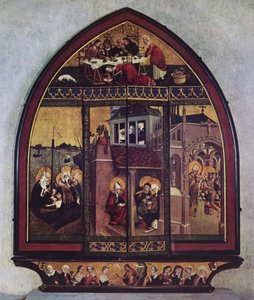
Lukas Moser, a name perhaps unfamiliar to many outside the circles of art history, represents a pivotal figure in the transition from the International Gothic style to the burgeoning realism that would characterize early Renaissance painting. Born around 1390 in Ulm, Germany, Moser’s life remains shrouded in mystery; details are scarce, known primarily through a single inscription on the frame of his most celebrated work – the altarpiece above the altar of St. Mary Magdalene parish church in Tiefenbronn. This lack of biographical information only adds to the allure surrounding this artist who dared to break from established conventions and forge a new path in visual representation. He is considered part of the early Ulm school, working alongside artists like Hans Multscher, yet his individual style quickly distinguished him as a unique voice within the artistic landscape of the period. Moser’s relatively short life concluded around 1434, but the impact of his innovations continues to resonate with scholars and art enthusiasts alike.The Magdalenenaltar: A Turning Point in German Painting
The *Magdalenenaltar* (Altarpiece of St. Mary Magdalene) is undeniably Moser’s magnum opus, and it serves as the primary lens through which we understand his artistic vision. Commissioned for the parish church in Tiefenbronn, the altarpiece depicts scenes from the life of Mary Magdalene with a striking departure from the prevailing aesthetic norms. Where International Gothic often favored elegant elongation, stylized drapery, and symbolic ornamentation, Moser embraced a more naturalistic approach. The figures possess weight and volume; their faces are imbued with individual character and emotion. The landscape backgrounds, though still somewhat conventional, demonstrate an increasing attention to spatial depth and atmospheric perspective – qualities that foreshadow the developments of Early Netherlandish painting. This wasn’t merely a technical shift; it was a fundamental change in how artists perceived and represented the world around them. The altarpiece isn't just a religious narrative; it is a testament to Moser’s keen observation of human anatomy, light, and shadow.Influences and Artistic Development
Pinpointing Moser’s specific influences proves challenging given the limited documentation surrounding his life. However, scholars generally agree that he was exposed to both the late Gothic traditions prevalent in Southern Germany and the emerging artistic trends emanating from Flanders. The influence of the International Gothic style is evident in the initial stages of his work – a refined elegance in line and composition. Yet, Moser quickly moved beyond these conventions, demonstrating an eagerness to experiment with new techniques and approaches. The detailed realism found in the *Magdalenenaltar* suggests a familiarity with Flemish painting, particularly the works of artists like Robert Campin and Jan van Eyck, whose pioneering use of oil paint allowed for unprecedented levels of detail and luminosity. It’s likely that Moser encountered these Northern European influences through trade routes and artistic exchange networks common during the 15th century. His development wasn't a complete rejection of the past but rather a synthesis of existing styles with his own innovative sensibilities.Technique and Style: A New Language of Representation
Moser’s technical mastery is particularly evident in his handling of light and shadow, which he used to create a sense of volume and depth previously unseen in German painting. While the precise materials and techniques employed by Moser remain subject to scholarly debate, it's believed that he experimented with oil-based paints, allowing him to achieve greater subtlety and realism in his depictions of textures and surfaces. His figures are not idealized but rather possess a grounded physicality; their clothing appears realistically draped, and their faces convey a range of human emotions – from sorrow and contemplation to piety and devotion. This emphasis on naturalism wasn’t simply about replicating appearances; it was about imbuing religious narratives with greater emotional resonance and accessibility for the viewer. His style can be characterized by a delicate balance between Gothic elegance and Renaissance realism, creating a unique visual language that set him apart from his contemporaries.Historical Significance and Legacy
Lukas Moser’s contribution to art history lies in his role as a transitional figure – bridging the gap between the International Gothic and the Early Renaissance. His *Magdalenenaltar* is widely regarded as a landmark work, representing a significant shift towards more naturalistic representation in German painting.- He paved the way for subsequent generations of artists to explore new techniques and approaches.
- His emphasis on emotional realism influenced the development of religious art in Southern Germany.
- The altarpiece continues to be studied by scholars as a prime example of early Renaissance innovation.
lukas moser
1390 - 1434
작가 정보 요약
- Artistic Movement Or Style: Late Gothic Art
- Artists Or Movements Influenced By This Artist: ['Early Netherlandish Painting']
- Date Of Birth: c 1390
- Date Of Death: c 1434
- Full Name: Lukas Moser
- Nationality: German
- Notable Artworks:
- Landscape With A Bull
- Meerfahrt Der Heiligen
- Italian Sea Port
- Place Of Birth: Weil der Stadt, Germany