프린트 판매로 전환
 상세 보기
상세 보기







































 가로 또는 세로 중 어느 한 면이라도 105cm(약 41인치)를 초과하는 작품이나 복제화의 경우, 프레임은 분해된 키트 형태로 배송됩니다. 이는 안전한 배송을 보장하고 운송 중 발생할 수 있는 손상을 방지하기 위함입니다.


A Dramatic Testament of Faith: Ludovico Carracci’s “The Trinity with the Dead Christ”
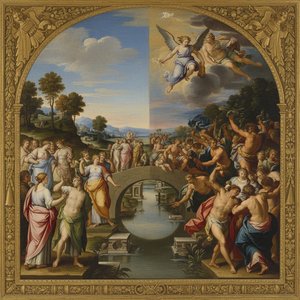
Ludovico Carracci's "The Trinity with the Dead Christ," painted around 1590, stands as a monumental achievement in Bolognese Baroque art—a testament to its profound spiritual ambition and masterful execution. More than just a depiction of biblical sorrow, it’s an immersive experience designed to evoke contemplation and convey the sublime beauty inherent within Christian iconography. This artwork immediately captivates viewers with its dynamic composition and emotionally charged atmosphere, reflecting the artistic sensibilities of its time and cementing Carracci's place as one of the foremost figures shaping the Baroque aesthetic.Composition and Technique: Pyramidal Drama Illuminated
The painting’s pyramidal structure draws the eye upwards towards Christ’s lifeless body, positioned centrally upon a draped cloth bearing Veronica’s imprint—a poignant symbol of compassion and divine mercy. Diagonal lines dominate the scene, propelling movement and intensifying the dramatic tension. Carracci skillfully employs chiaroscuro – the interplay of light and shadow – to sculpt figures and create an ethereal glow around Christ and the angels, highlighting key elements and deepening the emotional impact. The technique is characterized by meticulous layering of oil paint on canvas, resulting in rich textures that capture the subtle nuances of drapery and skin tones. This careful attention to detail underscores Carracci’s commitment to realism blended with expressive idealism—a hallmark of Baroque painting.Historical Context: Reformation Reverberations
Created during the Counter-Reformation, “The Trinity” embodies the Catholic Church's fervent desire for artistic expression that reaffirmed faith and conveyed spiritual truths. Unlike earlier depictions prioritizing theological abstraction, Carracci’s masterpiece incorporates elements of the Pieta tradition—a deeply emotive portrayal of Mary mourning over Christ’s body—further amplifying its emotional resonance. This innovative approach reflects a broader shift towards humanist sensibilities tempered by religious fervor, mirroring the artistic currents circulating throughout Europe during this period. The painting's influence extended beyond Bologna, inspiring artists like Guercino and shaping the visual language of Baroque art for decades to come.Symbolism: Sacrifice, Redemption, and Divine Grace
The artwork’s symbolism speaks volumes about Christian theology. The Trinity itself represents God as Father, Son, and Holy Spirit—a concept central to Orthodox Christianity and a cornerstone of Catholic dogma. Christ's descent into the Father’s arms symbolizes divine redemption and underscores the promise of eternal life. The angels surrounding Christ convey compassion and serve as messengers of God’s grace. Carracci’s masterful use of visual language elevates the scene beyond mere representation, transforming it into an embodiment of spiritual contemplation—a profound meditation on faith, sorrow, and hope.A Legacy Enduring Through Reproduction
Today, high-quality reproductions of “The Trinity with the Dead Christ” allow art enthusiasts worldwide to experience Carracci’s artistic genius firsthand. OriginalUniqueArt.com offers exceptional prints that faithfully capture the painting's luminous colors and dramatic textures—bringing this iconic Baroque masterpiece into homes and galleries across the globe. Explore the artwork’s captivating narrative and immerse yourself in its timeless beauty.질의응답
"The Trinity with the Dead Christ"이(가) 제작되었을 당시 루도비코 카라치의 나이는 어떻게 되었나요?
루도비코 카라치은(는) 35세에 "The Trinity with the Dead Christ"을(를) 제작했습니다. 작가는 1555년에 태어났으며, 이 작품의 제작 연도는 1590년입니다.
루도비코 카라치의 "The Trinity with the Dead Christ"을(를) 활용하기에 가장 좋은 용도와 공간은 무엇인가요?
"The Trinity with the Dead Christ"은(는) Statement 용도로 추천하며, Living Room 공간에 배치하기 좋습니다.
"The Trinity with the Dead Christ"의 복제 작품은 집 안 어느 공간에 잘 어울릴까요?
"The Trinity with the Dead Christ"의 복제본은 Living Room에 잘 어울립니다.
More about this painting
 실제 크기로 보기
 보내기
보내기 공유하기
공유하기
 상세 보기
상세 보기 가이드 보기

 이미지 다운로드
 유사 작품 더 보기
 X-레이
X-레이 슬라이드 쇼 보기
 Q&A
Q&A 통계 정보
통계 정보