프린트 판매로 전환
 상세 보기
상세 보기







































 가로 또는 세로 중 어느 한 면이라도 105cm(약 41인치)를 초과하는 작품이나 복제화의 경우, 프레임은 분해된 키트 형태로 배송됩니다. 이는 안전한 배송을 보장하고 운송 중 발생할 수 있는 손상을 방지하기 위함입니다.


A Renaissance Tableau of Divine Grace: Exploring "The Paradise"
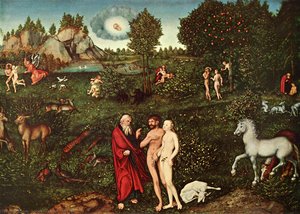
Lucas Cranach the Elder’s “The Paradise,” painted in 1530, isn't merely a depiction of a biblical scene; it’s a carefully constructed dialogue between faith, mythology, and the burgeoning anxieties of the Reformation. Housed within the Kunsthistorisches Museum in Vienna, this oil-on-panel masterpiece transcends its religious subject matter to become a profound meditation on humanity’s relationship with God, temptation, and redemption. Cranach masterfully blends the formality of Northern Renaissance portraiture with the vibrant color palette and dynamic composition characteristic of his era, creating an image that simultaneously invites contemplation and draws the viewer into its intricate narrative.

At the heart of “The Paradise” stands a striking figure: a man, clad in arresting crimson robes, holding a child nude against his chest. This central scene immediately commands attention, drawing us into a moment of profound intimacy and vulnerability. The red, a color often associated with royalty, sacrifice, and divine authority, elevates this father-son tableau to a position of symbolic importance. Surrounding them is a carefully orchestrated gathering – kneeling figures, standing attendants, and even a powerful horse positioned on the right, adding an element of dynamism and perhaps hinting at earthly power and dominion. Cranach’s skill lies not just in rendering individual forms with meticulous detail but also in creating a palpable sense of atmosphere; the lighting, the positioning of the figures, all contribute to a feeling of solemn reverence.
Symbolism Woven into the Fabric of Faith
Beyond its immediate depiction of Adam and Eve’s expulsion from Paradise, “The Paradise” is rich in symbolic layers. The horse, frequently associated with pagan deities like Mars, can be interpreted as a reminder of humanity's fallen state – a connection to earthly desires and temptations that led to their expulsion from Eden. The figures kneeling represent the faithful, seeking solace and guidance within the divine realm. Cranach subtly incorporates elements of classical mythology, suggesting a continuity between the biblical narrative and the broader human story. The very act of holding the child is laden with meaning: it represents both the promise of new life and the responsibility of nurturing faith – a theme central to the Reformation’s emphasis on personal piety.
Technique and Artistic Innovation
Cranach's mastery of oil paint on panel is evident in every brushstroke. The rich, layered textures, the subtle gradations of color, and the remarkable detail with which he renders fabrics and skin tones demonstrate his technical virtuosity. He was a pioneer in utilizing this medium to achieve both luminous effects and intricate realism. Cranach’s ability to balance detailed observation with expressive gesture is particularly noteworthy; the figures are not merely representations but seem imbued with genuine emotion. The composition itself, carefully balanced and meticulously arranged, reflects Cranach's deep understanding of perspective and his desire to create a visually compelling and intellectually stimulating work.
A Legacy of Religious Art and Reformation
“The Paradise” stands as a pivotal work in Lucas Cranach the Elder’s oeuvre and a significant example of German Renaissance art. It reflects the complex religious and political landscape of his time, embodying both Catholic tradition and the emerging Protestant ideals. Cranach's willingness to engage with the Reformation through his art cemented his place as a key figure in shaping the visual language of the era. Today, reproductions of “The Paradise” offer a captivating glimpse into this pivotal moment in history, inviting viewers to contemplate timeless themes of faith, temptation, and redemption – themes that continue to resonate powerfully across centuries.
질의응답
크라나흐 루카스 더 엘더의 "The Paradise"의 채도는 어느 정도인가요?
크라나흐 루카스 더 엘더의 "The Paradise"은(는) 적당히 부드러운 채도의 채도로 기록되었습니다.
크라나흐 루카스 더 엘더의 "The Paradise"의 작품 방향(가로/세로)은 어떻게 되나요?
크라나흐 루카스 더 엘더의 "The Paradise"은(는) 가로형 구도로 이루어져 있습니다. 프린트 크기를 결정하시기 전에 비율을 확인해 보시는 것이 좋습니다.
크라나흐 루카스 더 엘더의 "The Paradise"은(는) 어떤 느낌을 전달하나요?
크라나흐 루카스 더 엘더의 "The Paradise"에 담긴 분위기는 낭만적인이며, 정서적 어조는 우수 어린입니다.
More about this painting
 실제 크기로 보기
 보내기
보내기 공유하기
공유하기
 상세 보기
상세 보기 가이드 보기

 이미지 다운로드
 유사 작품 더 보기
 X-레이
X-레이 슬라이드 쇼 보기
 Q&A
Q&A 통계 정보
통계 정보