
 실제 크기로 보기
 보내기
보내기 공유하기
공유하기
 상세 보기
상세 보기 가이드 보기

 이미지 다운로드
 유사 작품 더 보기
 X-레이
X-레이 슬라이드 쇼 보기
 통계 정보
통계 정보Earth


 상세 보기
상세 보기
지클레 / 아트 프린트
빠른 제작과 다양한 마감 옵션을 선택할 수 있는 박물관 수준의 지클레이 및 캔버스 프린트. ( 수작업 채색 복제본 주문하기 디지털 이미지 판매 채널로 전환)




P118B $10

P118H $10

P118W $10

P438Z $10

P508JH $12

P508YH $12

P805H $10

P805Z $10

P919BZ $10

P919G $10

P919XJ $10

P959ZH $10

P968JZ $12

W106C $8

W218G $10

W218JH $8

W218Y $10

W307PJ $10

W316G $10

W316PJ $8

W316Y $10

W398PJ $8

W4111J $10

W500HY $15

W500JH $15

W692G $12

W849H $8

W940BG $15

W953PJ $8




작품의 원본 비율을 그대로 유지하는 프리셋 사이즈 중에서 선택해 보세요.

특정 프레임이나 공간에 맞춰 직접 치수를 입력하실 수 있습니다. 선택하신 사이즈가 원본 이미지의 비율과 일치하지 않을 경우, 작품을 크롭(자르기)하거나 이미지를 대칭 또는 단색 채우기로 확장하여 제작합니다. 제작 시작 전, 최종 확인을 위해 디지털 목업이 전송됩니다.
화면상의 미리보기는 실제 크롭이나 확장 상태를 반영하지 않으므로, 최종 구도는 오직 목업을 통해서만 정확하게 확인하실 수 있습니다.
맞춤 사이즈 제작도 가능하지만, 원본 비율을 유지하기 위해서는 사전 정의된 목록에서 치수를 선택하시는 것을 권장합니다.


 유리 옵션은 110cm 미만 크기에서만 선택 가능합니다.

Earth
지클레 / 아트 프린트
복제본 규격
-


총 결제 금액
$ 80
Symbolism and Composition
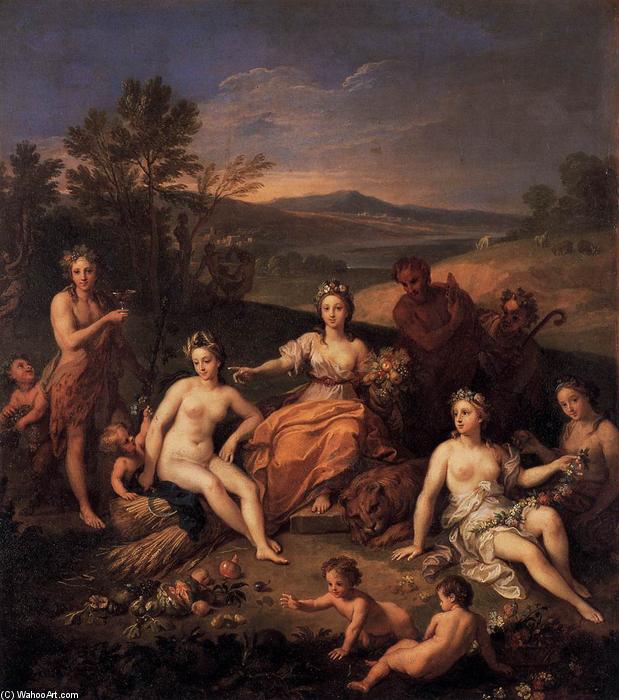
The woman at the center is seated on a rock, adorned with flowers and leaves that seem to sprout from her skin, symbolizing the bounty of nature. She holds a basket filled with fruits and vegetables, emphasizing the theme of abundance. The surrounding figures are engaged in different activities, such as playing musical instruments, suggesting a celebration or ritual. The presence of animals like a lion, a unicorn, and a bird adds to the diversity of life depicted in the painting. Key Features of the painting include:- The use of color, with shades of green, brown, and blue bringing the scene to life
- The serene landscape in the background, featuring trees and mountains under a clear blue sky
- The intricate details, such as the flowers and leaves on the central figure's body
The painting "Earth" is a testament to Louis The Younger Boullogne's ability to convey complex themes through visual storytelling. As a masterpiece of art, it continues to inspire and captivate audiences today. To explore more artworks like this, visit the OriginalUniqueArt.com collection, which features hand-made oil painting reproductions of famous works.
작가 소개
The Scion of a Parisian Artistic Dynasty
Born in the heart of Paris in 1654, Louis de Boullogne the Younger entered a world where art was not merely a profession but a profound family inheritance. As the son of the esteemed Louis Boullogne I, his early years were steeped in the grand traditions of French painting and the rigorous atmosphere of the capital. While his father’s monumental religious frescoes commanded the sacred spaces of cathedrals like Saint-Denis, the younger Boullogne sought to carve a path that was uniquely his own. Alongside his brother, Bon Boullogne, he navigated the prestigious corridors of the Académie Royale, absorbing the humanist principles and technical discipline that would define his illustrious career. This formative period was less about escaping a familial shadow and more about refining a legacy, as he transformed the inherited mastery of his lineage into a sophisticated, personal vision of classical elegance.The Pursuit of Classical Elegance
As the seventeenth century gave way to the eighteenth, Boullogne’s artistic style underwent a profound metamorphosis. While his early inclinations leaned toward the intricate and sometimes strained complexities of Mannerism, he eventually found his true voice in the balanced clarity and serene grace championed by masters such as Nicolas Poussin and Claude Lorrain. His canvases became windows into a more ordered, luminous world. He possessed an unparalleled ability to render the human form with anatomical precision, yet he never allowed technical accuracy to overshadow the emotional resonance of his subjects. Through smooth, meticulous brushwork and a masterful command of subtle tonal gradations, he achieved a sense of visual harmony that felt both timeless and profoundly modern for his era. His skill in depicting the heavy, flowing folds of drapery and the soft, ethereal glow of light upon skin became the unmistakable hallmarks of his celebrated technique.A Symphony of Nature and Myth
The depth of Boullogne’s artistry is perhaps most vibrantly captured in his mythological and allegorical compositions. In works such as Earth, created in 1698, one witnesses a breathtaking celebration of the natural world. In this masterpiece, the artist uses a semi-circle of figures and animals to orbit a central, divine feminine presence—a woman whose very skin seems to sprout with the bounty of flowers and leaves. This painting serves as a testament to his ability to weave complex symbolism into a cohesive narrative, where the abundance of fruits and vegetables reflects the generosity of the land. Whether portraying the celestial drama of Venus in the forge of Vulcan or the quiet dignity of an academic nude, Boullogne’s work consistently sought to elevate the viewer through beauty, intellectual depth, and a profound connection to the natural order.Legacy of the Académie
Beyond the canvas, Louis de Boullogne the Younger left an indelible mark on the institutional fabric of French art. His ascent to the position of Director of the Académie Royale in Paris solidified his influence over generations of painters, marking him as a pillar of the artistic establishment. He was not merely a creator of images but a guardian of the classical ideals that would shape the eighteenth-century aesthetic. His life, spanning from the height of the Baroque to the dawn of a new era, represents a vital bridge between the dramatic intensity of the past and the refined, luminous classicism of the future. Through his dedication to precision, anatomy, and the pursuit of perfection, he ensured that the name Boullogne would remain synonymous with the very essence of French artistic mastery.
louis the younger boullogne
1654 - 1733 , France
작가 정보 요약
- Artistic Movement Or Style: Baroque
- Artists Who Influenced This Artist:
- Peter Paul Rubens
- Gian Lorenzo Bernini
- Date Of Birth: November 19, 1654
- Date Of Death: November 2, 1733
- Full Name: Louis de Boullogne the Younger
- Nationality: French
- Notable Artworks:
- Earth
- Male Nude on his Right Knee, his Left Leg Raised
- Venus in the forge of Vulcan
- Place Of Birth: Paris, France
관련 기사
프라도 미술관 최고 걸작 25선: 역사와 예술의 숨결을 담은 명화 컬렉션 | OriginalUniqueArt
프라도 미술관 최고 걸작 25선을 만나보세요. 벨라스케스, 고야, 엘 그레코 등 거장들의 숨겨진 이야기와 명화의 아름다움을 탐험합니다. 유럽 미술의 정수를 OriginalUniqueArt.com에서 감상하고, 특별한 인테리어 액자로 예술을 경험하세요.
루브르 박물관 최고 걸작 25선: 예술과 역사의 숨결을 담아 (Louvre Masterpieces)
루브르 박물관 최고 걸작 25선을 만나보세요. 모나리자, 빈센트 반 고흐 등 유명 화가들의 숨겨진 이야기와 예술 기법을 탐험하고, 프랑스 미술의 정수를 느껴보세요. OriginalUniqueArt.com에서 고품질 미술 복제품과 인테리어 아이디어를 찾아보세요.

Bring Drama to Your Walls: The Timeless Elegance of Baroque Oil Masterpieces
Elevate your collection with the dramatic grandeur of Baroque oil masterpieces. OriginalUniqueArt offers exquisite, hand-painted reproductions of the Great Masters, featuring authentic chiaroscuro and premium textures. Discover bespoke artistry and expert consultation for elite collectors worldwide.
상트페테르부르크 에르미타주 박물관 최고 걸작 25선: 예술, 역사 그리고 당신의 공간에 영감을 불어넣다
상트페테르부르크 에르미타주 박물관 최고 걸작 25선을 만나보세요. 렘브란트, 레오나르도 다 빈치 등 거장들의 숨겨진 이야기와 예술 기법을 탐험하고, 당신의 공간에 영감을 불어넣는 명화 복제를 OriginalUniqueArt.com에서 찾아보세요.

화려함 속에 감춰진 진실! 바로크 미술을 정의한 10대 걸작 탐구
화려함과 극적인 표현이 압권! 바로크 미술을 대표하는 10대 걸작의 숨겨진 이야기를 만나보세요. 베르니니, 루벤스 등 거장의 작품부터 바로크 색감, 예술적 기법까지 – OriginalUniqueArt.com에서 명품 복제 & 인테리어 영감을 얻으세요! 지금 바로 컬렉션을 탐험해보세요.