프린트 판매로 전환
 상세 보기
상세 보기







































 가로 또는 세로 중 어느 한 면이라도 105cm(약 41인치)를 초과하는 작품이나 복제화의 경우, 프레임은 분해된 키트 형태로 배송됩니다. 이는 안전한 배송을 보장하고 운송 중 발생할 수 있는 손상을 방지하기 위함입니다.


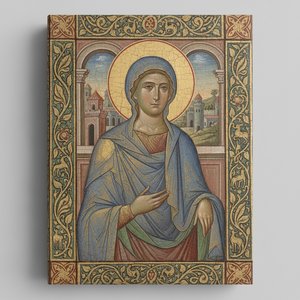
The Visitation: A Florentine Monk’s Vision of Divine Grace
Lorenzo Monaco's "The Visitation," painted around 1405-1410, is more than just a religious depiction; it’s a poignant meditation on faith, family, and the profound mystery at the heart of Christian belief. Created during a pivotal transition in Florentine art – bridging the late Gothic with the nascent Renaissance – this tempera panel offers a glimpse into the deeply spiritual world of Lorenzo Monaco, a Camaldolese monk who profoundly shaped his artistic practice through his contemplative life.
The painting immediately draws the eye to its central composition: Mary Magdalene, rendered in a strikingly sober palette of muted blues and browns, stands before Elizabeth, her face radiating serenity. The scene depicts the iconic moment when Mary visits her cousin Elizabeth, bearing news of the miraculous conception of John the Baptist – an event that foreshadows the birth of Christ. Monaco masterfully captures the quiet intimacy of this encounter, eschewing dramatic gestures in favor of a subtle exchange of glances and a gentle offering of fruit, symbolizing both nourishment and divine grace.
A Byzantine Echo with Renaissance Nuances
Monaco’s style is a fascinating blend of influences. While firmly rooted in the late Gothic tradition – particularly evident in the flattened perspective, elongated figures, and rich use of gold leaf – he subtly incorporates elements that anticipate the burgeoning Renaissance. The composition, though not fully embracing linear perspective, demonstrates a greater attention to spatial relationships than typical of his predecessors. The drapery, while still stylized, possesses a newfound fluidity and naturalism, hinting at the realism that would soon dominate Florentine painting.
The panel’s execution is equally noteworthy. Monaco employed tempera on wood, a technique known for its luminous colors and durability. The layering of pigments – particularly the meticulous application of gold leaf to the architectural elements and the Virgin's garments – creates an astonishing sense of depth and texture. Notice the delicate brushstrokes that define the folds of fabric and the subtle gradations of light and shadow, contributing to a remarkably lifelike portrayal of the figures.
Symbolism Woven into Sacred Narrative
Beyond its immediate depiction, “The Visitation” is rich in symbolic meaning. The fruit offered by Mary represents both earthly sustenance and divine grace – a tangible reminder of God’s provision. The setting, though vaguely reminiscent of a domestic interior, feels more like a sacred space, imbued with an atmosphere of reverence and contemplation. The dark background, almost black in its intensity, serves to heighten the luminosity of the figures and emphasize their spiritual significance.
Furthermore, the painting’s connection to the story of John the Baptist is crucial. The Visitation foreshadows the coming of Christ, highlighting the role of Mary as a key figure in salvation history. Monaco's careful attention to detail—from the Virgin’s modest attire to Elizabeth’s serene expression—underscores the profound humility and grace associated with this pivotal moment.
A Legacy of Spiritual Intensity
Lorenzo Monaco’s “The Visitation” stands as a testament to his unique artistic vision. It's a work that transcends mere representation, offering instead a deeply felt meditation on faith, family, and the mysteries of divine grace. His ability to synthesize Byzantine influences with emerging Renaissance sensibilities resulted in a style characterized by both solemnity and emotional intensity – a legacy that continues to resonate with viewers today. Reproductions of this powerful image offer a window into the soul of a Florentine monk and his profound understanding of the sacred narrative.
질의응답
"The Visitation"의 화풍은 작가가 활동했던 시대와 어떤 연관이 있나요?
로렌초 모나코의 "The Visitation"에서는 Early Renaissance 사조와 르네상스 시대가 만납니다.
로렌초 모나코의 "The Visitation"의 색감과 가장 잘 어우러지는 공간은 어디인가요?
로렌초 모나코의 "The Visitation"의 Dark 색조는 추천 공간인 Living Room과 완벽하게 어우러집니다.
"The Visitation은(는) 로렌초 모나코의 예술적 여정 중 어느 시기에 해당하나요?"
"The Visitation"은(는) 로렌초 모나코의 예술적 생애 중 Early Renaissance 시기에 해당합니다. 이 분류는 해당 작품을 작가의 예술적 발전 과정과 연결해 줍니다.
More about this painting
 실제 크기로 보기
 보내기
보내기 공유하기
공유하기
 상세 보기
상세 보기 가이드 보기

 이미지 다운로드
 유사 작품 더 보기
 X-레이
X-레이 슬라이드 쇼 보기
 Q&A
Q&A 통계 정보
통계 정보