프린트 판매로 전환
 더 보기
더 보기







































 가로 또는 세로 중 어느 한 면이라도 105cm(약 41인치)를 초과하는 작품이나 복제화의 경우, 프레임은 분해된 키트 형태로 배송됩니다. 이는 안전한 배송을 보장하고 운송 중 발생할 수 있는 손상을 방지하기 위함입니다.


Lorenzo Monaco’s Vision: Bridging Gothic Grace and Early Renaissance Innovation
Lorenzo Monaco (1370-1425), a Florentine Monk’s Artistic Journey Lorenzo Monaco, born Piero di Giovanni around 1370 in Siena, stands as an extraordinary figure—a conduit between the opulent elegance of the Trecento Gothic style and the nascent fervor of the Quattrocento Renaissance. Biographical details surrounding his life remain elusive, yet his artistic output speaks volumes about a profound engagement with spiritual contemplation and a remarkable ability to synthesize disparate influences into a singularly distinctive aesthetic. Apprenticed in Florence under masters like Giotto, Spinello Aretino, and Agnolo Gaddi—artists who established a bedrock of narrative clarity and emotional resonance—Monaco absorbed the lessons of tradition while simultaneously pushing boundaries toward a more humanist vision. His decision to join the Camaldolese order in 1390 at Santa Maria degli Angeli wasn’t merely a personal commitment; it fundamentally shaped his artistic sensibilities, imbuing his works with an introspective depth that distinguishes them from many contemporaries.The Artwork: ‘The Nativity’ – A Gothic Masterpiece Illuminated
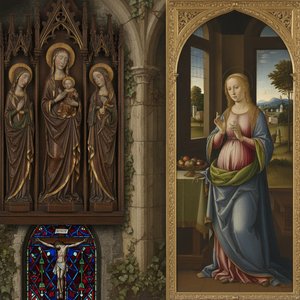
‘The Nativity,’ executed in 1405, is a breathtaking tempera painting measuring just 22 x 31 cm and currently housed at the Metropolitan Museum of Art in New York City. This artwork exemplifies Early Italian Renaissance art, characterized by meticulous realism and masterful use of gold leaf—a technique borrowed directly from Gothic traditions to heighten visual splendor. The scene depicts the traditional Christian narrative: Mary cradling Jesus in a manger, attended by Joseph, angels radiating divine luminescence, and other figures embodying piety and reverence. Color palettes are subdued, dominated by earthy hues that foster an atmosphere of warmth and intimacy – a deliberate contrast to the grandeur often associated with religious art during this period. Notably, the angelic wings shimmer with gold leaf, mirroring the halos surrounding Jesus’ head, symbolizing God's grace and illuminating the composition with ethereal light.Composition & Technique: Layers of Detail and Geometric Precision
The painting’s compositional structure is carefully considered, utilizing diagonal lines created by the postures of the figures to guide the viewer’s gaze toward the central focal point—the infant Jesus. Architectural elements within the stable contribute to this dynamic arrangement, reinforcing the sense of depth achieved through a flattened perspective typical of panel paintings from the Quattrocento. Lines are predominantly straight and geometric, delineating the structure of the stable and capturing the folds of drapery with remarkable accuracy. Shapes are largely defined by rectangular forms—the stable itself—and rounded forms—representing human faces—creating harmonious balance within the scene. Monaco skillfully employs glazing techniques to build up texture and color gradually, resulting in a surface that possesses subtle luminosity and captures the nuances of light and shadow.Symbolism & Emotional Resonance: Echoes of Faith
Beyond its visual beauty, ‘The Nativity’ resonates deeply with theological symbolism. The animals present—oxen and donkey—represent humility and innocence, mirroring Jesus' humble origins. Furthermore, the angel hovering above embodies divine intervention, conveying a profound sense of spiritual awe. Monaco’s artistic vision transcends mere depiction; it aspires to evoke contemplation and reverence for the sacred event at its core. The dark background serves to accentuate the brilliance of the central figures, reinforcing the painting’s emotional impact—a testament to Monaco's ability to translate faith into enduring visual art.Comparative Works & Artistic Influences
Considered alongside similar masterpieces like Paolo Di Giovanni Fei’s ‘Virgin and Child Enthroned,’ which showcases comparable use of gold leaf and intricate detailing within Gothic art, and Lorenzo Monaco’s ‘Lamentation over the Dead Christ,’ ‘The Nativity’ exemplifies the artistic dialogues shaping the Renaissance. Stefano Di Sant'agnese’s ‘Virgin and Child’ similarly demonstrates stylistic convergence between Gothic and Early Renaissance traditions. These artworks underscore Monaco’s role as a pivotal figure in establishing a new aesthetic framework—one rooted in humanist ideals yet retaining the spiritual solemnity of its predecessors.질의응답
"The Nativity"은 어떤 종류의 작품인가요?
"The Nativity"은(는) WallArt 작품입니다.
"The Nativity" 작품을 증강 현실(AR)로 미리 볼 수 있나요?
"The Nativity"의 증강 현실(AR) 미리보기를 경험해 보세요. 호환 가능한 기기에서 작품의 AR로 미리보기 페이지를 통해 여러분의 공간에 배치된 작품을 확인하실 수 있습니다.
로렌초 모나코의 "The Nativity"의 색채는 얼마나 조화로운가요?
로렌초 모나코의 "The Nativity"의 색채는 Balanced Harmony 조화를 보여줍니다. 여기서 조화란 색상들이 서로 어떻게 어우러지는지를 의미합니다.
이 작품에 대해 더 알아보기
 미리보기
미리보기
 공유하기
공유하기 공유하기
공유하기
 상세 정보
상세 정보 가이드 보기

 다운로드
다운로드
 유사 작품 더 보기
 X-레이
X-레이 슬라이드 쇼 보기
 질의응답
질의응답 통계 정보
통계 정보