

 프린트 판매로 전환
 상세 보기
상세 보기







































 가로 또는 세로 중 어느 한 면이라도 105cm(약 41인치)를 초과하는 작품이나 복제화의 경우, 프레임은 분해된 키트 형태로 배송됩니다. 이는 안전한 배송을 보장하고 운송 중 발생할 수 있는 손상을 방지하기 위함입니다.


Maestà: A Symphony of Gold and Grace
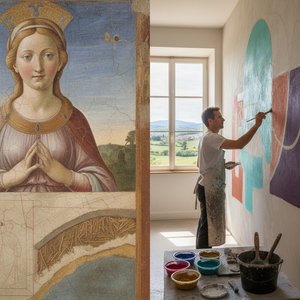
The fresco depicting the Virgin Mary enthroned with Child, known universally as Maestà – Italian for “Majesty” – stands as an emblem of Sienese artistic achievement during the late Gothic period. Painted in 1317 by Lippo Memmi, commissioned for the Palazzo Pubblico’s Civic Hall in San Gimignano, Tuscany, this monumental artwork transcends mere representation; it embodies a profound spiritual aspiration and exemplifies the stylistic innovations that characterized the International Gothic movement. Its enduring allure stems from its masterful blend of opulent decoration and subtle psychological depth—a testament to Memmi's skill as both craftsman and artist.A Vision of Divine Royalty
At first glance, Maestà overwhelms with its breathtaking scale – approximately 3.6 meters by 2.8 meters – and the sheer brilliance of its gilded surface. The central figure, Mary, is depicted seated upon a throne adorned with intricate carvings and lavishly overlaid with gold leaf, mirroring the regal posture of secular monarchs. This deliberate juxtaposition underscores the fresco’s ambition to elevate Marian sanctity to levels comparable to earthly power, reflecting the prevailing theological concerns of the time regarding papal authority and divine grace. Surrounding Mary are twelve angelic figures radiating luminescence, symbolizing God's omnipresence and benevolent protection—a visual echo of biblical narratives depicting Christ’s ascension.Technique and Style: The International Gothic Legacy
Lippo Memmi skillfully employed techniques honed under Simone Martini’s tutelage – a collaboration that cemented the stylistic dominance of the International Gothic style. The fresco utilizes tempera paint on plaster, a medium favored for its luminosity and ability to achieve remarkable detail. However, what truly distinguishes Maestà is Memmi's masterful manipulation of color and texture. Vibrant hues—deep blues, reds, greens—are juxtaposed with shimmering gold leaf, creating an illusionistic depth that draws the viewer into the scene’s ethereal atmosphere. The elongated figures possess a characteristic Gothic aesthetic, characterized by stylized musculature and expressive facial features, conveying emotion rather than anatomical accuracy. Memmi's meticulous attention to drapery folds and surface textures contributes significantly to the fresco’s palpable realism—a paradoxical achievement given its symbolic intent.Symbolism: Echoes of Heavenly Glory
Beyond its visual splendor, Maestà is laden with symbolism reflecting medieval Christian piety. The throne itself represents Mary’s dominion over heaven and earth, symbolizing her role as Queen of Angels and mediator between God and humanity. The twelve angelic figures embody the apostles—representing Christ's divine authority and proclaiming salvation to humankind. Furthermore, the drapery patterns are meticulously designed according to cosmological principles, mirroring the celestial spheres and reinforcing the fresco’s overarching theme of divine order. The careful placement of Mary and Child within the composition underscores their centrality as symbols of faith and redemption—a visual declaration of Christian belief at its most sublime.Emotional Impact: Reverence and Transcendence
Looking upon Maestà evokes a profound sense of awe and contemplation. Its luminous colors, combined with the grandeur of its architectural setting – the Palazzo Pubblico’s arched hall – transport viewers to a realm beyond earthly concerns. The fresco's serene expression conveys an unwavering faith in God’s providence—a sentiment deeply rooted in medieval spirituality. More than just a depiction of religious iconography, Maestà represents a pinnacle of artistic achievement, capturing not only the visual splendor of its time but also the spiritual yearning that fueled Sienese art during the 14th century. It continues to inspire admiration for its beauty and intellectual depth—a timeless masterpiece demonstrating the enduring power of art to communicate profound truths about humanity’s relationship with divinity.질의응답
"Maestà"은(는) 리포 멤미의 평소 작업 스타일을 잘 보여주는 작품인가요?
리포 멤미의 반복되는 주제에는 byzantine tradition, martini’s artistic legacy, royal symbolism & faith, sienese patronage influence, memmi’s distinct style가 포함되어 있으며, "Maestà"은 religious iconography, medieval art, gold leaf decoration, siena fresco, royal patronage, saint mary, divine majesty에 초점을 맞추고 있습니다.
리포 멤미의 "Maestà"의 색채 구성은 어떻게 이루어져 있나요?
리포 멤미의 "Maestà"의 색채 구성은 Statement한 대비와 Strong Color Unity한 조화를 동시에 보여줍니다.
"Maestà"은(는) 누가 제작했으며 어떤 화풍인가요?
"Maestà"은(는) International Gothic Style 양식으로 리포 멤미가 제작하였습니다. 작가와 미술 사조는 해당 작품의 전통을 나타냅니다.




 실제 크기로 보기
 보내기
보내기 공유하기
공유하기
 상세 보기
상세 보기 가이드 보기

 이미지 다운로드
 유사 작품 더 보기
 X-레이
X-레이 슬라이드 쇼 보기
 Q&A
Q&A 통계 정보
통계 정보