
 미리보기
미리보기
 프린트 구매
 공유하기
공유하기 공유하기
공유하기
 상세 정보
상세 정보

 다운로드
다운로드
 유사 작품
유사 작품 X-레이
X-레이 슬라이드 쇼
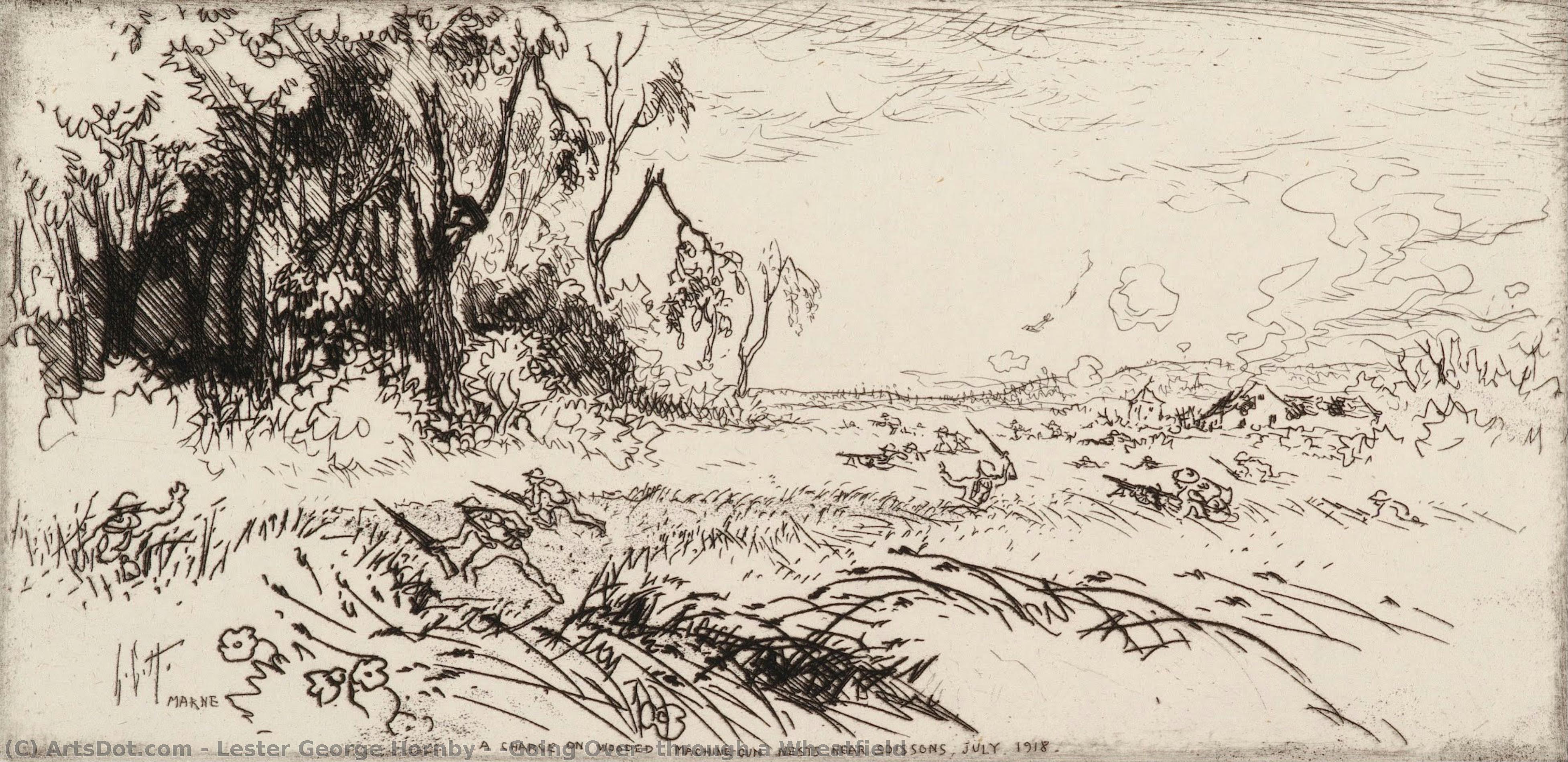
“Going Over” through a Wheatfield


 더 보기
더 보기




P118B $10

P118H $10

P118W $10

P438Z $10

P508JH $12

P508YH $12

P805H $10

P805Z $10

P919BZ $10

P919G $10

P919XJ $10

P959ZH $10

P968JZ $12

W106C $8

W218G $10

W218JH $8

W218Y $10

W307PJ $10

W316G $10

W316PJ $8

W316Y $10

W398PJ $8

W4111J $10

W500HY $15

W500JH $15

W692G $12

W849H $8

W940BG $15

W953PJ $8




작품의 원본 비율을 유지하는 미리 설정된 크기 중에서 선택하세요.

특정 프레임이나 공간에 맞도록 직접 크기를 입력할 수 있습니다. 선택하신 크기가 원본 이미지의 비율과 일치하지 않는 경우, 작품을 자르거나 추가적인 손으로 그린 요소를 사용하여 그림을 확장합니다. 제작 시작 전 승인을 위해 디지털 목업을 보내드립니다.
화면 미리 보기는 실제 자르기 또는 확장을 반영하지 않습니다. 최종 구성은 목업을 통해서만 정확하게 확인하실 수 있습니다.
맞춤 크기 제작도 가능하지만, 원본 비율을 유지하기 위해 사전 정의된 목록에서 크기를 선택하시는 것을 권장합니다.
주문 후 OriginalUniqueArt.com 팀에서 상세 안내를 위해 고객님께 이메일을 보내드리며, 미리보기 시안을 제공해 드립니다.


 유리 옵션은 110cm 미만 크기에서만 선택 가능합니다.

“Going Over” through a Wheatfield
재현 기법
복제본 크기
-


최종 결제 금액
$ 300
작품 상세 설명
작가 약력
The Etched Chronicles of Lester George Hornby
Lester George Hornby (1882–1956) remains a poignant figure in the tapestry of early 20th-century American art, an artist whose work serves as both a technical masterclass in printmaking and a visceral historical record. Born in Lowell, Massachusetts, to a father who was himself a clergyman and an artist, Hornby’s creative sensibilities were nurtured within a domestic environment that valued both spiritual depth and aesthetic precision. His early artistic education was rigorous and diverse, spanning the Pape School of Arts in Boston, the Rhode Island School of Design, and the prestigious Art Students League in New York City. These institutions provided him with a robust foundation in classical technique, yet it was his subsequent immersion in the European avant-garde that would truly define his visual language.
In 1906, Hornby’s journey led him to France, a move that proved transformative for his burgeoning career. Immersed in the vibrant atmosphere of Paris, he began exploring the delicate complexities of copper engraving and etching. He found profound inspiration in the works of masters such as Jean-Paul Laurens, whose meticulous approach to tonal gradations and ability to evoke deep emotion through subtle visual cues became a guiding light for Hornly’s own hand. This period of study allowed him to absorb the lingering essence of Impressionism—the sensitivity to light and atmosphere championed by luminaries like Monet and Renoir—while refining the disciplined, linear precision required for high-level printmaking.
Witness to the Great War
The trajectory of Hornby’s life and art was irrevocably altered by the outbreak of World War I. Having been living in France when war was declared in 1914, he found himself positioned at a unique historical crossroads. Upon returning to Boston briefly, his determination to document the unfolding catastrophe led him back to the French front lines in 1916. Armed with an extraordinary work ethic, Hornby obtained special passes that allowed him to traverse the war zones, where he famously produced upwards of fifty drawings and sketches in a single day. This period of intense, frontline observation birthed some of his most significant and harrowing works.
His etchings from this era are far more than mere illustrations; they are hauntingly atmospheric chronicles of combat. One notable work, “Going Over” through a Wheatfield, captures the terrifying vulnerability of the Allied forces during a charge near Soissons in July 1918. Through his mastery of the etching needle, Hornby was able to convey the stark contrast between the serene, natural landscape and the sudden, lethal intrusion of machine gun nests and heavy fighting. His ability to render the exposure of the Marines as they advanced through open terrain provides a psychological depth that transcends simple reportage, capturing the very essence of dread and bravery inherent in the conflict.
Legacy and Artistic Maturity
As the decades progressed following the Great War, Hornby’s focus shifted from the immediate chaos of the battlefield to more contemplative and instructional pursuits. In his later years, he settled in Rockport, Massachusetts, where he dedicated much of his energy to teaching the next generation of artists. While he rarely sought the grand exhibition stages of his contemporaries, his influence persisted through his pedagogical contributions and the enduring quality of his prints. His later works, including lithographs such as his 1950s holiday greeting cards, demonstrate a continued command over medium and light, reflecting a lifetime of refined observation.
The historical significance of Lester George Hornby lies in his ability to bridge the gap between the classical traditions of the 19th century and the raw, modern realities of the 20th. His oeuvre stands as a testament to the power of printmaking to act as a witness to history. Through the delicate interplay of ink and metal, he preserved the fleeting shadows of war and the enduring beauty of the landscapes he traversed, ensuring that the psychological weight of his era would remain etched in the collective memory of the art world.

lester george hornby
1882 - 1956 , United States of America
주요 정보
- Artistic Movement Or Style: WWI Imagery & European Influenced Style
- Artists Or Movements Influenced By This Artist: ['Romanticism']
- Artists Who Influenced This Artist: ['Jean-Paul Laurens']
- Date Of Birth: March 27, 1882
- Date Of Death: December 17, 1956
- Full Name: Lester George Hornby
- Nationality: American
- Notable Artworks: ['Going Over']
- Place Of Birth: Lowell, United States
관련 기사 더 보기
Beyond the Horizon: 10 Landscape Masterpieces for Your Home Decor
Journey through 10 breathtaking landscape paintings by Monet, Van Gogh & more! Explore iconic artworks, artistic techniques & find inspiration for your home decor. Museum-quality reproductions at OriginalUniqueArt.com. Discover all masterpieces on OriginalUniqueArt.com
Etching Masters: 10 Legendary Prints That Revolutionized Art | OriginalUniqueArt
Journey through 10 legendary etching masterpieces by Rembrandt, Dürer & Goya. Explore the history of printmaking and discover timeless art for your home. Find museum-quality reproductions at OriginalUniqueArt.com.

The Intricate World of Etching: A Historical Survey of Technique, Aesthetic Evolution, and Enduring Artistic Impact
Explore the rich history of etching, from its origins to modern practice. Discover techniques, key artists like Rembrandt, and insights for collectors. A comprehensive guide by OriginalUniqueArt.

Etching: A Historical Survey of Technique, Aesthetic Qualities & Enduring Artistic Significance
Explore the rich history of etching, from its origins to Rembrandt's masterful innovations. Discover the technique, aesthetic qualities & enduring legacy of this captivating art form. Expert insights for collectors and enthusiasts.

낭만 풍경화의 황홀! 예술사에 빛난 10대 걸작 탐구 | 와후아트
낭만주의 시대, 예술혼을 불태운 10대 풍경화 걸작! 터너부터 프리드리히까지, 시대를 초월하는 아름다움을 와후아트에서 만나보세요. 고흐의 색채와 코로의 섬세함이 당신의 공간에 영감을 더합니다. 지금 바로 와후아트에서 명품 미술 작품을 감상하고 구매하세요!

