프린트 판매로 전환
 더 보기
더 보기







































 가로 또는 세로 중 어느 한 면이라도 105cm(약 41인치)를 초과하는 작품이나 복제화의 경우, 프레임은 분해된 키트 형태로 배송됩니다. 이는 안전한 배송을 보장하고 운송 중 발생할 수 있는 손상을 방지하기 위함입니다.


The Soul Captured in Chalk: Leonardo’s Vision of St. Peter
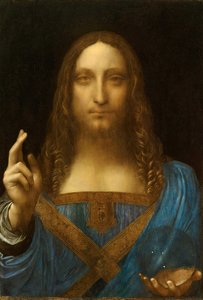
In the quiet corridors of the Musées des Beaux-Arts de Strasbourg, there exists a window into the divine mind of the Renaissance. Head of St. Peter, a profound work attributed to the incomparable Leonardo da Vinci, is far more than a mere portrait; it is an intimate encounter with the sacred. Through the delicate yet commanding medium of pencil and black chalk, Leonardo breathes life into the apostle, capturing a moment of intense spiritual gravity. The subject’s gaze, piercing and resolute, seems to transcend the boundaries of the paper, inviting the viewer into a deep, meditative dialogue with history itself. This is not just a depiction of a man, but an exploration of the weight of faith and the rugged dignity of a saintly life.
The technical mastery displayed in this piece serves as a testament to Leonardo’s unparalleled ability to manipulate light and shadow. Using the subtle gradations of chalk and pencil, the artist sculpts the features of St. Peter with a sculptural precision that anticipates the depth of oil painting. The flowing textures of his long beard and mustache are rendered with such tactile detail that one can almost feel the coarse hair, while the soft transitions of light across his forehead suggest a profound internal thought process. This mastery of sfumato—the smoky blurring of edges—allows the figure to emerge from the background not as a flat image, but as a three-dimensional presence, imbuing the work with an atmospheric mystery that has captivated scholars for centuries.
A Legacy of Devotion and Artistic Evolution
To understand the Head of St. Peter, one must view it within the broader tapestry of Leonardo’s late-period explorations. Often associated with a series of monumental studies including the heads of Christ, St. Andrew, and St. James, this work reflects the artist's fascination with the human countenance as a vessel for divine character. While some historical debates suggest these works may be masterful copies intended to preserve the essence of his larger compositions, the emotional resonance remains undiminable. The piece stands at the intersection of religious devotion and scientific observation, where the anatomical accuracy of the facial structure meets the ethereal symbolism of the saintly subject.
For the discerning collector or interior designer, a high-quality reproduction of this masterpiece offers an unparalleled opportunity to introduce a sense of timelessness and intellectual depth into a space. The monochromatic elegance of the black chalk and pencil allows it to integrate seamlessly into diverse decor styles—from the sophisticated minimalism of a modern gallery-style room to the rich, textured warmth of a classical study. Owning such a piece is not merely about decoration; it is about surrounding oneself with the enduring spirit of the High Renaissance, providing a focal point that inspires contemplation, grace, and a profound connection to the history of human genius.
질의응답
레오나르도 다 빈치의 "Head of St Peter"의 대비는 어느 정도로 강한가요?
"Head of St Peter"의 명암 대비는 설명로 기록되었습니다. 대비는 밝은 부분과 어두운 부분의 차이가 얼마나 강한지를 나타냅니다.
"Head of St Peter"의 저작권 상태가 왜 이렇게 지정되어 있나요?
"Head of St Peter"의 저작권 상태(퍼블릭 도메인 - 저작권 보호 기간이 만료되었습니다)는 작가의 1519년 사망 시점을 기준으로 결정됩니다.
레오나르도 다 빈치의 "Head of St Peter"에서 어떤 감정이 느껴지나요?
레오나르도 다 빈치의 "Head of St Peter"에 담긴 분위기는 극적인이며, 정서적 어조는 우수 어린입니다.
이 작품에 대해 더 알아보기
 미리보기
미리보기
 공유하기
공유하기 공유하기
공유하기
 상세 정보
상세 정보 가이드 보기

 다운로드
다운로드
 유사 작품 더 보기
 X-레이
X-레이 슬라이드 쇼 보기
 질의응답
질의응답 통계 정보
통계 정보