Baroque
St. Peter (주세페 데 리베라)
주세페 데 리베라 (1591–1652) 작가의 St. Peter Baroque 운동에 속합니다. Oil On Canvas(으)로 제작되었습니다. 마드리드, 스페인에 위치한 프라도 미술관에 소장되어 있습니다.
- Oil On Canvas
- 프라도 미술관, 마드리드

 미리보기

 수작업 유화 작품
 공유하기
 공유하기
 가이드 보기


 다운로드
 유사 작품 더 보기
 X-레이
 슬라이드 쇼 보기
 질의응답

 통계 정보
St. Peter: 핵심 정보
- 제목
- St. Peter
- 작가
- 주세페 데 리베라 (1591–1652)
- 작가 출생지
- 자티바, 스페인
- 매체
- Oil On Canvas
- 전시 장소
- 프라도 미술관, 마드리드, 스페인
- 운동성
- Baroque
- 제작 시기
- Early Modern
- 주제
- man, beard, book, keys, cloak, brown
St. Peter은(는) 무엇을 묘사하고 있나요?
The Portrait of St. Peter by Jusepe de Ribera
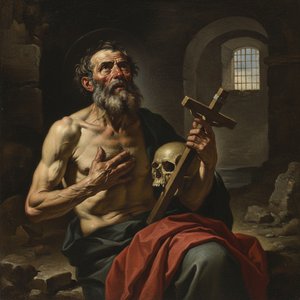
In this oil painting on canvas, Jusepe de Ribera presents us with a portrait of St. Peter. The subject, a central figure among the apostles of Jesus and recognized as the first Pope, is rendered with a profound sense of presence. Ribera focuses on the man himself, capturing the weight of his role and the character of his lived experience. There is a quiet intensity in the way the figure is presented, inviting a closer look at the weathered details of his countenance.
The work is a significant example of the Baroque style. Through this approach, the artist emphasizes the spiritual and human dimensions of the apostle. The depiction avoids idealization, opting instead for a directness that feels immediate. By focusing on the specific attributes of the saint, Ribera allows the subject to command the space, presenting a figure that is both a religious icon and a man of flesh and bone.
Composition and Visual Elements of the Portrait
The composition is built upon a stable pyramidal structure, with the head of St. Peter forming the apex of the form. He is presented from the waist up, his body turned slightly toward the viewer's left. In his right hand, he holds a book and a set of keys, objects that anchor the figure within the frame. This arrangement directs the eye upward toward his weathered features, creating a sense of quiet, grounded presence.
A strong light source enters from the left, illuminating his face and upper body while casting the rest of the figure into deep shadow. This light creates a sharp contrast against a background that is nearly black, pushing the subject forward into the viewer's space. The color palette is restrained, dominated by warm earth tones—ochre, brown, and gold—which emphasize the textures of his skin and the heavy folds of his clothing.
Technique and Artistic Style of the Work
The work is defined by a profound use of tenebrism, where the subject emerges from a nearly black background into a sharp, focused light. This dramatic chiaroscuro creates a sense of volume, pulling the figure forward and emphasizing the physical presence of the man. Such a heavy interplay of light and shadow reflects the influence of Caravaggio, grounding the religious subject in a palpable, earthly reality. The light source, positioned to the left, carves out the contours of the face and the weathered texture of the skin, casting deep shadows that heighten the emotional weight of the portrait.
Ribera’s approach to the medium is tactile and deliberate. He employs a technique of layering paint to build up depth, allowing the viewer to sense the physical weight of the drapery and the coarse nature of the beard. Visible brushstrokes are not hidden; instead, they contribute to the overall effect, lending a sense of immediacy to the rendering of the fabric and the aged features. Strong, defined lines delineate the eyes, nose, and mouth, providing a structural clarity that balances the more fluid, organic shapes of the figure. The result is a composition that feels both intensely personal and physically substantial.
Other Works by Jusepe de Ribera
The artist's exploration of this particular subject matter is reflected in several other significant pieces within our collection and major institutions. We hold St. Simeon 1 in our catalog, a work that speaks to the same profound human experience found in this portrait. Another notable piece in our collection is The Repentance of Saint Peter, which is currently housed in the Museum of Fine Arts, Lyon.
Beyond our own holdings, Ribera's preoccupation with the themes of remorse and spiritual weight is evident in other historical examples. The work known as Penitent St. Peter, dated about 1630, is held at the Kunsthistorisches Museum in Vienna. This piece shares a similar intensity in its depiction of the apostle's character. Additionally, The Tears of Saint Peter, which dates to 1612, is part of the collection at the Metropolitan Museum of Art in New York. These works collectively illustrate the artist's ability to capture the complexities of faith and the physical reality of the human condition through his characteristic use of light and shadow.
St. Peter은(는) 어느 미술관에 소장되어 있나요?
프라도 미술관
마드리드, 스페인
프라도 미술관의 역사 프라도 미술관의 기원은 18세기로 거슬러 올라가 스페인 왕실 컬렉션과 그 궤를 같이합니다. 페르난도 7세 치하에서 자연사 캐비닛을 향한 비전에서 시작된 이 공간은, 시간이 흐르며 점차 회화와 조각을 위한 숭고한 안식처로 그 성격이 변화하였습니다. 이러한 전환은 단순한 과학적 탐구의 장을 스페인 왕실의 가장 소중한 보물들을 간직한 보고로 탈바꿈시켰습니다.


고해상도 St. Peter
주세페 데 리베라, St. Peter, 프라도 미술관. 퍼블릭 도메인
St. Peter에 관한 질문
"St. Peter"의 저작권 상태가 왜 이렇게 지정되어 있나요?
주세페 데 리베라의 "St. Peter"은(는) 어떤 미술 사조에 속하나요?
주세페 데 리베라의 "St. Peter"은(는) 어떤 공간에 잘 어울릴까요?
주세페 데 리베라의 "St. Peter"에서 어떤 색상이 주를 이루나요?
"St. Peter"은 어떤 종류의 작품인가요?
"St. Peter"의 색감은 강렬한 편인가요, 아니면 부드러운 편인가요?
"St. Peter"의 색채 강도는 Balanced입니다. 강도는 색상이 얼마나 선명하게 느껴지는지를 나타냅니다.
"St. Peter"에서 매체와 움직임은 어떻게 결합되어 있나요?
"St. Peter"은(는) Baroque 양식의 Oil On Canvas 기법으로 제작되었습니다.
주세페 데 리베라의 "St. Peter"은(는) Baroque를 작가의 모국과 어떻게 연결하고 있나요?
아티스트 주세페 데 리베라 소개

1591–1652, 스페인
주세페 데 리베라
그림자 속에서 피어난 삶: 호세 데 리베라 호세 데 리베라(Jusepe de Ribera), 많은 이들에게 ‘Lo Spagnoletto’ – “작은 스페인 사람”으로 알려진 그는 바로크 시대의 거대한 인물이었으며, 그의 캔버스는 극적인 강렬함과 냉철한 사실주의로 맥동쳤습니다. 1591년 스페인의 사티바(Xàtiva)에서 태어난 리베라는 발렌시아 기원을 멀리 떠나, 결국 당시 스페인 통치하에 있던 17세기 나폴리의 가장 중요한 화가 중 한 명으로 자리매김했습니다. 리베라의 삶은 단순히 예술적 발전의 연대기가 아니었습니다. 그것은 고난, 야망, 그리고 인간 조건의 날것 그대로의 복잡성을 묘사하려는 흔들림 없는 헌신으로 짜여진 이야기였습니다.
주세페 데 리베라의 다른 작품들
 남편과 아들과 함께 있는 마그달레나 벤투라1631
 단지증
 St. Onuphrius1637
 The Duel of Women (The Duel of Isabella de Carazzi and Diambra de Pettinella)1636
St. Peter 관련 에세이
 Mastering the Shadows: The Dramatic Power of Chiaroscuro and Tenebrism in Baroque Fine ArtExplore the profound drama of chiaroscuro and tenebrism. Discover how masters like Caravaggio used light and shadow to sculpt emotion and v…
 Masterpieces of Light: The Top 25 Artworks by Duccio di BuoninsegnaJourney through the divine elegance of Duccio di Buoninsegna. Explore 25 iconic Sienese masterpieces, from the Maestà to the Rucellai Madon…
 Jusepe de Ribera: Dramatic Realism & Spiritual Intensity in the Spanish Golden AgeExplore the powerful Baroque paintings of Jusepe de Ribera, master of tenebrism and dramatic realism. Discover his spiritual intensity, inf…