유화 원작 구매
 St. Andrew에 관한 모든 것







































 가로 또는 세로 중 어느 한 면이라도 105cm(약 41인치)를 초과하는 작품이나 복제화의 경우, 프레임은 분해된 키트 형태로 배송됩니다. 이는 안전한 배송을 보장하고 운송 중 발생할 수 있는 손상을 방지하기 위함입니다.


A Moment of Quiet Sorrow
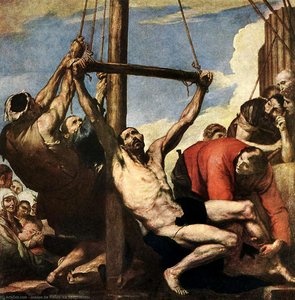
The air in the room feels heavy, thick with the weight of unspoken prayers. St. Andrew sits in a space where light and shadow struggle for dominance, his form emerging from a darkness so profound it feels tangible. He leans forward, his body heavy with a fatigue that transcends the physical. A large book lies open before him, its pages perhaps holding the very scriptures that now weigh upon his spirit. His hand rests against his forehead, a gesture of profound contemplation or perhaps a silent plea against the exhaustion of the soul. The scene is one of intense solitude, where the only companion is the quiet gravity of his own thoughts.
The light does not merely illuminate; it strikes. It catches the stark white of his beard and the pale skin of his hands, carving his features out of the surrounding gloom. This dramatic interplay of light and shadow creates a sense of immediate, visceral presence. Every wrinkle in his brow and every fold of his heavy drapery tells a story of a man caught in a moment of spiritual struggle. The textures are palpable: the coarseness of the fabric, the weathered surface of the book, and the soft, aged quality of his skin all pull the viewer into his private, somber world.
The Language of Light and Form
The composition draws the eye inward, focusing entirely on the saint's emotional state through a deliberate use of shape and shadow. The following elements define the visual experience:
- The stark chiaroscuro that isolates the figure against an undefined, dark background.
- The organic, heavy lines of the drapery that add volume to his slumped posture.
- The earthy palette of ochre, brown, and black that reinforces the somber mood.
- The rectangular grounding of the open book against the fluid, human shapes of the saint.
The technique relies on a masterful layering of oil paint, allowing for subtle gradations of light that mimic the way shadow clings to the contours of a face. There is a certain roughness to the brushwork in the shadows, a jaggedness that mirrors the internal tension of the subject. This is not a polished, idealized depiction, but a raw, honest encounter with a man in the midst of deep reflection.
The Weight of Faith
In this 1616 work, the depiction of the apostle moves away from the grandiosity often associated with religious figures, opting instead for a profound human vulnerability. The book serves as a silent anchor, representing the knowledge and scripture that define his life and his burden. His weary expression and the slight slump of his shoulders suggest a man who has carried much, perhaps feeling the immense weight of his calling. The darkness surrounding him does not feel empty; it feels like a space for introspection, a void where the physical world falls away to leave only the essence of his devotion and his struggle.
질의응답
St. Andrew은(는) 수작업으로 그린 작품인가요, 아니면 프린트된 작품인가요?
수작업 제작: 숙련된 화가가 St. Andrew을(를) 리넨 캔버스 위에 유화로 재현합니다.
St. Andrew의 사이즈는 어떤 것을 선택해야 하나요?
원작의 크기는 93 x 111 cm입니다. 사이즈는 34.8 x 28.7 cm (₩269539)부터 241.9 x 199.8 cm (₩2388115)까지 있으며, 이 페이지의 표에 주요 단계별 가격이 안내되어 있습니다.
배송은 얼마나 걸리나요?
배송은 전 세계 무료 특송으로 4~5주가 소요되며, 본 페이지에서 긴급 제작 옵션을 선택하실 수 있습니다. 제품은 조건 없이 100일 이내에 반품하여 전액 환불받으실 수 있습니다.
주세페 데 리베라 작가는 St. Andrew 작품에 어떤 재료를 사용했나요?
Oil On Canvas
 미리보기

 공유하기
 공유하기
 상세 정보
 학습용 요약본


 다운로드
 유사 작품 더 보기
 X-레이
 슬라이드 쇼 보기
 질의응답

 통계 정보