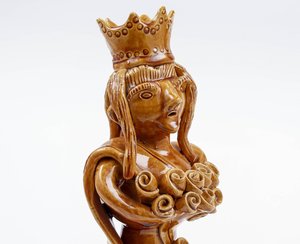
Saint Anthony
Ceramic
Sculpture
Contemporary Realism
1900
19th Century
38.0 x 17.0 cm
National Museum of Ethnology
작품의 원본 비율을 유지하는 미리 설정된 크기 중에서 선택하세요.
특정 프레임이나 공간에 맞도록 직접 크기를 입력할 수 있습니다. 선택하신 크기가 원본 이미지의 비율과 일치하지 않는 경우, 작품을 자르거나 추가적인 손으로 그린 요소를 사용하여 그림을 확장합니다. 제작 시작 전 승인을 위해 디지털 목업을 보내드립니다.
화면 미리 보기는 실제 자르기 또는 확장을 반영하지 않습니다. 최종 구성은 목업을 통해서만 정확하게 확인하실 수 있습니다.
맞춤 크기 제작도 가능하지만, 원본 비율을 유지하기 위해 사전 정의된 목록에서 크기를 선택하시는 것을 권장합니다.
주문 후 OriginalUniqueArt.com 팀에서 상세 안내를 위해 고객님께 이메일을 보내드리며, 미리보기 시안을 제공해 드립니다.
Saint Anthony
재현 기법
복제본 크기
-
최종 결제 금액
$ 300
작품 상세 설명
A Tender Encounter in Glazed Clay
In the quiet, tactile world of Portuguese ceramics, few pieces capture the profound intimacy of faith and humanity quite like Saint Anthony. This exquisite sculpture, a masterwork of glazed clay by the contemporary ceramicist Júlia Ramalho de Sousa, presents a moment frozen in time: the tender embrace between Saint Anthony and the Christ Child. The piece is not merely a religious icon but a soulful exploration of connection, rendered through the earthy, warm tones of sculpted clay. As one gazes upon the intricate detailing of the faces and the delicate positioning of the hands, there is an immediate sense of the artist's deep reverence for her medium and her subject.
The sculpture breathes with a life that transcends its material composition. Through a masterful application of glaze, Ramalho de Sousa imbues the brown, ceramic surface with a soft, organic luster that mimics the warmth of skin and the weight of tradition. The craftsmanship is evident in every fold of the saint's garments and the gentle, watchful expression of the infant. This level of detail invites the viewer to linger, finding beauty in the subtle textures that suggest both the ruggedness of the earth and the refinement of high art. For the collector, this piece offers a rare opportunity to possess a fragment of Portuguese ceramic heritage, where the lineage of the legendary Rosa Ramalho meets the distinct, expressive voice of her granddaughter.
Symbolism and the Spirit of Tradition
Beyond its physical beauty, Saint Anthony serves as a powerful symbol of protection, devotion, and the enduring bond between the divine and the earthly. The composition, featuring Saint Anthony cradling the Baby Jesus, evokes a sense of peace and sanctuary. The presence of secondary figures in the background adds a layer of narrative depth, suggesting a larger, sacred scene that expands the emotional landscape of the work. This layering of figures creates a sense of community and shared spiritual experience, making the sculpture feel less like a solitary object and more like a window into a timeless devotion.
For interior designers and art enthusiasts alike, this piece acts as a profound focal point. Its earthy palette and classical subject matter allow it to integrate seamlessly into spaces that value organic textures and historical resonance. Whether placed in a sunlit alcove of a contemporary home or serving as a centerpiece in a curated gallery setting, the sculpture radiates an aura of contemplative calm. It is a work that does not demand attention through sheer scale, but rather commands it through its quiet, undeniable presence—a testament to the enduring power of clay to tell the most human of stories.
작가 약력
A Legacy Forged in Clay: The World of Júlia Ramalho de Sousa
Júlia Ramalho de Sousa, born May 3, 1946, in Galegos, Barcelos, Portugal, carries a remarkable artistic lineage. Her story isn’t simply that of a talented ceramist; it's one deeply interwoven with the rich tradition of Portuguese claywork, specifically as the granddaughter of the celebrated Rosa Ramalho. This familial connection has profoundly shaped her creative journey, yet Júlia has carved out a distinct and expressive voice within the medium, establishing herself as a significant figure in contemporary ceramics. From an early age, she was immersed in the tactile world of clay, absorbing not just technical skills but also a profound respect for the material’s inherent qualities and potential. This formative experience laid the groundwork for a career dedicated to exploring the evocative power of sculpted form.Early Influences and Artistic Development
Growing up surrounded by Rosa Ramalho's work instilled in Júlia an appreciation for the raw beauty and earthy tones characteristic of traditional Portuguese pottery. However, while honoring this heritage, she didn’t simply replicate it. Instead, she embarked on a path of experimentation, seeking to infuse her creations with a more personal and contemporary sensibility. Her early works demonstrate a fascination with texture and volume, moving beyond purely functional forms towards increasingly sculptural pieces. This period was marked by a deliberate exploration of the human figure, often rendered in abstracted or stylized ways. The influence of Rosa Ramalho is visible in the grounding presence of her figures, but Júlia quickly developed a unique approach to surface treatment and composition. She began incorporating elements of Portuguese folklore and religious iconography into her work, imbuing her sculptures with layers of cultural meaning.Themes and Techniques
Júlia Ramalho de Sousa’s art is deeply rooted in the Portuguese landscape and its traditions. Her sculptures frequently depict figures engaged in everyday activities or representing archetypal characters from local stories. Saint Anthony, for example, showcases her ability to capture a sense of quiet contemplation and spiritual devotion within the clay form. The human figure remains central to her oeuvre, often serving as a vessel for exploring themes of faith, community, and identity. Her technique is characterized by a masterful handling of clay—a combination of hand-building, coiling, and sculpting methods. She employs a limited palette of earthy tones, allowing the natural texture and form of the clay to take precedence. The surfaces are often rough or deliberately unfinished, adding to the sculptures’ sense of immediacy and authenticity. This deliberate rawness is not a lack of skill but rather a conscious aesthetic choice—a rejection of polished perfection in favor of a more visceral connection with the material.Recognition and Historical Significance
Throughout her career, Júlia Ramalho de Sousa has garnered recognition for her unique artistic vision. Her work has been exhibited both nationally and internationally, earning her a reputation as one of Portugal’s leading contemporary ceramic artists. While she maintains strong ties to the traditions established by her grandmother, Rosa Ramalho, she is not simply a continuation of that legacy but rather an innovator who has expanded the possibilities of clay sculpture. She represents a bridge between generations—honoring the past while forging new paths for Portuguese ceramics in the 21st century. Her sculptures offer a powerful commentary on cultural identity and the enduring human spirit, solidifying her place as a significant voice within the broader landscape of contemporary art.- Her work is often seen as a celebration of Portuguese heritage.
- She skillfully blends traditional techniques with modern sensibilities.
- Júlia Ramalho de Sousa’s sculptures evoke a sense of intimacy and authenticity.
júlia ramalho de sousa
1946 - , Portugal
주요 정보
- Artistic Movement Or Style: Contemporary Ceramics
- Artists Who Influenced This Artist: ['Rosa Ramalho']
- Date Of Birth: May 3, 1946
- Full Name: júlia ramalho de sousa
- Nationality: Portuguese
- Notable Artworks: ['Saint Anthony']
- Place Of Birth: Vila Nova de Gaia, Portugal

유리 옵션은 110cm 미만 크기에서만 선택 가능합니다.